

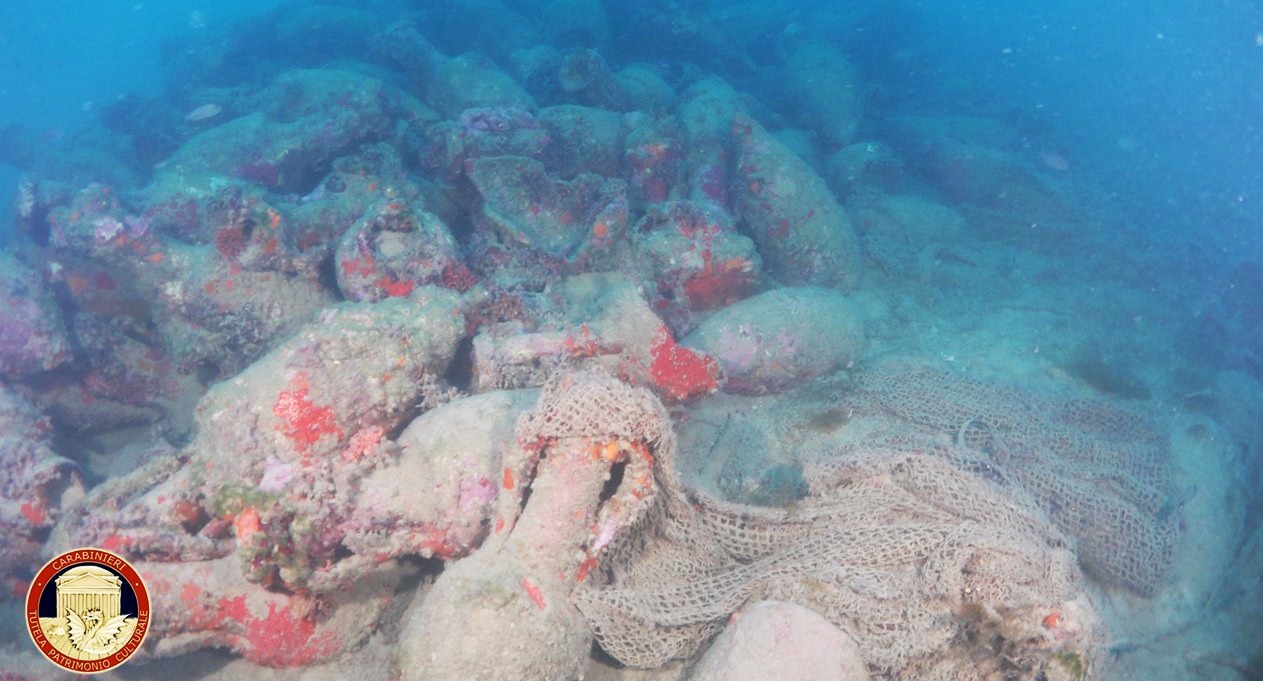

MAZARA DEL VALLO, Sicily — A Roman-era shipwreck carrying hundreds of amphorae has been located off Mazara del Vallo, Sicily, in a find that Italy’s Ministry of Culture announced on August 8, 2026, calling it one of the most significant underwater discoveries in recent years.
Found by chance, three miles out
The wreck sits nearly three miles off the Sicilian coast, at a depth of about 46 metres. It was first spotted not by archaeologists but by two freedivers, Giacomo De Mola and Igor Bisulli, who were training in the area ahead of a competition.
Their report reached the Carabinieri unit for cultural heritage protection in Palermo. A joint inspection followed, involving the region’s Soprintendenza del Mare, the Carabinieri’s underwater unit in Messina, and a patrol boat from Trapani. Officials say the seabed survey found a cargo still largely intact, a rare condition for a wreck this old.
A vessel that once carried wine
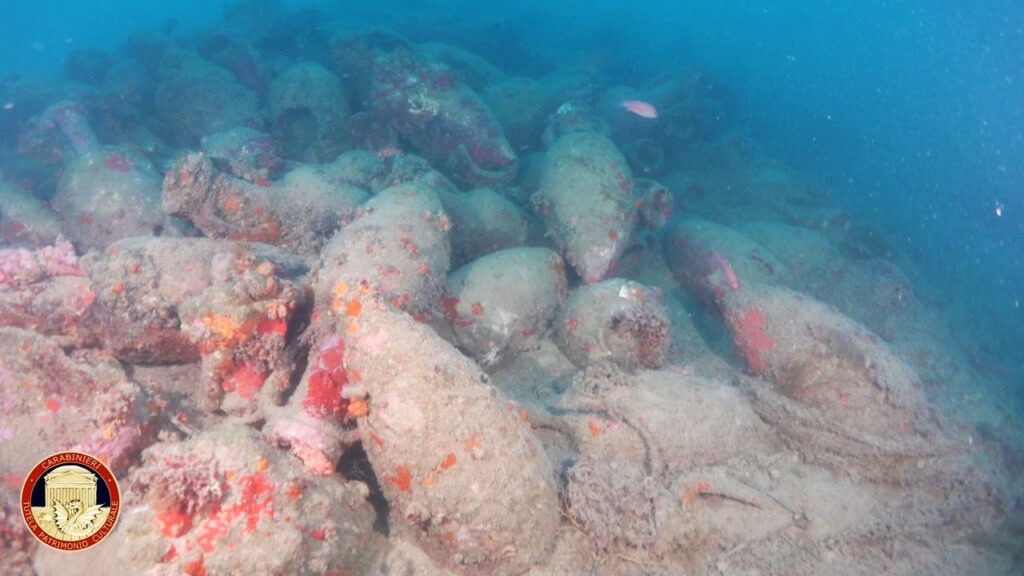
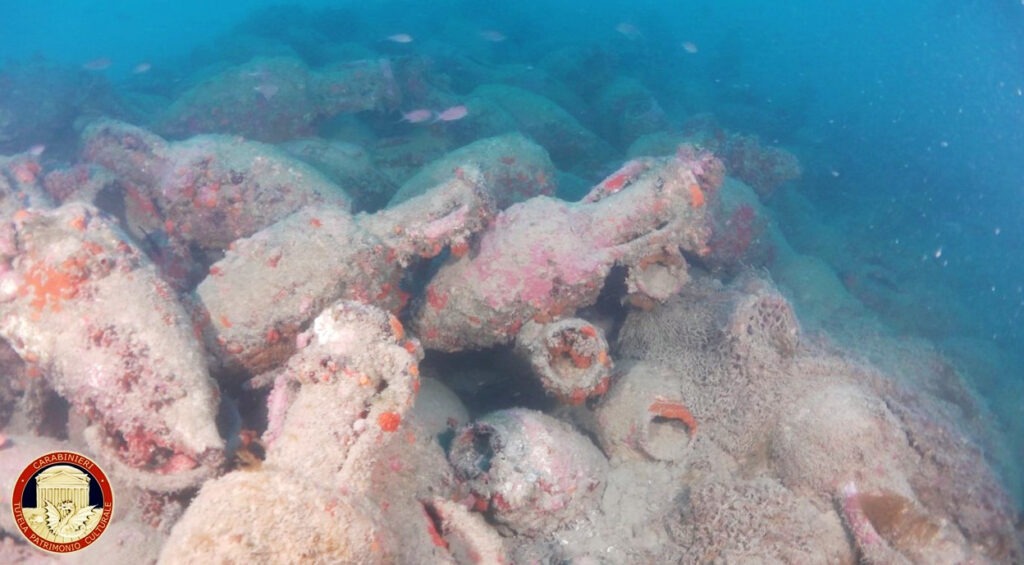
On the seabed, investigators counted hundreds of amphorae, most of them the Dressel 1A type widely used to transport Italian wine between the second and first centuries BC. Two lead anchor stocks and a further lead structure were also found nearby, hinting at the size and original construction of the vessel.
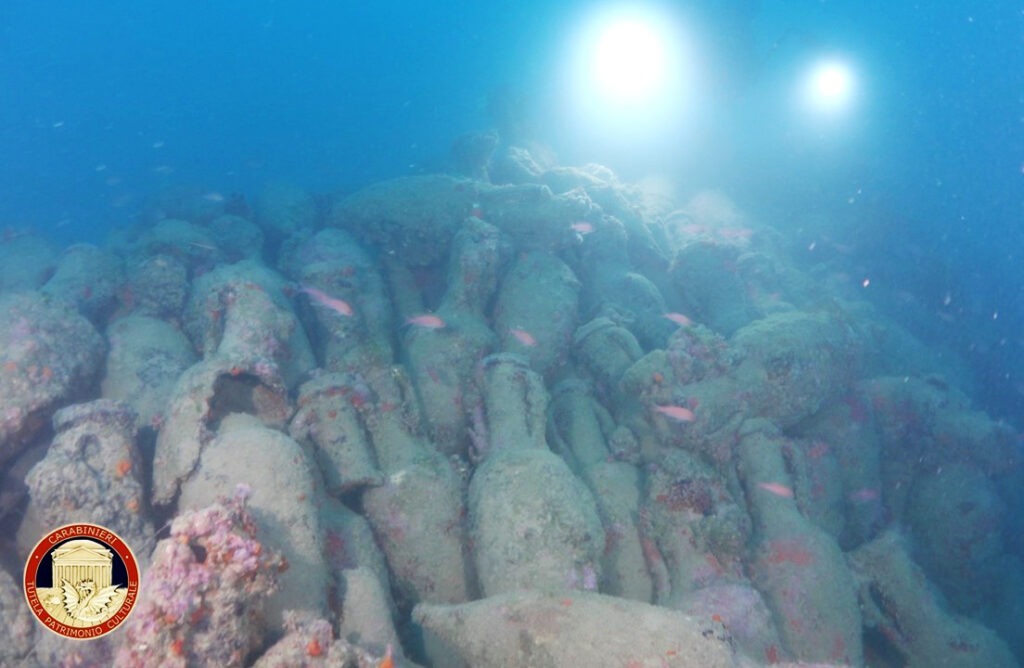
Culture Minister Alessandro Giuli praised the teams involved, and their careful documentation of the site. “It is one of the most important underwater archaeological discoveries of recent years,” he said, adding that the wreck speaks to the routes and exchanges that made the Mediterranean a crossroads of civilisations.
Historians note that Dressel 1A amphorae were produced widely across central Italy, from Etruria to Campania, and mark one of the busiest chapters of Roman maritime trade. Their spread across the Mediterranean traces networks that linked Sicilian ports to the wider Republican economy, long before the region became a hub of empire.
Archaeologists caution that the dating remains preliminary. Further study of the amphorae’s shape, clay composition, and any surviving residue should help confirm where the cargo originated and what it carried, while comparisons with similar wrecks found off Sicily in recent years may sharpen the picture further.
The Soprintendenza del Mare will lead the next phase of work, mapping the site in detail and putting protective measures in place before any recovery is considered. For now, the ship and its cargo remain where they settled more than two thousand years ago, a fresh clue to Sicily’s place in ancient Mediterranean trade.