
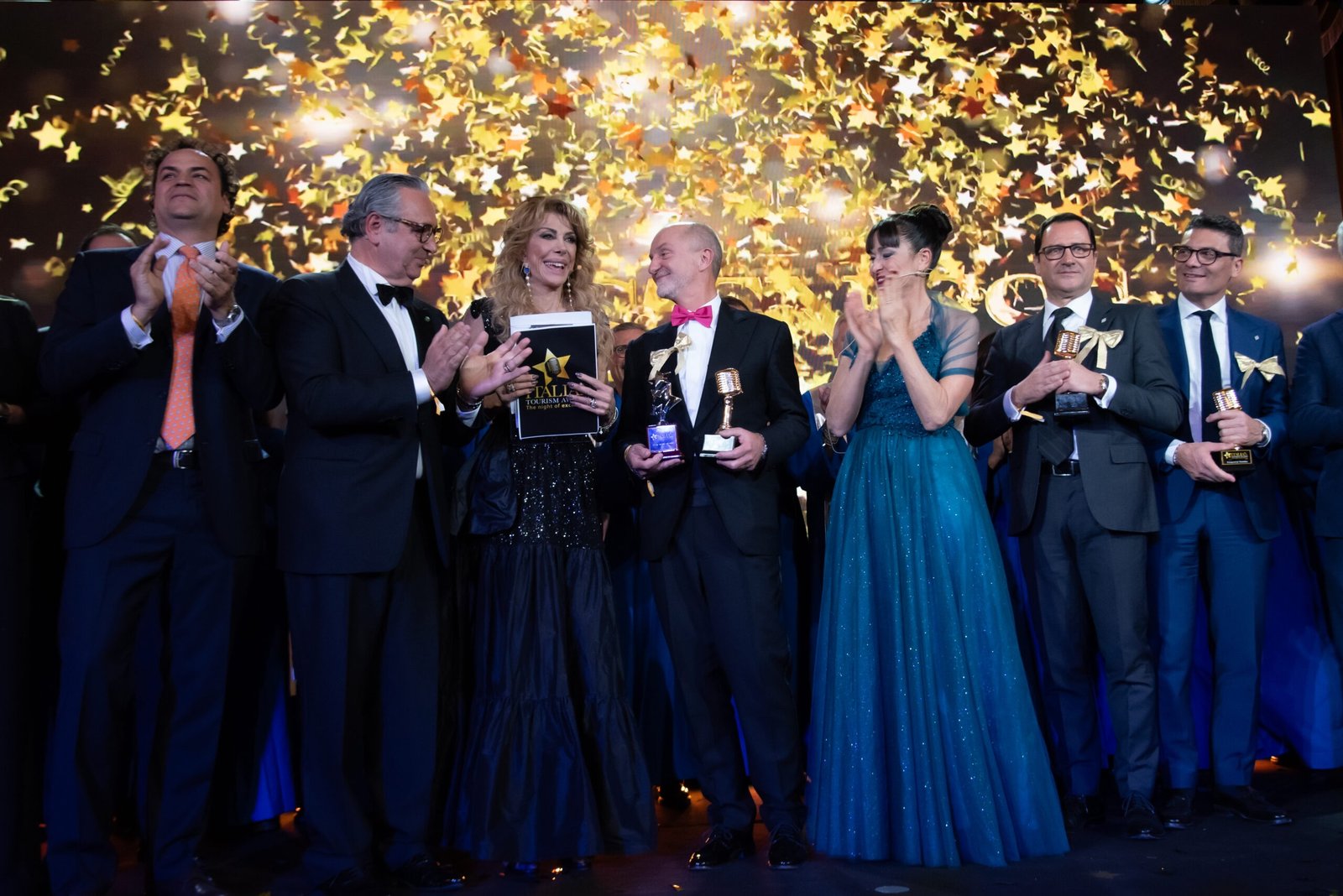

ROME — Italy’s tourism industry gathered at the St. Regis Rome on December 11, 2025 to celebrate the sector’s strongest performance in decades, as the sixth edition of the Italian Tourism Awards honoured 15 winners ranging from the Cinque Terre to a hotel-tech start-up, against a backdrop of record arrivals and the first-ever UNESCO recognition of an entire nation’s cuisine.
Rome’s own numbers framed the evening. Alessandro Onorato, the city’s councillor for tourism and major events, announced that the capital had registered 44.1 million presences between January and October 2025, more than three percent up on the same period the year before, putting it on track to surpass its 2024 record of 51.4 million. Employment in the sector had grown 5.5 percent year on year over the past three years, compared with 1.9 percent in the three years before COVID.
“Travellers are no longer looking for just a room,” Gabriella Carlucci, the awards’ host and ambassador, told Italy Now. “They want local experiences, slower rhythms, and authentic contact with the territory. Those who tell the story of an experience before the booking have a real competitive advantage.”
The winners
Ligurian coastal reserve Cinque Terre took the prize for Italian Destination, with Mayor Fabrizia Pecunia of Riomaggiore collecting the award. Forte Village won in the Hotel category, while Frecciarossa high-speed trains claimed Transport and Glamping & Spa Terme di Vulci took New Hospitality. Zacchera Hotels was recognised for Sustainable Tourism. Blastness, a hospitality-tech company founded by Andrea Delfini, claimed both the Innovation prize and the Star Night Award, the public’s choice selected via QR code vote. Tasting Opera won the Start-Up category, while Dante per i Borghi was recognised for Media and Travel Storytelling. The International award went to Malta, with Ester Tamasi of the Malta Tourism Authority accepting on behalf of the destination.

Cuisine joins the UNESCO canon
The ceremony’s cultural centrepiece came from Minister of Tourism Daniela Santanchè, who announced that Italian cuisine had been recognised as UNESCO intangible cultural heritage, the first time the designation has been awarded to an entire nation rather than a specific tradition. The Twiga restaurant group received the UNESCO plaque at the event.
The awards were conceived and produced by Deborah Garlando, CEO of MHR, with jury president Palmiro Noschese overseeing a selection process that evaluated roughly 300 applications before arriving at 45 finalists.