POMPEII — For the first time, 22 of Pompeii’s best-preserved plaster casts of eruption victims, among them a child and a couple who died fleeing together, have been brought out of the houses, streets, and city gates where they were discovered and united in a single space.
The installation marks a departure from decades of displaying the casts as archaeological artefacts scattered across their original locations. Instead, the Palestra Grande exhibition space presents them as a human memorial, with each figure arranged to emphasise personal story, final posture, and expression. The Pompeii Archaeological Park inauguration was described by Italy’s culture minister as a gallery of rare visual power. The exhibition opens to the public March 12 and brings together casts of people killed during the catastrophic eruption of Mount Vesuvius in AD 79.
Faces returned to the dead
The casts preserve the final moments of residents overcome by a pyroclastic flow, a surge of scorching volcanic ash and gas, during the eruption’s second phase. The plaster casting technique, first developed in the nineteenth century,involves pouring plaster into cavities left in hardened ash after bodies decomposed, revealing detailed impressions of victims’ final postures, clothing, and expressions. “These were real people who fled their homes and became trapped during the second phase of the eruption,” said Pompeii Archaeological Park Director Gabriel Zuchtriegel. “The ash cloud solidified around their bodies, and through these casts science returns their faces, gestures and humanity to us.”
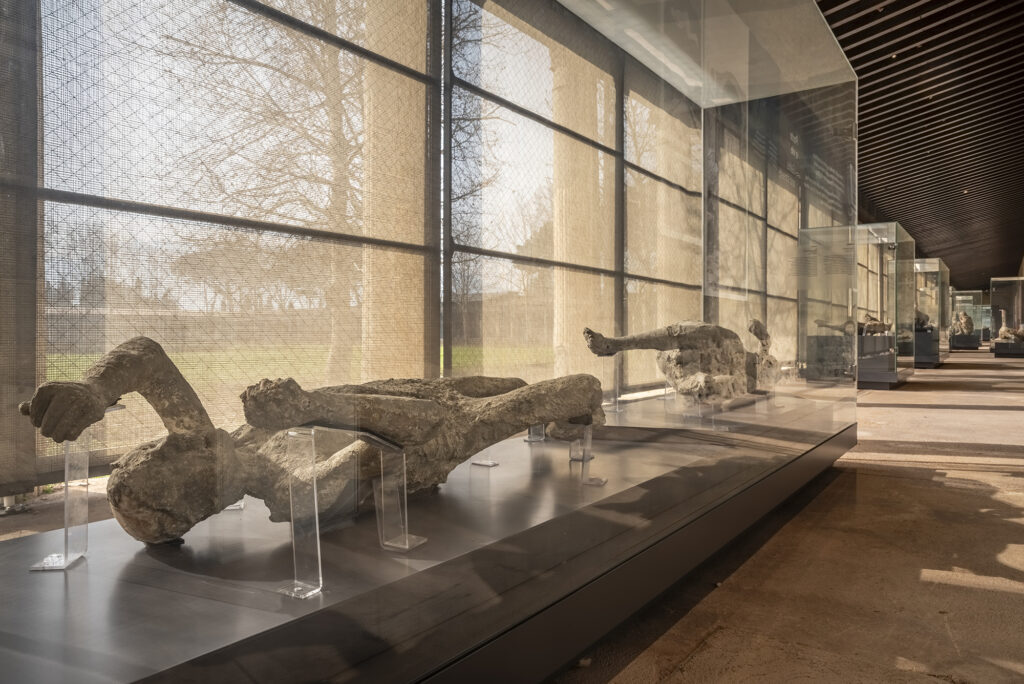
Curators designed the space with deliberate restraint: the section is partially screened, with warnings preparing visitors for what they are about to see, and minimal colour or decoration to maintain a respectful atmosphere. Culture Minister Alessandro Giuli, who attended the inauguration, called the installation “a gallery of pain of rare visual power,” adding that “in this frozen moment there is respect.” He described it as a memorial combining historical memory with modern technology to convey the human tragedy behind the remains.
Pompeii, located near Naples, was buried under ash and volcanic debris when Vesuvius erupted nearly 2,000 years ago, killing thousands and preserving much of the Roman city. Since the nineteenth century, archaeologists have created around 100 plaster casts at the site, many still displayed where they were discovered. The 22 selected for this exhibition represent the best-preserved examples and are the first to be gathered in one place on a permanent basis.