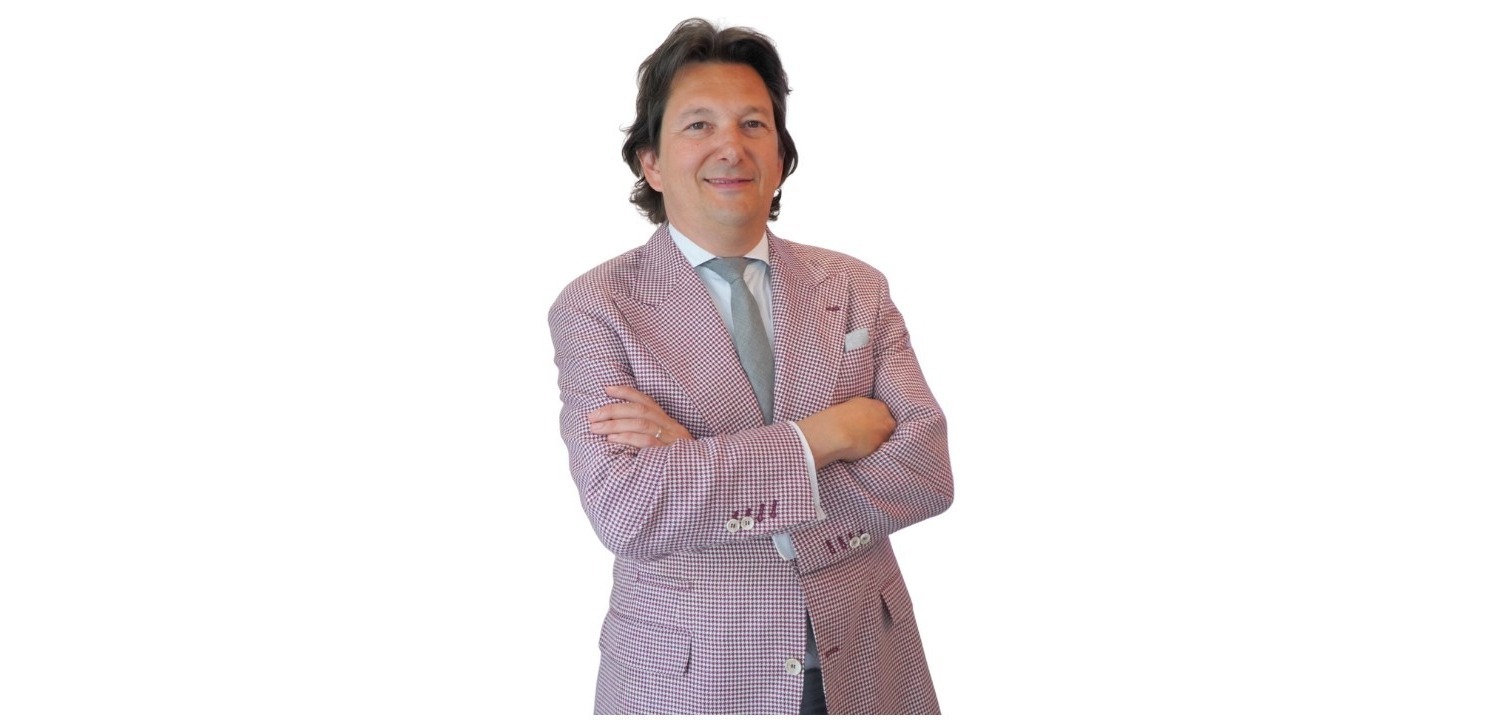
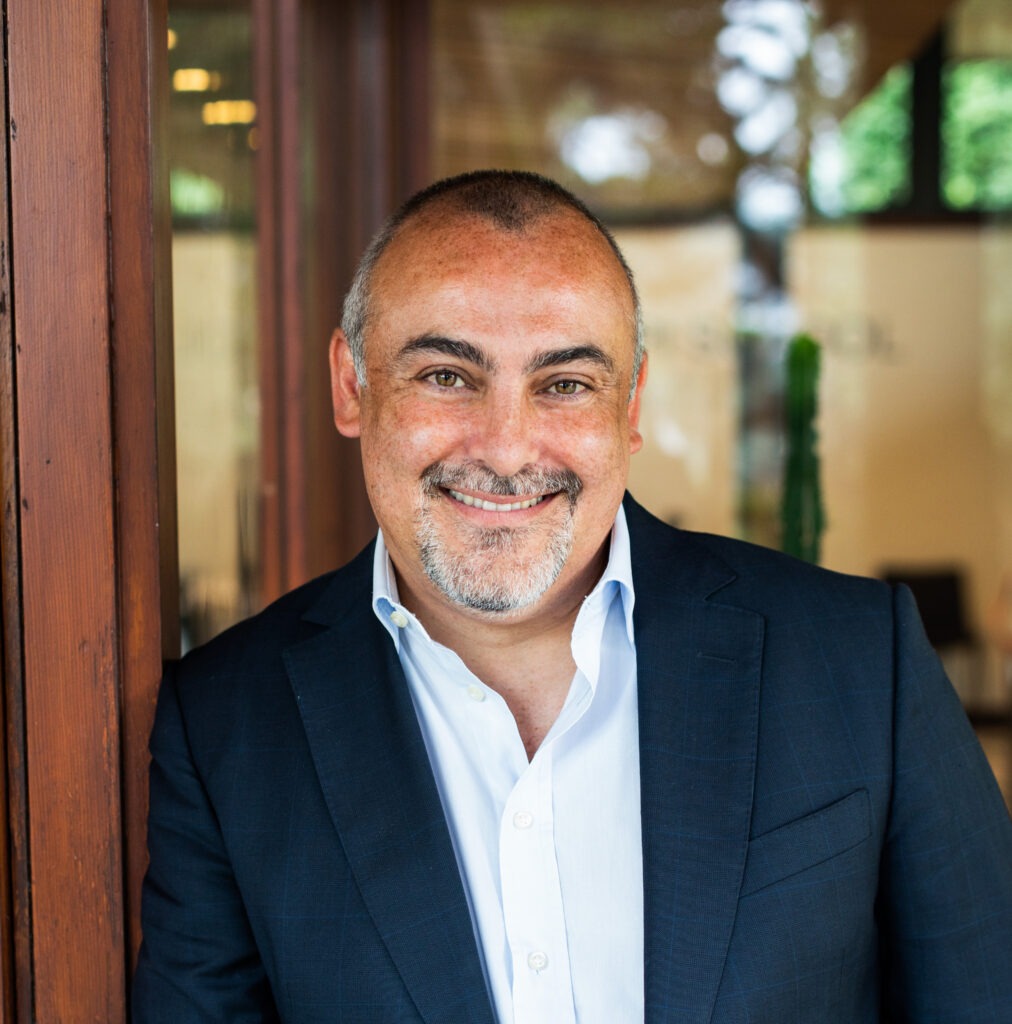
ROME — Days after President Sergio Mattarella named him one of Italy’s 25 new Cavalieri del Lavoro (Knights of Labour), we met Marco Trombetti, the Roman who built translation company Translated from nothing in 1999 with his wife Isabelle Andrieu. Now one of the world’s leading AI translation companies, it supports 237 languages and more than 400,000 clients, among them Google, Airbnb, and Uber. He talked to us about the honour, his start in astrophysics, why people and machines work better together, and why he could only have built this in Italy.
Q. You were just named Cavaliere del Lavoro. What does it mean to you?
“I am overjoyed, with tears, because in Italy this is the highest recognition the state can give an entrepreneur. My grandfather was a Cavaliere and my uncle a Commendatore, so to see another Trombetti take a title the family dreamed of for 20 years meant everything. One of our idols who held this honour was Adriano Olivetti, a genius who put design, architecture, work, and the centrality of the human being back together. That idea is slowly vanishing today, where people are treated as something to exploit and arrogance always wins. The honour brings some of those values back, and it makes you think over a longer horizon.”
Q. Where does your story begin?
“I am Roman, born in Rome but raised in Torvaianica, a small town on the sea. My grandfather became a knight because the post office asked him, as a director, to open offices in places where there was nothing. He, the pharmacist, and the parish priest would open the town together. From the age of 11 I studied with the Jesuits in Rome, the same school as Mario Draghi. Then I studied astrophysics in France because I was drawn to the origin of the universe. There I met Isabelle, a linguist, who became my wife and co-founder. I came to language out of love for a girl, not love for language. We came back during the internet boom, and in 1999 no internet translation service existed, so we built the first one.”
Q. What did you see in 1999 that others did not?
“Two things I keep seeing in successful ventures, and both are counterintuitive. Being naive, and being impatient. We were impatient because the world did translation the wrong way. You went to an agency in Rome that had one Chinese translator who had lived here for 20 years, and whether the text was medical, legal, or journalistic, it was always him. If you are writing a piece on wine, you want the best Italian to Chinese wine translator in the world, and he is unlikely to be in Rome. With the internet we could reach the right person for each document. The naivety matters too, because you underestimate how hard the problem is, so you jump in. Anything significant takes 10 years. If you knew all the problems in advance, you would never start.”
Q. Your rivals build AI to replace translators. You talk about symbiosis. Why?
“Google, Microsoft, OpenAI, and DeepL all built AI to replace the human translator. Traditional agencies treat AI as the devil and want only humans. We believed people and machines together do far better if you combine each one’s strengths. The machine does part of the work, the human corrects its errors, and we built a machine that learns from the human and follows where they want to go. If it uses tu where you want lei, the informal and formal Italian you, you correct it once or twice and it generalises, so you do not re-edit a whole novel. We called it adaptive translation. We built MateCat, then ModernMT, and today Lara, which reads the context, not just the sentence, and improves every time you correct it.”
Q. You support 237 languages. How do you protect quality at that scale?
“Three things. First, an AI that already does the best possible job, remembering past terminology and style, so the translator starts from a strong base and spends their time refining rather than typing. Second, as the AI improves, only a few translators in the world can still add real value, so you have to find them. We have recruited around 700,000 translators, still at 12,000 a month, and we work with the top 1 percent. Third, process, because humans are variable. Even a Nobel laureate has an off day, so you add layers of review, some by AI and some by other people. Together those give you not just high quality but consistent quality over time.”

Q. Why could you not have built Translated in Silicon Valley?
“You could never have built Google here, and I could never have built Translated there. Language is something you can really only do in Europe, and in Italy even more. Living here, you feel the language barrier. Travel one hour in Europe and people speak another language, so any business hits the problem. Within one timezone we reach the best linguists in the world. From San Francisco they are nine hours away. American companies grow on a market of 300 million people before they discover they need to translate. It is the same with fashion. Federico Marchetti built YOOX into a company worth billions, because the producers, the buyers, and the talent who understand fashion are here.”
Q. You also give your translation away to non-profits. Why?
“Because of the importance of language. We discovered that in much of Africa people cannot read scientific information, because the articles are all published in English. So we are giving a lot of it away, especially in medicine and science. If language is a barrier to knowledge, then opening it up is the whole point.”