


ROME — A new English-language platform unveiled on February 24, 2026 at the Senate’s Palazzo di Santa Maria in Aquiro invites international travellers beyond Pompeii and the Colosseum, towards the lesser-known Roman ruins scattered across Italy’s regions, borghi, and islands.
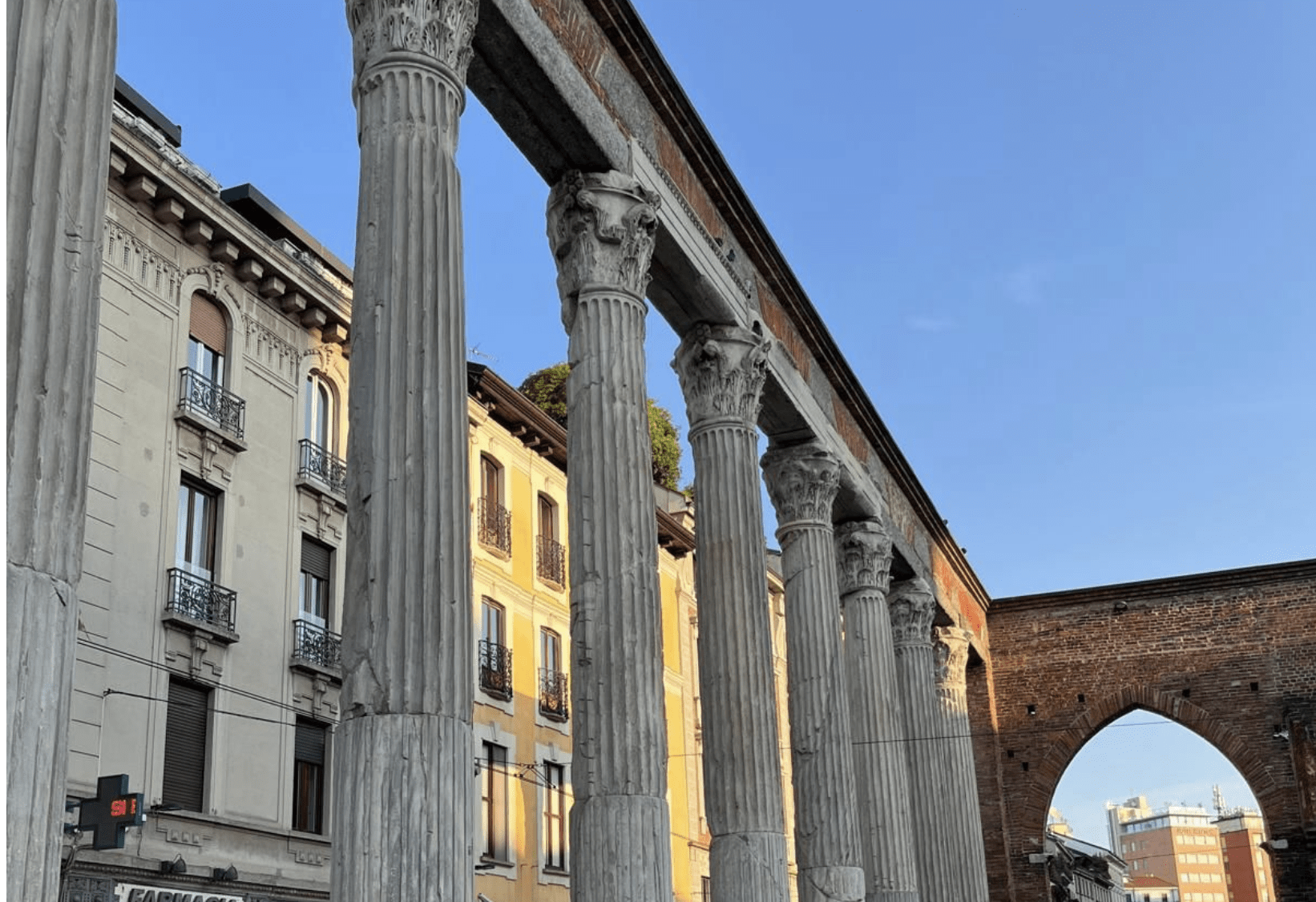
A small private Roman residence beneath a Rimini square, an aqueduct gallery cut by Emperor Vespasian in the Marche, a forum hidden under a Milan church. These are the kinds of sites that Italy as the Romans did, a new English language website, wants foreign visitors to actually find. The platform launched on February 24, 2026 at the Senate venue on Piazza Capranica in Rome, hosted by Senator Anna Maria Fallucchi of the Culture Commission.
The project is the work of Davide Sarsini, a journalist with the Italian news agency Agi, who told Italy Now the idea came to him when visiting the island of Capri, in front of Villa Jovis, the cliffside palace from which Emperor Tiberius ran the Roman Empire for 11 years. “This is a project that combines history, culture, and tourism,” explains Davide Sarsini, a journalist for the Agi news agency and the site’s promoter. “We want to help Italian and foreign visitors discover places and stories that often remain invisible even to those who live in Italy.”

The site groups its content under three sections, Little Jewels, Unexpected Rome, and Speaking Stones, the last of these dedicated to single Roman artefacts and epigraphs, with all content in English. ‟Latin was the lingua franca of a Roman Empire with a universal vocation, just as English today is the lingua franca of a globalised world,” Sarsini said.
Speaking Stones
The opening Speaking Stones essay is by Peter Stothard, author of the bestselling recent biography Horace, Poet on a Volcano. It examines a marble pillar in the Baths of Diocletian in Rome, discovered in 1890, that records the only known official mention of a Roman poet by the Roman state. ‟Carmen composuit Q. Horatius Flaccus,” the inscription reads, ‟Quintus Horatius Flaccus wrote the poem.” ‟Everyone who loves Latin poetry should drop by and pay homage,” Stothard writes. ‟This should be a much better known magic inscription, not in a remote museum but in the heart of Horace’s city.”
In fact “Italy As the Romans Did fills a very specific – and very Italian – gap, which is the one between great ‘iconic’ archaeology and the everyday Roman presence, which is widespread, though often almost invisible in the landscape,” Nuccia Bianchini, who moderated the presentation and also writes for the outlet, told Italy Now. “The Romans built a capillary civilisation made of bridges, aqueducts, road networks and villas, whose remains have incredibly never been told in an organic project.”