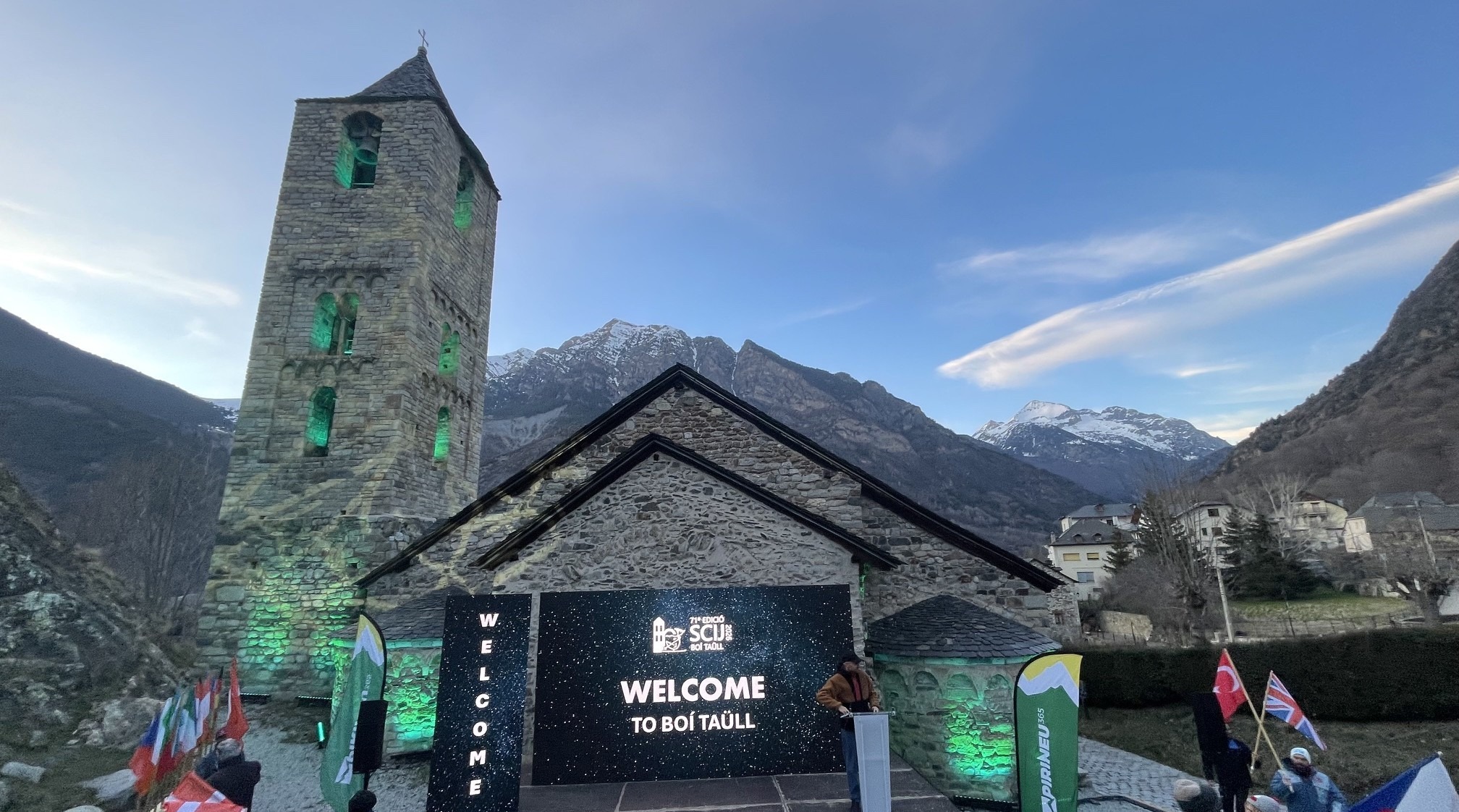

BOÍ TAÜLL, Spain — High in the Catalan Pyrenees, a cluster of Romanesque churches stands as a lasting monument to Lombard craftsmen, the Italian masons and stonecutters who built them more than nine centuries ago.
Boí Taüll is better known as an important ski resort, and it hosted early this year the 71st competition of the Ski Club international des Journalistes (SCIJ), which unites 21 nations. Few visitors expect to find Lombard gems here. The village lies in Catalonia, 120 kilometers from Lleida, and the journey is demanding, with a flight to Barcelona, four hours by bus and a final taxi ride uphill.

Among slate roofs and pastures, a slender bell tower appeared, and the driver Biel spoke with obvious pride. “We have here about nine churches in the valley with World Heritage status,” said Biel. UNESCO, the United Nations agency, listed the Vall de Boí as a World Heritage Site in 2000, he added.
Andrià, a guide at the valley’s Romanesque center in Erill la Vall, explained the history during the tour. “In the eleventh and twelfth centuries this was a contested frontier. Local lords, including the Erill family, commissioned churches to mark their land. Sant Climent and Santa Maria de Taüll were consecrated a day apart in December 1123. The valley lacked the skills to build them, so masons and stonecutters came from northern Italy, where early Romanesque had taken shape around Como, Pavia and the Val Camonica. They brought walls of split stone, blind arches and towers pierced by twin and triple windows. Then Catalan artists embellished them with colorful frescoes.”


Frescoes saved by Italians
Inside Sant Climent, the apse once held the Pantocrator, a Christ in majesty painted by an anonymous artist known as the Master of Taüll. The original is now in the Museu Nacional d’Art de Catalunya (MNAC) in Barcelona, and the valley shows reproductions with a light show.
In the early 1900s the paintings were damaged by damp and neglect, and there were fears they would be sold abroad. From 1919 the Institut d’Estudis Catalans, a Catalan academy, entrusted their removal to Italian restorers expert in the strappo technique, which peels the painted layer from the wall while preserving its color. A key chapter of Spanish art history survived thanks to skills honed in Italy.
The Romanesque section at MNAC in Barcelona is well worth a visit too.