




ROME — A group of chefs from Piedmont wants to move Vermouth di Torino from the drinks tray to the stove. They previewed a new recipe collection built on the fortified wine at the Foreign Press Association in Rome on June 11.
“Since the late eighteenth century, Vermouth di Torino was sipped as an aperitivo, for what we call l’ora del Vermouth, the hour before meals that we now know as aperitivo,” said Pierstefano Berta, director of the Consorzio.
“Before this book, nobody had used Vermouth di Torino so extensively in cooking,” Berta added. The collection, titled Vermouth di Torino, una guida agli abbinamenti, (Vermouth of Turin, a guide to pairings), pairs the wine with risottos, pan sauces, braises, and desserts. We tried to gather one hundred possible pairings, matching dishes with a Vermouth and sorting them across starters, first courses, and main courses,” he said.
A guarded recipe
Vermouth di Torino is an aromatized, fortified wine flavoured with artemisia, or wormwood, and other botanicals. It carries IGP status, a protected geographical indication tying the name to Piedmont and to a tradition dating to 1786, when Turin herbalist Antonio Carpano first blended wine, herbs, and spices.
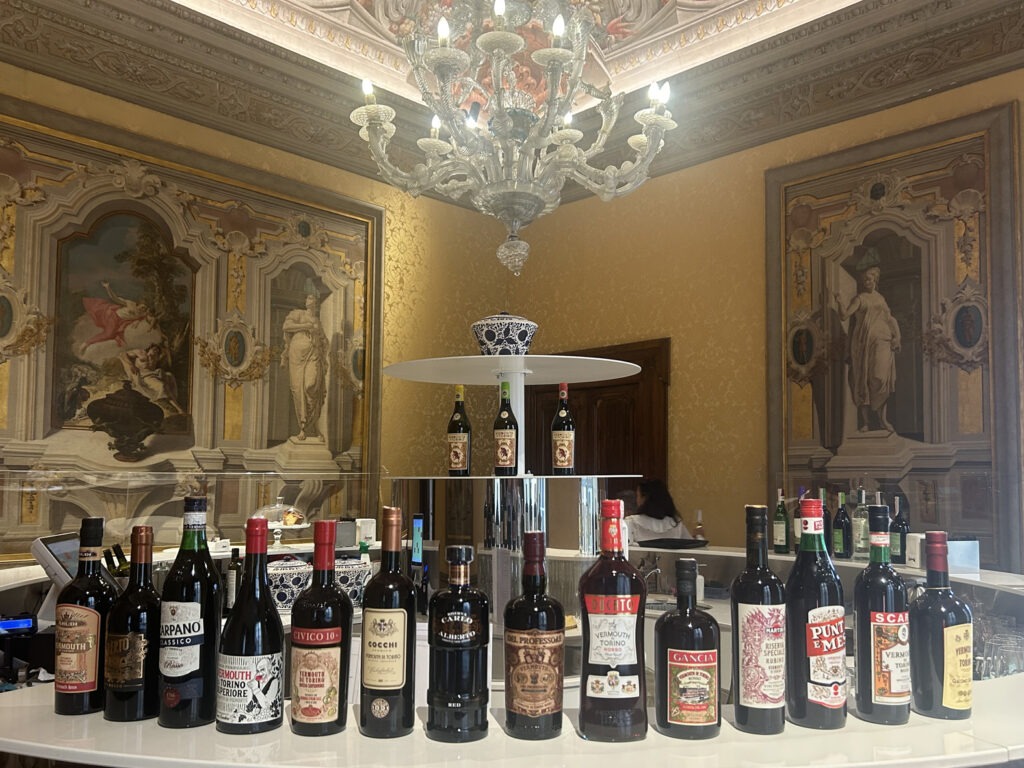
“Vermouth di Torino is the only vermouth in the world that can carry the IGP label. Production starts from a white base wine, with extracts of herbs, roots, and spices added, often through immersion in alcohol. Every producer guards their own recipe closely,” said Giusy Mainardi, a vermouth expert.
Beyond the Negroni
The case is partly commercial. The Consorzio reported roughly 6.9 million bottles sold worldwide in 2025, with the denomination now present in more than eighty countries and growth of about 16 percent a year since 2018. Vermouth already anchors the Negroni, the Martini, and the Manhattan.
Dry styles lift seafood and white meats, while sweet red versions cut through rich braises of Fassona beef from Piemont, raised on steep slopes where the grass is especially flavourful.
“Vermouth is more austere than the orange aperitivo, and it gives food a touch of bitterness,” said chef Luca Carrucci, presenting a Fassona tartare with Vermouth reduction.
Rather than compete with Aperol glass for glass, the book moves vermouth where the spritz cannot, onto the plate, where bitterness becomes an asset.
“The kitchen is the next frontier,” said Bruno Malavasio, Consorzio president.



Così pieno di dettagli che ho assaporato tutto.
Sei bravissima come sempre.