ROME — We meet Martina Almonte, director of the Archaeological Parks and Museums of Praeneste and Gabii (Ministry of Culture) on the paths of a 70 hectare stretch of Roman countryside that has remained almost untouched, just 30 minutes from the center of the Capital. She tells us how the site preserves some of the oldest phases in the history of Rome and Lazio, from a temple dedicated to Juno to an archaic age regia.
Q. What makes this 70 hectare area so special, sitting right at the edge of Rome?
“The peculiarity of this place is precisely that of being a fragment of countryside within the urban periphery. In my view, this is also its great potential strength, it offers a completely different dimension, outside the city but, at the same time, inside the city.”
Q. Why did Gabii play such an important role in ancient history?
“Gabii stood at the crossroads of major communication routes. On one side there was the north south axis, which in Roman times became the Via Prenestina all the way to Praeneste, on the other the east west routes crossed the hills and coincided with the roads used for transhumance. These were active routes since prehistoric and protohistoric times. This is why the site preserves some of the oldest phases in the history of Rome and Lazio.”
Q. Which monuments should visitors make sure not to miss?
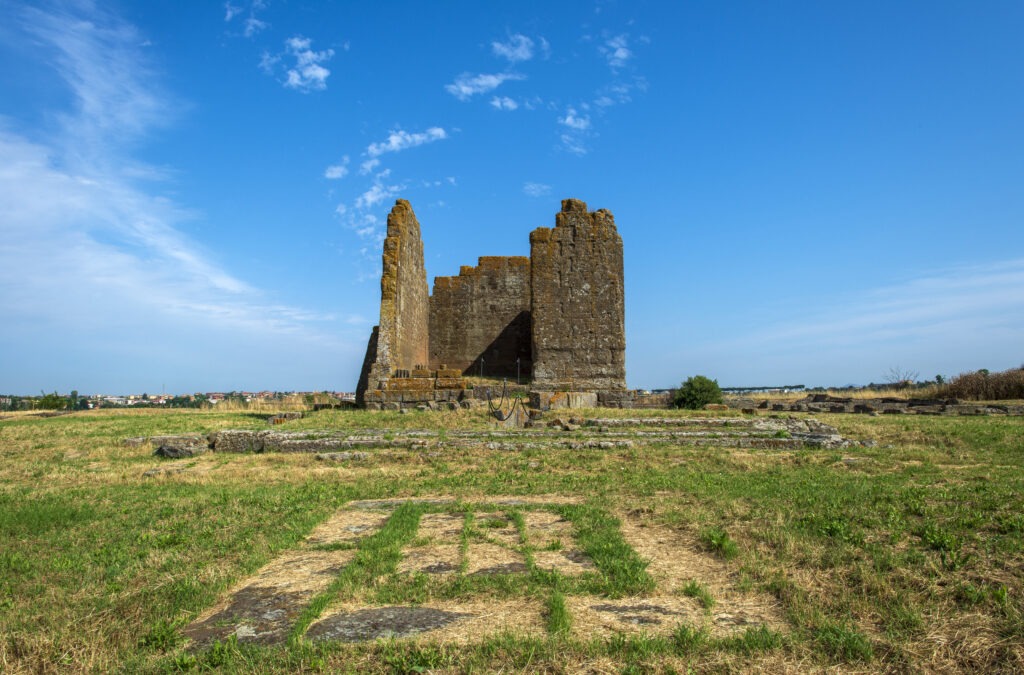
“The entrance to the area is marked by the Temple of Juno, an element that has always remained recognizable in the landscape. In front of the temple stood a theater, which effectively served as the access point to the sacred area, surrounded by porticoes, shops and a large cella. Among the most exceptional monuments is the so called regia, an archaic age building that reaches almost two meters in height, an extraordinary figure when we consider that the regia of the Roman Forum survives only a few centimeters above ground.”
Q. Where do things stand with the work toward the park’s official opening?
“The Ministry is still arranging the staff needed for regular opening hours, while work is underway on accessibility, including a path suitable for golf carts. A picnic area, new restrooms and shaded spots are also planned. There is no precise date yet, but the goal is to open within the year.”
Q. How can visitors see the site in the meantime?
“A new partnership between GetYourGuide, the global booking platform for tours and experiences, the park, the Ministry of Culture and Roma Capitale lets visitors explore the site before its official debut. Guided tours in Italian and English run every Saturday and Sunday until July 5, and then in September, led by archaeologists and trained guides.”
Since May 2026 the Metro C station has been renamed “Finocchio, Antica Citta di Gabii,” linking Rome’s transport to lesser known heritage sites.