

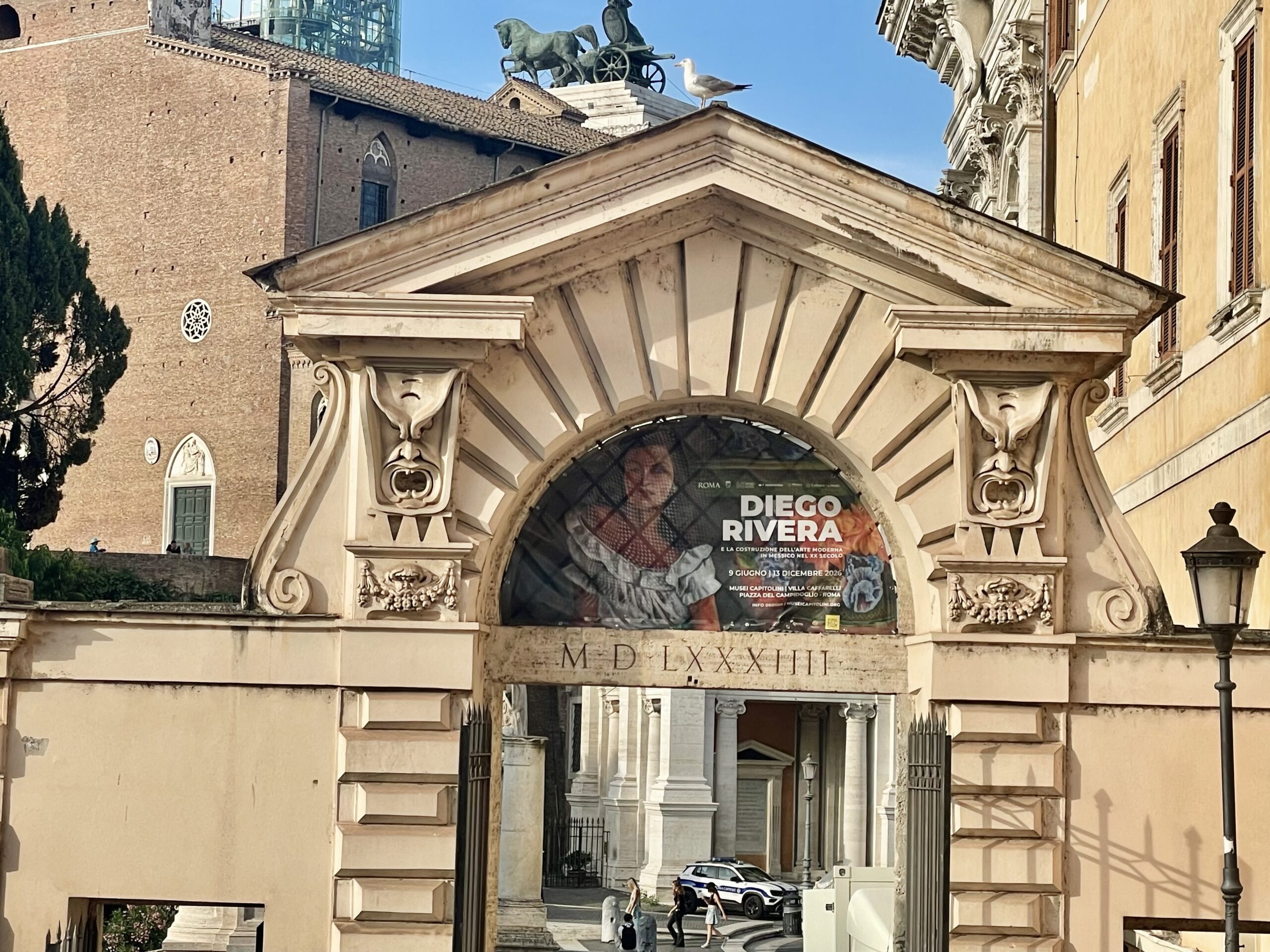

ROME — A sweeping retrospective on Diego Rivera is running at the Capitoline Museums the ancient Roman museum complex on the Capitoline Hill, marking the largest exhibition on the Mexican muralist ever held in Europe.
Rivera, who died in 1957, remains Mexico’s best known painter and the figure most associated with muralism, a movement that used large wall paintings in public buildings to tell the story of the nation to a broad audience.
“We are very pleased to have organized the largest exhibition ever staged in Europe, in partnership with the City of Rome and MetaMorfosi, because this show represents the bond between Mexico and Italy,” said Genaro Lozzano, Mexico’s ambassador to Italy, speaking to Italy Now. “Rivera studied European art, especially Italian art, but then painted with his own Mexican world.”
A record breaking selection
Titled “Diego Rivera and the Construction of Modern Art in Mexico in the Twentieth Century,” the show runs at the Villa Caffarelli wing of the museum. It brings together more than 140 works, thirty of them by Rivera, alongside pieces by his wife Frida Kahlo, Jose Clemente Orozco, David Alfaro Siqueiros and other artists who shaped the Mexican muralist movement.
“This exhibition shows the influence Diego Rivera has had on global art,” said Maria Noris, an art expert. “After his years working in Mexico, I believe the murals represent the most important pictorial tradition of twentieth century Mexico.”

The exhibition unfolds in four sections tracing Rivera’s academic training, his years among the European avant garde in Paris, the postrevolutionary cultural renaissance that fused precolonial heritage with modern identity, and the legacy of social realism in later Mexican art.
Photographs of Rivera taken by Tina Modotti, the Italian born photographer who documented Mexican artistic and political life in the twentieth century, are very beloved by italians visitors.
A partnership between Rome and Mexico City
The show is produced with MetaMorfosi Eventi and the Museo Kaluz in Mexico City, with support from Zetema Progetto Cultura, the Rome based agency that manages several of the city’s civic museums. It is curated by Miguel Fernandez Felix, director of the Museo Kaluz, and Alberto Gonzalez Torres, director of the Museo Robert Brady.
An excellent companion catalogue with essays from art historians is available from Gangemi Editore, alongside a shorter guide aimed at general visitors.
The exhibition remains open to the public at Villa Caffarelli through December 13, 2026.