PORTO SANTO STEFANO, Tuscany — Pellicano Hotels, present on the Tuscan Argentario coast for six decades, is involved in sponsoring the new Argentario Underwater Park, which opened earlier this month when five marble sculptures were lowered onto the seabed off Porto Santo Stefano, in Tuscany.
“We are proud to support a project that brings art and the protection of the sea into dialogue,” said Marie-Louise Sciò, chief executive of Pellicano Hotels Italy, “and after sixty years at the Hotel Il Pellicano, giving something back to the Argentario feels natural.”
The park lies between Porto Santo Stefano and Porto Ercole, on the Monte Argentario promontory in Tuscany. The local council created it with the marine conservation association Casa dei Pesci (House of the Fish) and the research body Accademia Mare Ambiente.
“We want to recreate a living, thriving sea,” said Giovanni Contardi, president of Casa dei Pesci, describing the park as a sort of underwater aquarium.
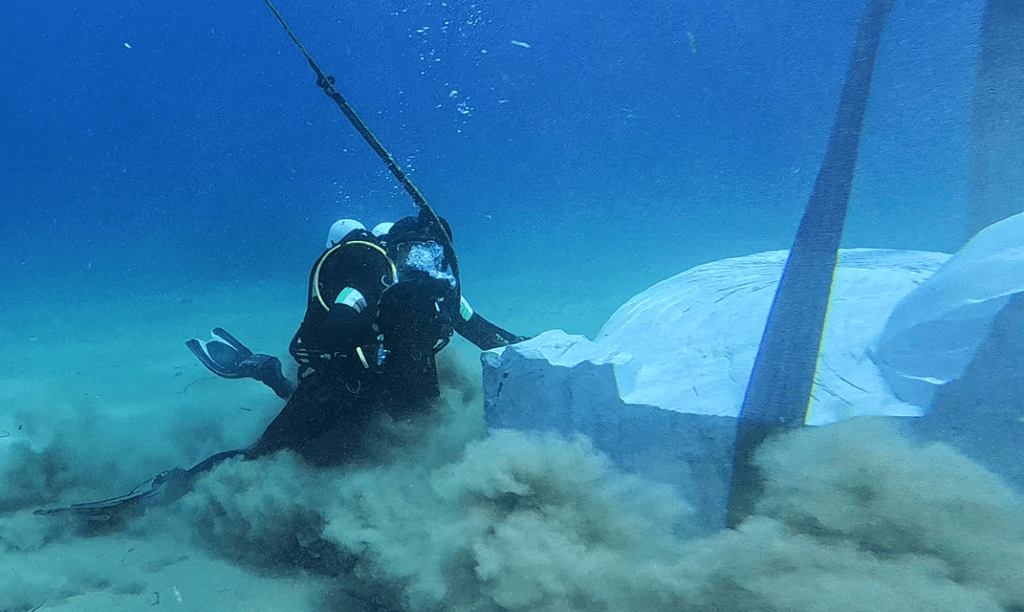
The Sound of the Sea, Anna Torre (Credits: Paolo Busani)
Barrier and refuge
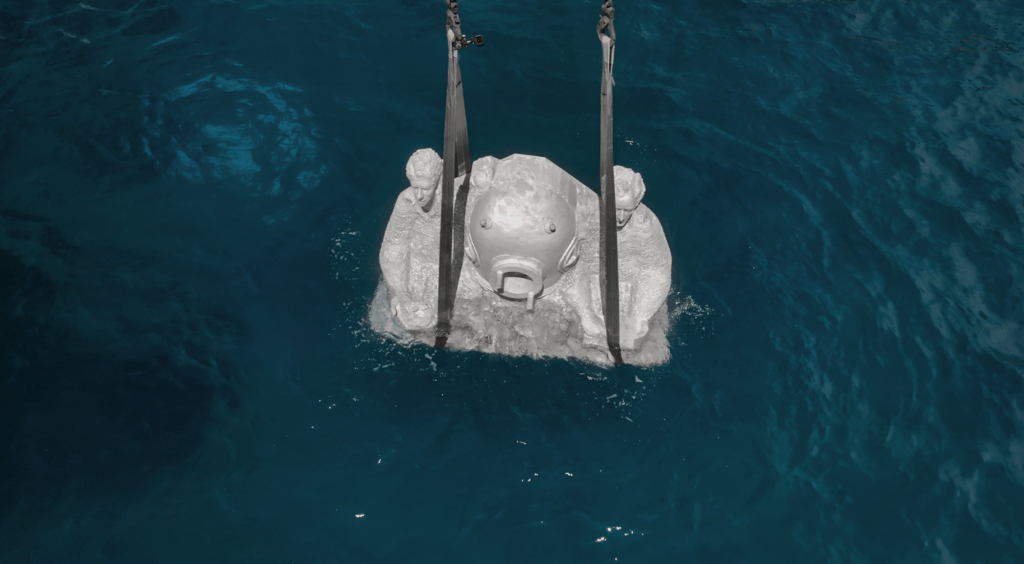
Each sculpture weighs between 12 and 15 tonnes and was cut from Carrara marble donated by the Michelangelo quarries. Divers from the Italian Navy lowered the works to about 10 metres, following an underwater map drawn with researchers from the University of Siena.
The heavy blocks physically obstruct illegal bottom trawling, a method that drags weighted nets across the seafloor. Reef modules printed in 3D and perforated tiles help fish shelter and Posidonia oceanica (a seagrass native to the Mediterranean) regrow.
Talamone origins
Casa dei Pesci began in 2012 in Talamone, a fishing village in Tuscany, where fisherman Paolo Fanciulli started sinking marble to block illegal trawlers. That museum now holds 29 sculptures.
At Argentario, seven artists produced five works, among them a marble armchair titled La Poltrona (Echinos) that rests a sea urchin on an open book. Over time, marine life will colonise the marble until the sculptures merge with the seabed.
Elite attraction
The park is open to divers and snorkellers, though the works stay invisible from land, and one travel specialist expects the audience to stay exclusive.
The park will draw “scuba travellers who’ve seen everything else and are looking for something new, so a very small group of travellers,” said Kristi Valentini, founder of the travel publication My Midwest Adventures.
Which may be the point. What began as one fisherman’s protest off a Tuscan beach was never built to be looked at, only to be left alone.