


L’AQUILA — A journey through Abruzzo works by subtraction. The further you travel from Rome on the A24, the less noise, the less crowd, the less of everything that clutters ordinary Italian travel. Then, somewhere around the Gran Sasso, the additions begin.
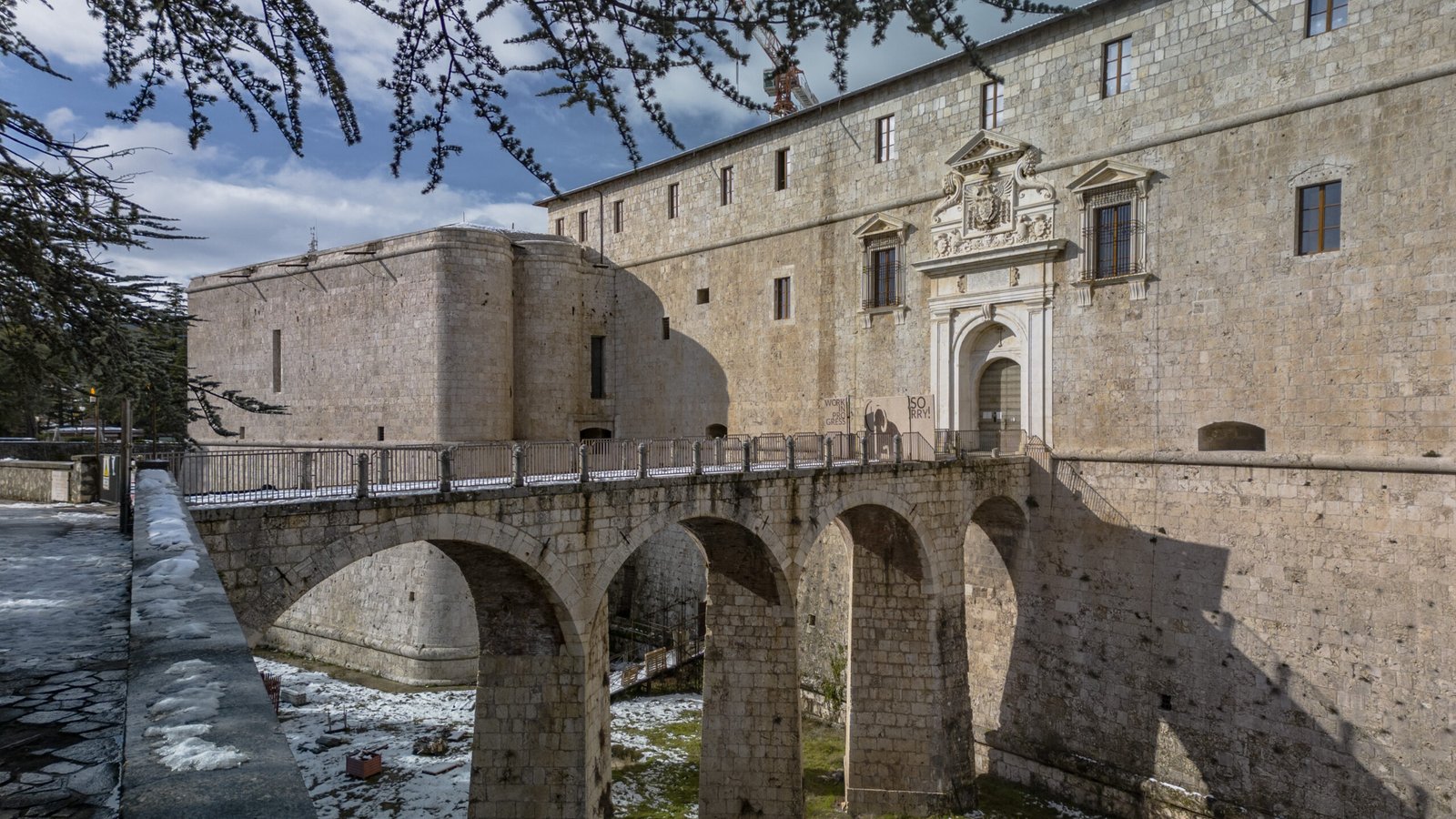
L’Aquila spent 17 years in scaffolding after the 2009 earthquake. In 2026 it opens as Italy’s Capital of Culture, with the Teatro Comunale among the buildings finally returned to the city after nearly two decades of silence. In Scanno, women pull on the same style of dress their great-grandmothers wore. On the Navelli plateau, the October dawn still begins with fingers moving through crocus fields, picking saffron stigma by stigma. Visitors who witness any of this are watching daily life, not a demonstration.
Day one: l’Aquila
Begin at Piazza Duomo with a visit to the Fratelli Nurzia café, which has been perfecting its soft aquilano torrone (nougat) since 1835. Then find Gianluca Giappo, the local historian and storyteller who leads walkers through the city’s lesser-known corners: the 99 fountains, the Palazzo Margherita where Margaret of Parma once lived, the immense Basilica di Collemaggio founded by the only pope in history to resign voluntarily before Benedict XVI. The craft quarter deserves the evening: tombolo (bobbin lace) makers, goldsmiths, and ceramicists working in a tradition that predates the Renaissance.

Day two: the plateau and the village
The cable car from Fonte Cerreto climbs a vertical kilometre to Campoimperatore in seven minutes. Ridley Scott filmed here; astrophysicists work here; in summer, shepherds graze their flocks across Europe’s largest high plateau. The road then drops toward Calascio, where a medieval fortress rises to 1,460 metres and maestro Orazio Tuccella draws young musicians from across Europe to the village convent for masterclasses. At Castel del Monte a small museum preserves the spiked iron collars that shepherd dogs once wore against wolf attacks. The wolves are still there.
Day three: saffron, souls and Scanno
Each October the Navelli plateau turns purple with crocus flowers. The Cooperativa Zafferano di Navelli has been harvesting its protected-designation saffron here for 700 years; the Raccolta e Museo dello Zafferano at the Convento di Civitaretenga tells that story in full. In Goriano Valli, a hamlet of 60 souls, the community cooperative Cuore delle Valli is quietly reversing depopulation: among its newest arrivals is a young German woman who came, brought two donkeys, and never left. In Scanno, Aurora D’Alonzo teaches the abito di Scanno to a new generation, a dress unchanged for four centuries and still worn daily by the women who grew up in it.
Abruzzo recorded 8.8 million tourist visits in 2025, with international arrivals up nearly 41 percent, led by the province of L’Aquila. In October that year, the region launched its first integrated tourism catalogue, positioning what Italians call “the greenest region in Europe” as the country’s next serious destination. BorGO, the social enterprise founded by Guido Cucchia, a local from Abruzzo who spent years in the Netherlands before coming home, guarantees 80 percent of revenues remain in the territory. “We want to give value back to the people and places that make Abruzzo unique,” Cucchia’s partner Marianna Colantoni says.