


SANT’AGATA DE’ GOTI, Campania — Each year in mid-June, something remarkable happens in the ancient lanes of this clifftop Campanian village. Through the night before Corpus Domini, more than 200 volunteers, grandparents alongside schoolchildren, work by torchlight to lay intricate tapestries of flower petals, seeds and leaves across the white stone streets of the historic centre. By dawn, the entire borgo has become an open-air gallery of colour and devotion.
The Infiorata of Sant’Agata de’ Goti, organised annually by the Società Operaia di Mutuo Soccorso, is a cultural and religious event, in which master flower artists and volunteers create elaborate floral carpets across the squares and main streets of the historic centre.
Preparations begin three months in advance, with local priests choosing the annual theme. In 2025 it was La speranza non delude (Hope Does Not Disappoint) before architects and master infioratori design the patterns that will be rendered in broom and myrtle gathered from the surrounding hills.
“The Infiorata is an occasion to come together, to believe in a better future and to rediscover, through art and faith, that hope is a living thing,” said Antonio Piscitelli, President of the Società Operaia di Mutuo Soccorso.
The event draws thousands of visitors each year and has grown from a single Sunday celebration into a two-day festival incorporating live painting performances, a solemn Mass at the Cathedral of Santa Maria Assunta, and a candlelit Corpus Domini procession through the flower-carpeted streets. Organisers describe it as a perfect fusion of faith, art and tradition.
A town built on tufa
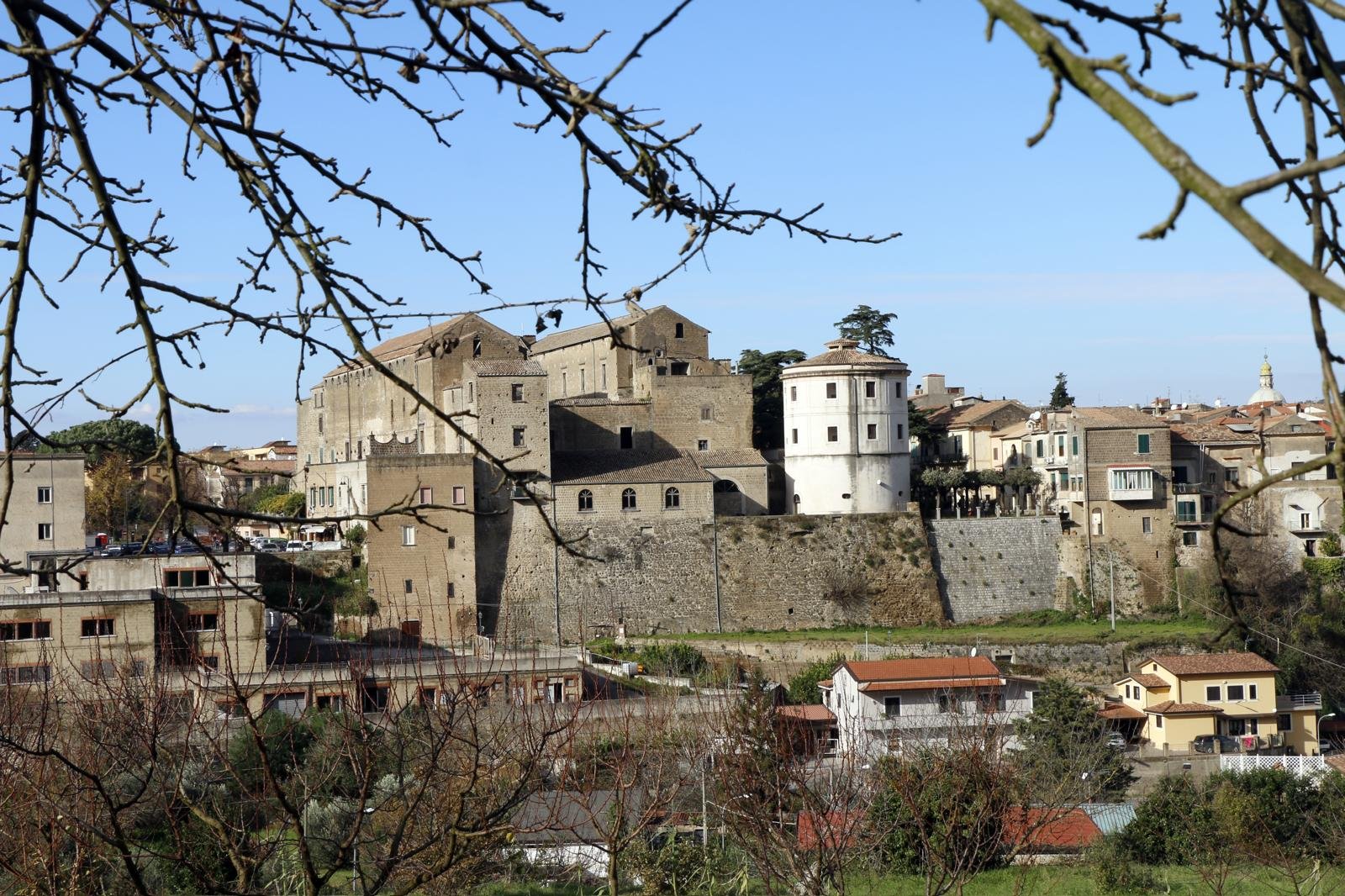
The Infiorata is the most spectacular expression of a village that rewards attention at every turn. The most dramatic view of Sant’Agata de’ Goti is from the Vittorio Emanuele Bridge, from which the system of ancient arches holding the tufa cliff town together comes fully into view. Founded as a Gothic warrior colony in the 6th century AD, the town divides into a 19th-century lower quarter and an ancient upper borgo whose white stone lanes are illuminated on clear nights by what one visitor called “a thousand brilliant stars.”
The Diocese, founded in 970, counts among its former bishops Sant’Alfonso Maria de Liguori, the 18th-century composer of Tu scendi dalle stelle, Italy’s best-loved Christmas carol. The Church of San Menna contains some of the oldest Cosmatesque mosaics in Italy, while the Castello Ducale carries mythological frescoes within its Longobard walls.
Wine and truffles
Sant’Agata sits at the heart of Campania’s Sannio wine country, where Falanghina and Aglianico are gaining growing international recognition. The historic Mustilli winery, a pioneer in Falanghina’s modern revival, is based here. The surrounding hills also produce IGP Annurca apples, a variety already noted by Pliny the Elder, and prized black truffle.
Twenty minutes away by car, the Parco Fluviale del Grassano offers kayaking on crystal-clear water among swans, colourful geese and resident beavers, a verdant counterpoint to the ancient stone of the town above.
Sant’Agata de’ Goti has been a film set, a pilgrimage destination and a place of quiet discovery for centuries. The flowers, however, are what stop people in their tracks.