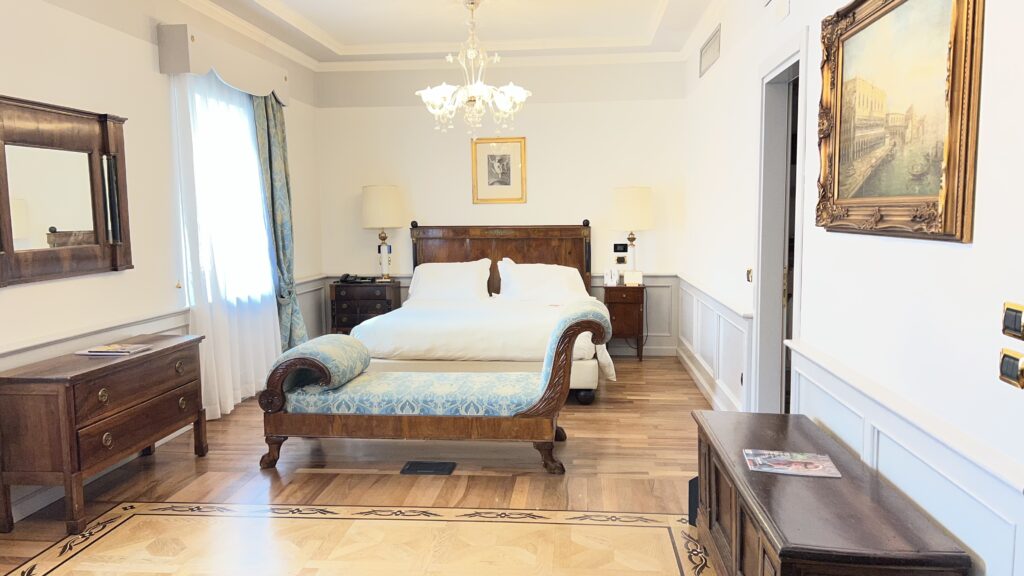
VERONA, Veneto — When guests return to the Due Torri Hotel in Verona after dinner and a stroll through the city famed for Romeo and Juliet, they find something unexpected on the pillow. Not a chocolate, but a book.
It’s been this way for ten years. Since 2016, the hotel has placed a small bilingual volume in every room, a tradition born from a deceptively simple idea: that the finest thing a luxury hotel can offer a traveller at the end of the day is a story worth reading. This year, the initiative marks its tenth anniversary with a new title dedicated to the Basilica di Sant’Anastasia, the largest Gothic church in Verona and, according to its author, one of the most underestimated buildings in Italy.
The Verona Due Torri is not alone. Across Italy and beyond, a quiet movement has taken hold in the luxury hospitality sector, with properties adding curated cultural objects alongside the minibar chocolates and branded toiletry bags. The Libri della Buonanotte series was among the first to formalise the idea, and remains one of the most sustained examples of what the industry now calls cultural hospitality.
Published by boutique Bologna-based publisher Minerva Edizioni, each Libro della Buonanotte runs to around 50 pages and is written in both Italian and English. The project conceived by Tiberio Biondi, director of the Grand Hotel Majestic in Bologna, and art historian Beatrice Buscaroli, has been since adopted by the Florence Bernini Palace and the Genoa’s Bristol Palace.
The latest volume, focussing on Verona, is written by renowned Italian journalist Anna Maria Catano, who says she found the format liberating. “It is in reality a long journalistic article,” she told Italy Now. “A small story that is a treat for the guest, and a way of promoting the beauties of this city.”
Catano leads readers through the red marble naves of Sant’Anastasia, past the gobbi, the pair of hunchback sculptures whose bellies Veronese tradition holds bring good luck to anyone who touches them, and toward the celebrated Pisanello fresco depicting Saint George and the Princess, considered the masterpiece of 15th-century Veronese painting. The painting “leaves you open-mouthed,” she said. “There is such detail in the princess’s hair, in the horses, in the two hanged men in the background.”