
VERONA — Italy’s wine estates are no longer just making wine. They are building businesses around the people who come to drink it.
The UniCredit-Nomisma Wine Monitor, unveiled on April 13 at Vinitaly in Verona, confirms that enoturismo (wine tourism) now accounts for 21 percent of total Italian wine sector turnover, generating 3.1 billion euro in 2025. That compares with an estimated 2.9 billion euro in 2024, a rise of approximately 7 percent year on year. Seventy-seven percent of producers invested in visitor infrastructure between 2022 and 2024, and winery visitor centres now receive 15 million guests annually.
“This is just the beginning, with the regions of Tuscany, Piedmont, Veneto and Trentino currently leading,” Count Gelasio Gaetani d’Aragona Lovatelli, wine expert and international business consultant, told Italy Now. “The model is producing a new wave of wine resorts built on local collaboration.”
The report, drawn from surveys of 300 wineries and 13 consortia, found that 47 percent of producers reported more wine tourists in 2025 compared with the previous two-year period, while 50 percent recorded higher enoturismo revenues. The visitor base remains predominantly domestic, with 58 percent of wine tourists Italian-born. Couples and families account for 51 percent of all visits.
Italian hotelier association Federalberghi president Bernabò Bocca described wine tourism as a “sustainable growth engine” amid broader debates about overtourism in Italy’s major cities. Meanwhile, Deputy Head of Italy at UniCredit Remo Taricani was equally direct. “The wine sector and tourism represent a fundamental pillar for the competitiveness of the country,” he said.
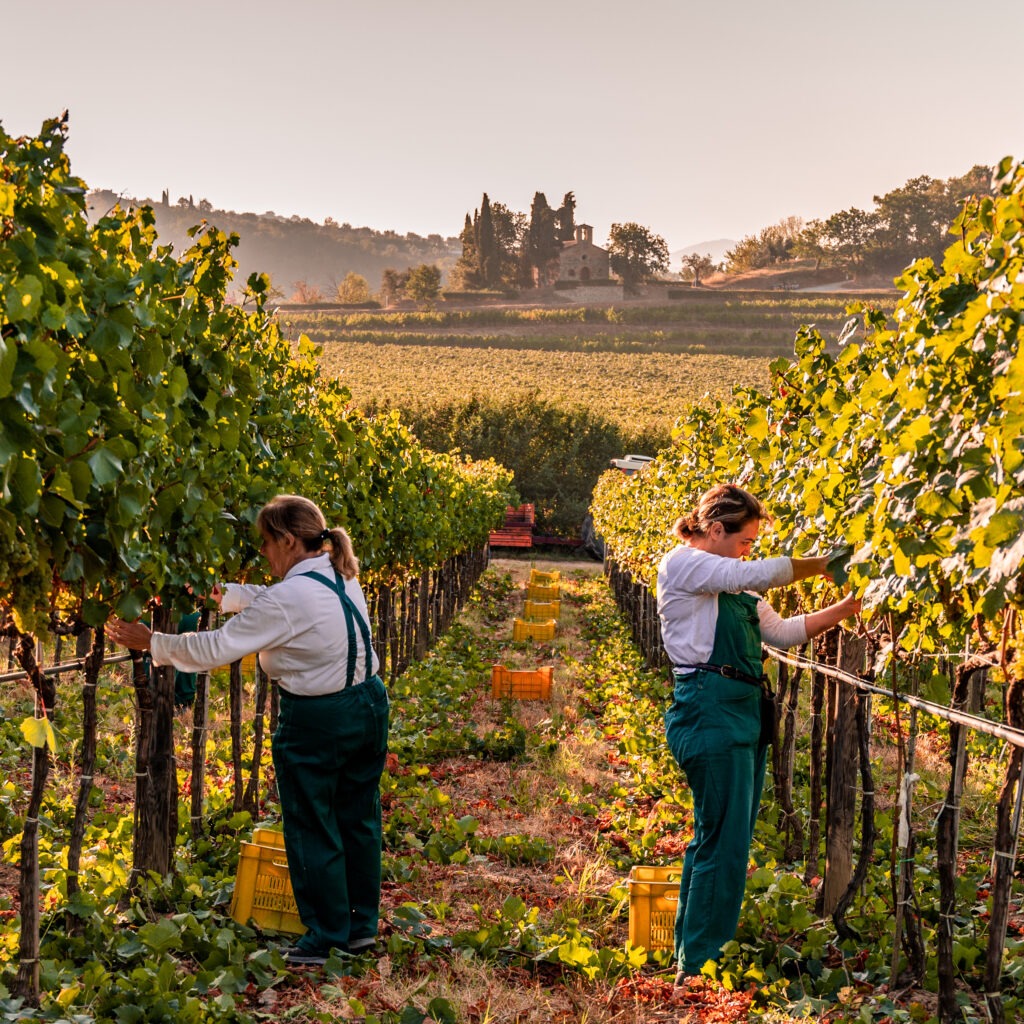
Flagship estates
The shift is most visible at established names. Cantina Antinori nel Chianti Classico in Tuscany, ranked number one by World’s Best Vineyards in recent years, pairs estate tours with dining at its Rinuccio 1180 restaurant. In Lazio, Casale del Giglio has expanded into guided tastings of regional whites alongside locally sourced food. Seventy percent of wineries now prioritise visitor facilities including rooftop terraces and overnight stays, per Nomisma.
“I would invest my own money in Sicily, Umbria, and Abbruzzo,” Gaetani said, pointing to these areas as the ones offering the highest-growth potential on the Italian market. “Across southern Italy, small family-owned wineries often close to historic villages are partnering with neighbouring activities to share costs and pool visitors, combining museum access with estate tastings.”
Denis Pantini, head of Agrifood and Wine Monitor at Nomisma, framed the broader significance. “Tourism is no longer seen as a sideline activity for promoting wine,” he said, “but a tool for territorial development closely tied to the identity of the denomination.”
The sector sustains 350,000 jobs and injects 1.2 billion euro into peripheral regions including Basilicata and Marche, according to Italian national statistics office Istat. Tuscany alone generates 800 million euro annually from wine tourism. Global wine tourism is projected to reach 20 billion euro by 2028, and Italy is well positioned to lead that growth.