CASTELFRANCO VENETO — It begins with a legend. A noblewoman, travelling to Milan, replaces a wilted orchid in her buttonhole with a head of radicchio so strikingly beautiful that onlookers declare she wears a flower they could eat. Centuries later, that story still draws crowds each December to one of northern Italy’s most quietly compelling walled cities.
The Festa del Radicchio Variegato di Castelfranco IGP (the festival celebrating the town’s protected-designation radicchio variety) returns each December, filling Piazza XXIV Maggio with producers bearing heads of the prized local leaf. Cream-white with red flecks, it has earned the nicknames “orchid lettuce” and “winter rose.” Competitors vie for best-in-show awards while visitors sample radicchio risotto, panini, and artisan bread. One visitor described the experience simply on TripAdvisor: the variegated radicchio was “a real delicacy.”
A Renaissance masterpiece
Off the main tourist circuit, Castelfranco Veneto sits on a plain of vineyards in the province of Treviso, Veneto, not far from Padua. Most visitors who find it wonder why it took them so long. Inside its red-brick medieval walls stands the house that in 1478 gave birth to one of the most influential and enigmatic painters in the history of art: Giorgio Zorzi, known as Giorgione.
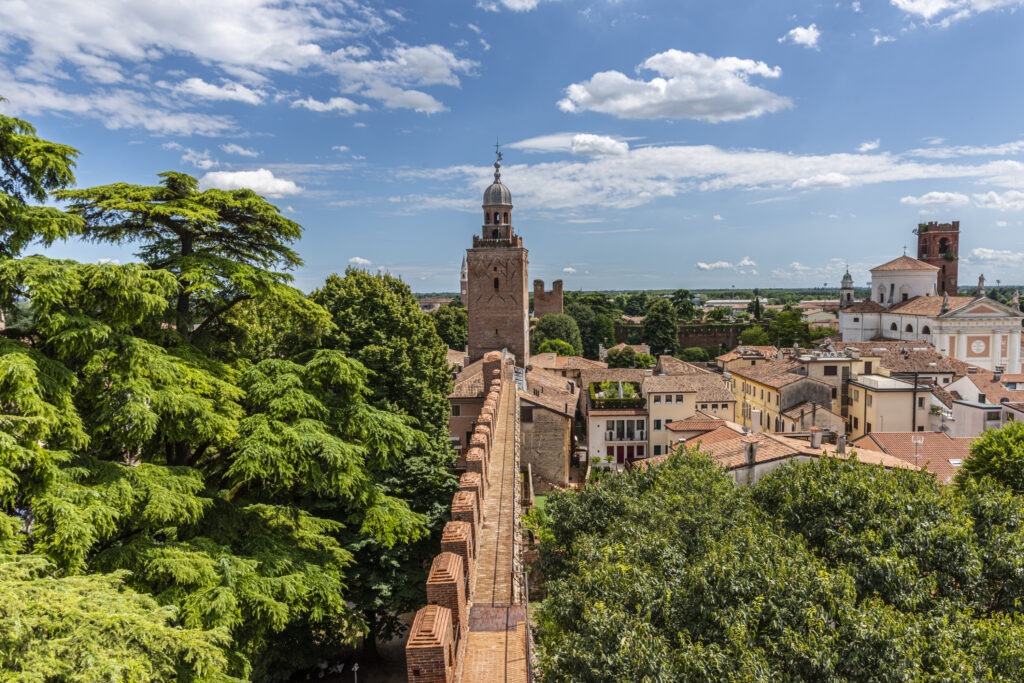
His Castelfranco Altarpiece remains inside the Cathedral of Santa Maria Assunta, while the Museo Casa Giorgione occupies his former home next door. One visitor described the medieval walls at night as producing “what an atmosphere,” struck by the beautifully lit ramparts and the animated café life within. The 43-metre Civic Tower rewards those who climb it with sweeping panoramas across the Venetian countryside.
Gardens and cycling
The Villa Revedin-Bolasco, a romantic garden of more than 1,000 trees across eight hectares, played a remarkable role in history. Days after the Liberation in 1945, partisans negotiated the German surrender here. It was named Italy’s most beautiful park in 2018.
The city is also a natural hub for cyclists, with the Ezzelini Trail following the Muson river and a scenic path to Treviso threading through natural tree tunnels. Evenings belong to Piazza Giorgione, the animated square outside the walls lined with cafés and historic palaces, where an aperitivo (pre-dinner drink) feels less like a tourist activity and more like a local rite.