


L’AQUILA — Something is happening in the villages around l’Aquila that demographers did not predict and tourist brochures have not yet caught up with. The fortresses are starting to fill with music. Shepherds defying all odds remain on the plateaus. And women continue to wear 400-year old dresses.
This spring, starting March 27, the music school at Calascio will open for another season, drawing students and teachers from across Europe into the convent of Santa Maria delle Grazie for masterclasses in 18th-century repertoire. Featuring singing, composition as well as film score preparation, the village is transformed into a sprawling creative laboratory through the end of July.
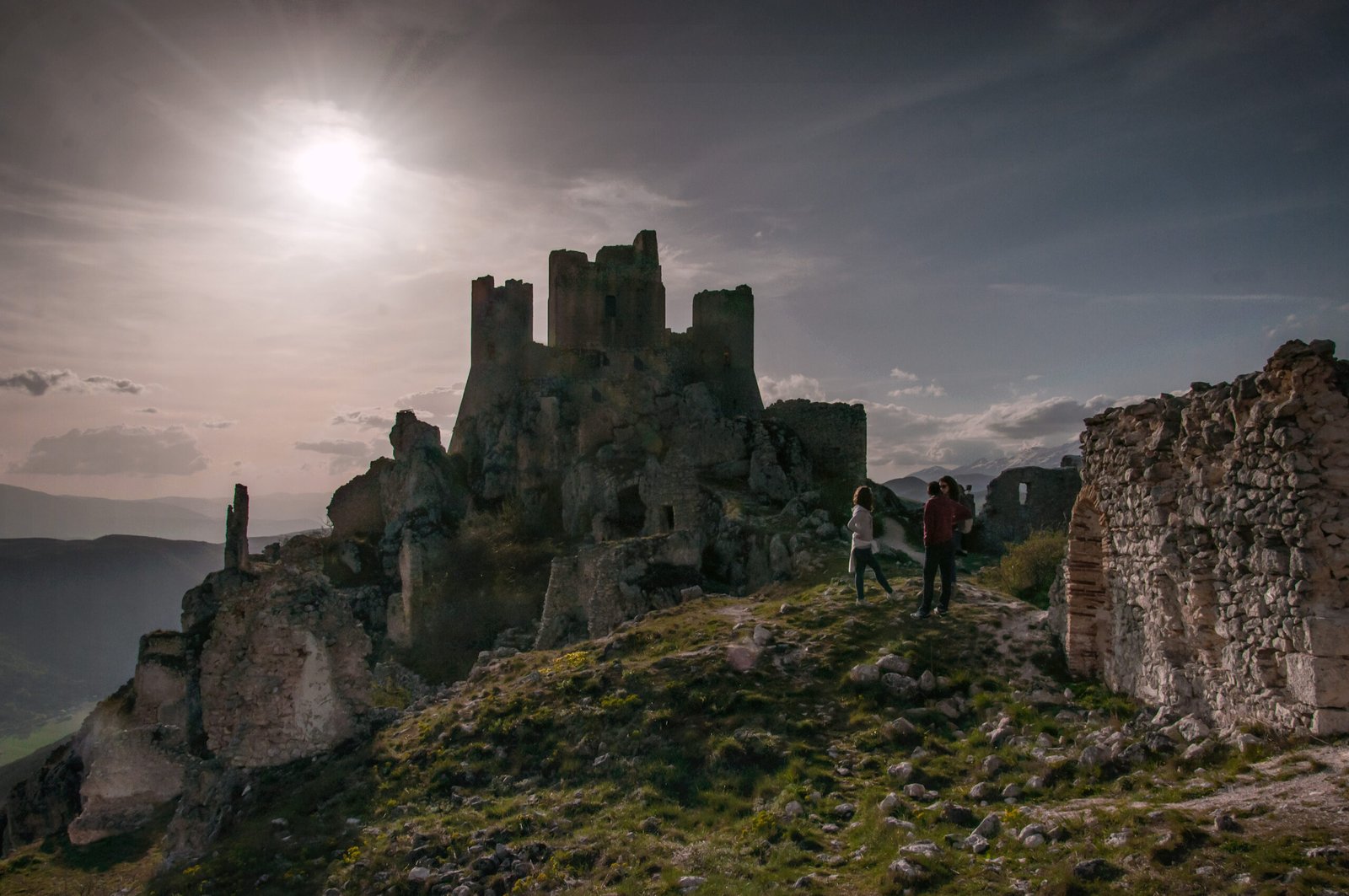
The fortress above the village has stood at 1,460 metres since the 15th century. In the middle ages Calascio grew rich on the Florentine wool trade, while in the 1980s it appeared in Ladyhawke. Today, with fewer than 100 souls living within its village walls, musical maestro Orazio Tuccella will fill its ancient rooms with young musicians who eat in the village, walk the fortress paths, and return the following year. This recently-launched festival only lasts a few days, though Tuccella says he is building something he intends to last decades.
At Castel del Monte, shepherds walk their flock across the plateau where millions of sheep once made the great seasonal journey between Campoimperatore and the lowlands of Apulia over the centuries. A small museum tells that story through the iron-spiked collars that shepherd dogs once wore against wolf attacks. The wolves are still on the mountain, and so are the shepherds.
In the glacial valley of Scanno, reached by a road that narrows until the light nearly disappears, older women still wear the abito di Scanno daily, a dress unchanged for four centuries, with workshops keeping the tradition alive for new generations. Instead, on the Navelli plateau each October, the fields turn purple with crocus flowers. The Cooperativa Zafferano di Navelli has harvested its protected-designation saffron here for 700 years, each stigma picked by hand in the hours after the crocus opens. In Goriano Valli, the community cooperative Cuore delle Valli has created a Museo Diffuso (distributed museum) across 16 village houses, each room a different chapter of Apennine life.

Ancient recipes too
Lamb raised on the plateau appears on almost every table, roasted slowly or folded into chitarra pasta with a ragù that has been cooking since morning. Pecorino aged in mountain caves, saffron from Navelli, torrone from L’Aquila: this is a cuisine built from altitude, patience, and very good ingredients. It has to be eaten here.
For visitors wanting to reach these places without getting lost on unmarked mountain roads, a lone local entrepreneur has spent years making that journey possible. Marianna Colantoni founded Taste Abruzzo out of a conviction that these villages deserved a wider audience, and has built a platform that connects visitors directly with the producers, cooperatives, and communities that bring them to life. Marianna Colantoni founded Taste Abruzzo out of a conviction that these villages deserved a wider audience. Her platform connects visitors directly with the producers, cooperatives, and communities in this article, building itineraries that would otherwise take years of local knowledge to assemble.