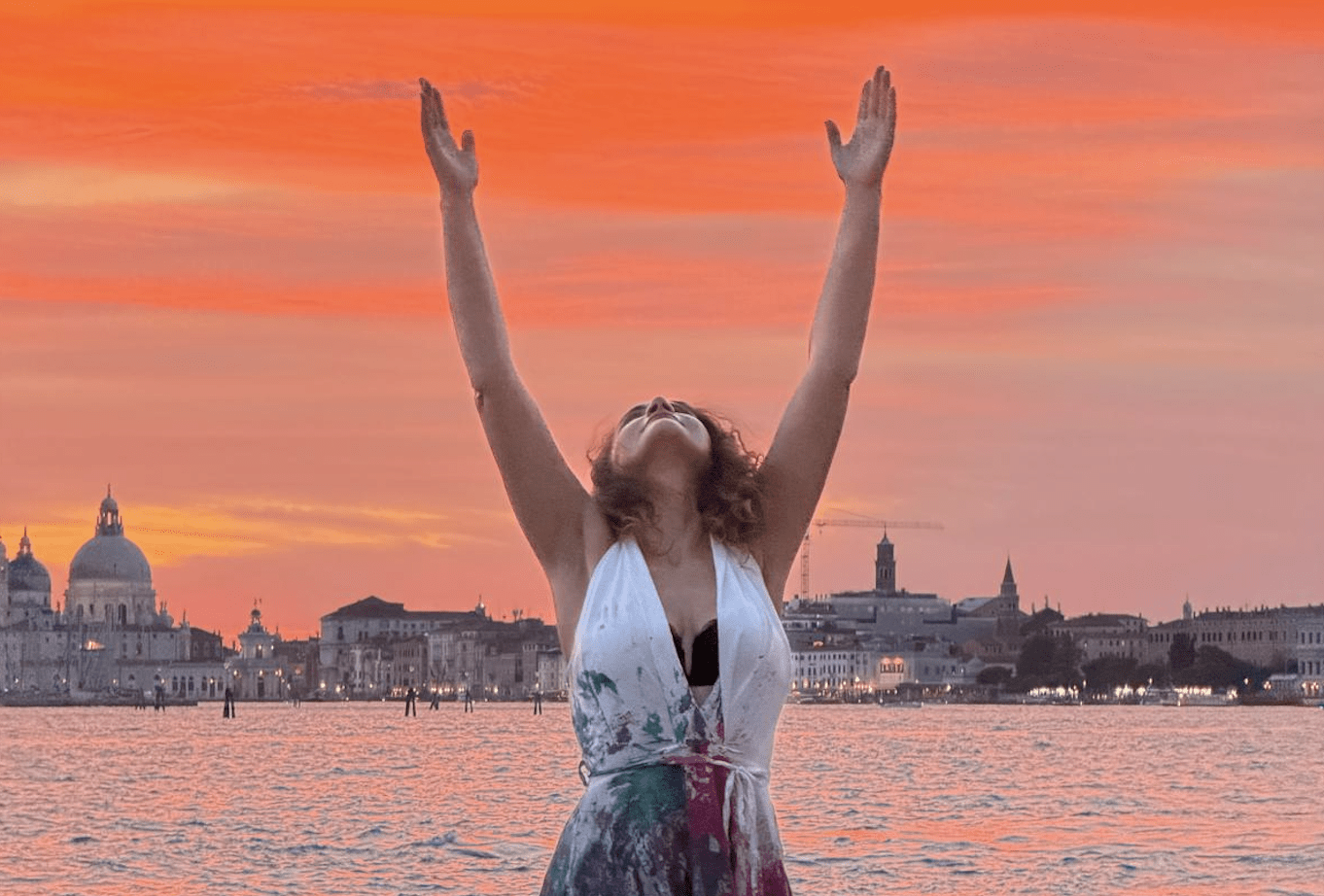

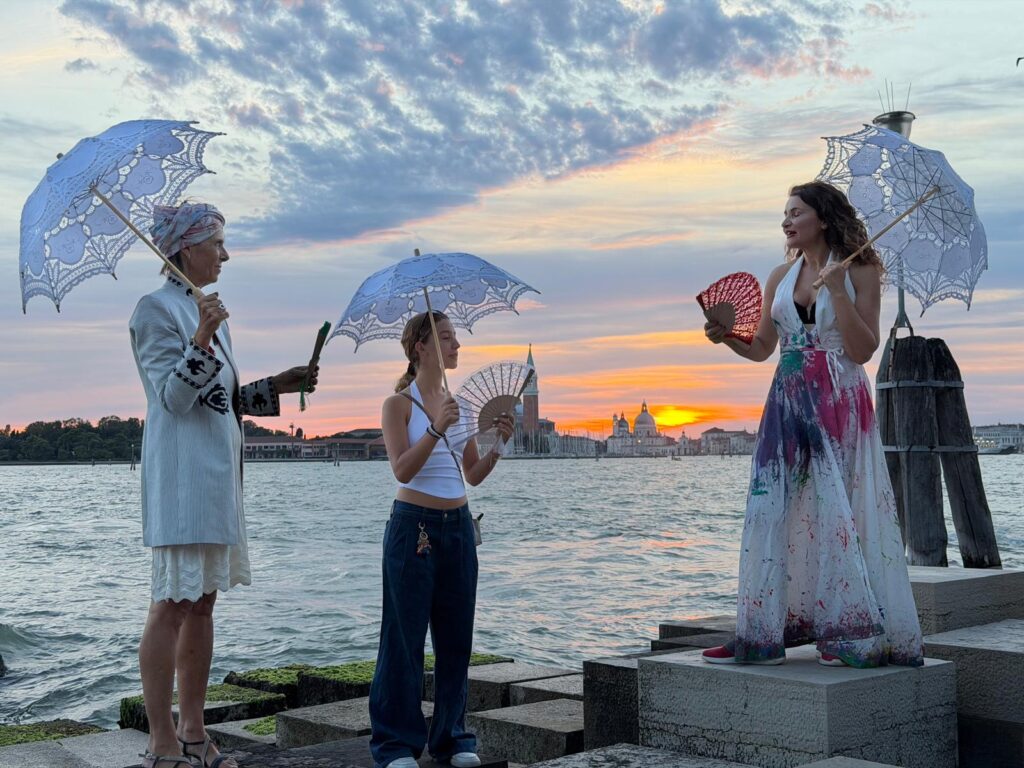
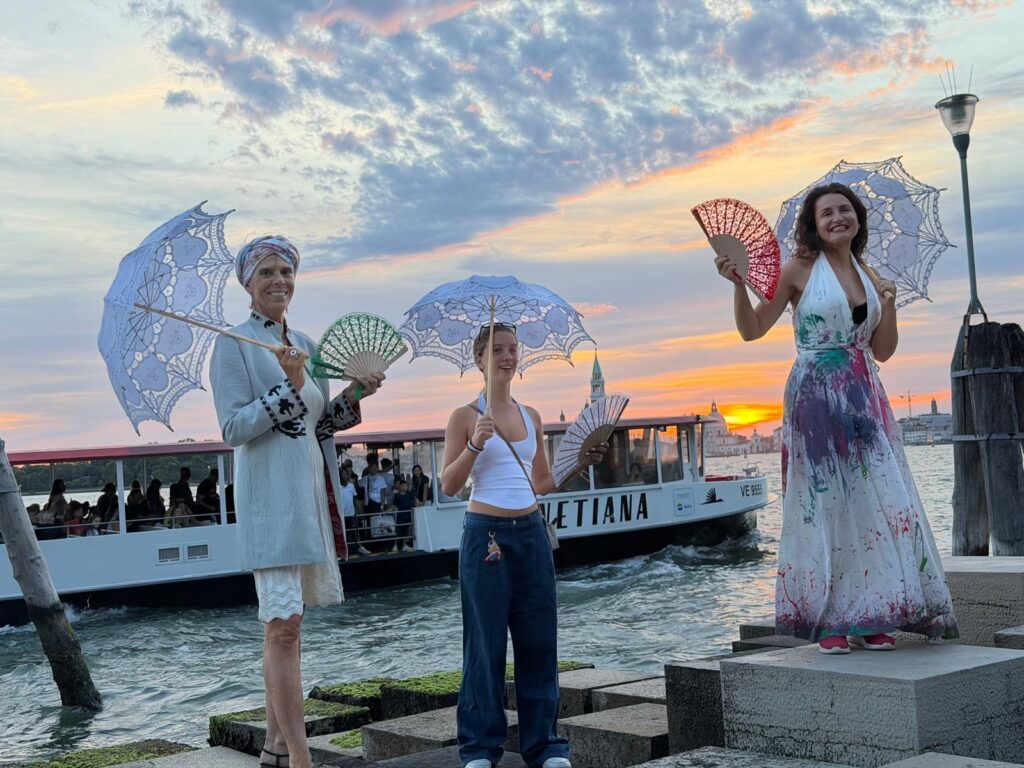
VENICE — Artist and sculptor Francesca Chialà led a sunset flash mob on September 13 at the Giardini della Biennale, before Augusto Murer’s monument to Venice’s partisan women, timed to the constitutional article protecting free speech, as the activist argued Italy lags on new European press rules.
Roberto Dutesco, the photographer known for the wild horses of Sable Island and a participant in the performance, called it an act of memory. “Remembrance is something that steers and guides us forward. It’s a way to navigate time and culture,” Dutesco said, “One person can change the world, and today, in a magical way, Francesca brought people together, believing that it’s possible.”
Chialà, a sociologist, performer and founder of the artistic movement La Festa delle 7 Arti, built the gesture around La Donna Vitruviana, her mosaic sculpture of a couple in yoga’s tree pose. Her 7 Arti choir sang the names of the 21 Madri Costituenti, who drafted the constitution, alongside Article 21, protecting press and speech freedoms.

A wounded monument
The Giardini’s monument has its own history of attack. Leoncillo’s original tribute to partisan women, unveiled in 1957, was destroyed by a neofascist bomb in 1961, leaving only Carlo Scarpa’s base. Murer’s replacement, installed on that base in 1969, shows a bound woman washed by the tide.
Before the flash mob, volunteers ran an unplanned cleanup, clearing plastic bottles from Scarpa’s base, an act of care for a work commemorating violence, Chialà said, fitting a gathering meant to protect, not erode, those freedoms.


The regatta’s articles
The timing was deliberate. Hours earlier in the Bacino di San Marco, 100 wooden boats raced in the 25th Coppa del Presidente della Repubblica, a cup then-President Ciampi of Italy created in 2001 for a tradition once called the hundred sails. Each boat carried a constitutional article at its bow.
This year’s edition, marking eighty years since 1946’s constituent election, echoed the Venice Art Biennale’s own 2026 theme, In Minor Keys, centering overlooked voices. Organizers cited the European Media Freedom Act, the EU law guarding press pluralism, in force since 2025 but not fully applied in Italy.
Under a monument bearing the marks of one attack on free expression, the singing of 21 names was less a celebration than a reminder that the freedoms they wrote down need defending.