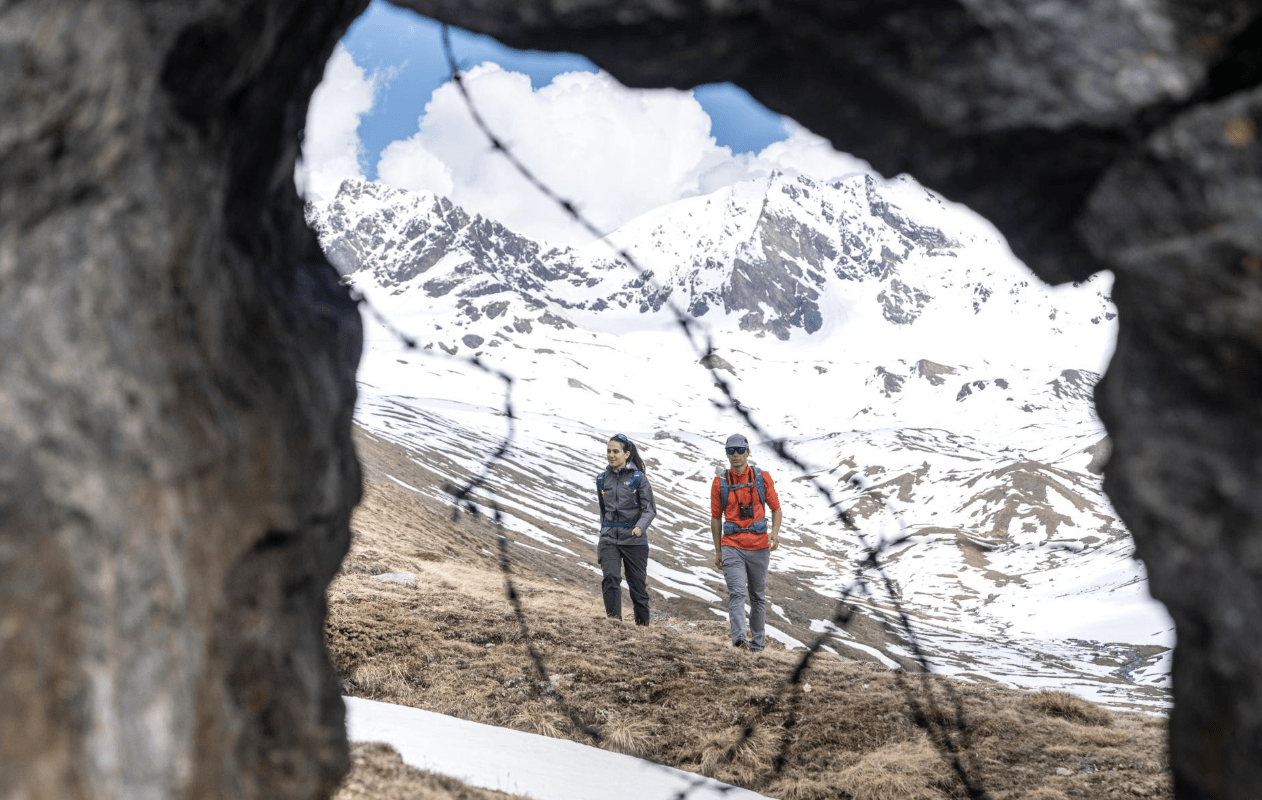

BORMIO, Sondrio — A summer of guided excursions on the Stelvio Historical Trek opens on July 21, when the Stelvio National Park leads the first walk of the season to the trenches, barracks, and lookout posts where the First World War was fought at more than 3,000 metres.
The routes climb from the Bormio side of the park, in Lombardy, retracing the front of the Guerra Bianca (the White War), fought between Italian and Austro-Hungarian troops from 1915 to 1918 at some of the highest altitudes of the entire conflict. Restoration work by the park has returned trenches cut into rock, artillery posts, and entire military villages to view.

Three signposted itineraries are graded by difficulty. The gentlest leads into the Valle dei Vitelli to Le Buse, a military village of 17 buildings arranged in a semicircle, reached in around two hours and 40 minutes over 5.8 kilometres with 436 metres of ascent. Marmots, chamois, and ibex graze the surrounding summer pastures, and walkers may spot a bearded vulture overhead.
Above the pass
Fitter hikers can push on to the Filon dei Mot and the 3,092 metre summit of Monte Scorluzzo, an eight kilometre route with 797 metres of climb that passes a wartime Italian observatory and front line positions that once dominated the Stelvio Pass. The most demanding option is the 11 kilometre loop over the 3,031 metre Piz Umbrail and the Forcola di Rims, a ridge walk on the border between Italy and Switzerland with short sections secured by chains, best attempted with Bormio’s Alpine Guides.

Summer calendar
The park’s programme continues on August 4 with a walk to a wartime shelter on Monte Ortles, on August 18 at the Gavia Pass, and on September 1 back at Le Buse. Bormio’s Alpine Guides, accompanied by a historian, lead outings on July 26, August 8, and August 22, while Thursday history treks run from Santa Caterina Valfurva until September 3.
The routes grew out of a project by the Lombardy region, the regional forestry agency ERSAF, and the Museum of the White War to interpret the Italian and Austrian front directly on the ground. More than a century on, paths built to supply a war now carry visitors at a walking pace, turning one of Europe’s harshest battlefields into a place to read the landscape slowly.