PADUA — Every June 13, Padua, in the Veneto region of northeastern Italy, stops in its tracks. The Feast of St Anthony draws pilgrims to the great Basilica of Sant’Antonio, known locally as Il Santo (the Saint), a figure so revered that the city traditionally refuses to speak his full name.
Anthony died on June 13, 1231, aged just 35, and was canonised within a year, one of the fastest processes in Church history. Pilgrims leave handwritten notes on the Basilica’s walls in gratitude for prayers they believe have been answered. Bread shops bake extra rolls, bought and given freely to friends and neighbours as offerings of thanksgiving. Those wishing to go deeper can retrace the Last Path, the route Anthony walked in June 1231 from Camposampiero to Padua, passing through the sanctuary at Arcella where he died.
A UNESCO city
Padua’s greatness extends far beyond its saint. In 2021, UNESCO recognised the city’s extraordinary concentration of 14th-century fresco cycles, known as Padova Urbs Picta (Painted City of Padua), as a World Heritage Site. Spread across eight sites, the cycles feature work by Giotto, Giusto de’ Menabuoi, and Altichiero da Zevio, among others. The Scrovegni Chapel alone, with Giotto’s luminous narrative scenes covering every surface, draws visitors from across the world. Booking in advance is essential; entry is timed and strictly limited.
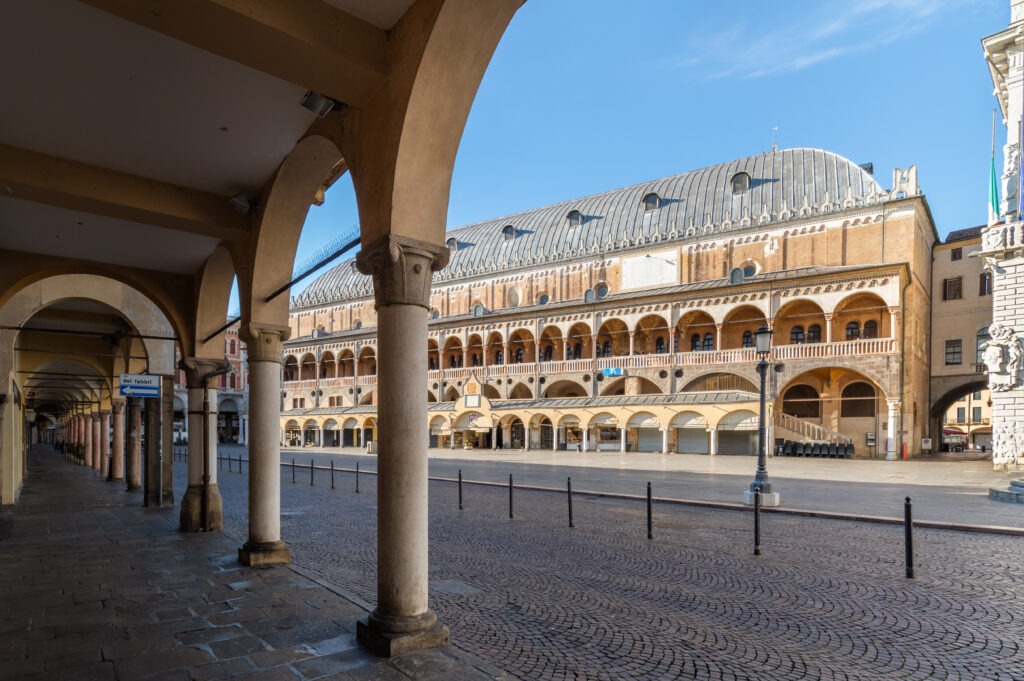
The Palazzo della Ragione, dating to 1218, houses a vast medieval astrological cycle alongside a giant wooden horse and the notorious Vituperio stone, on which insolvent debtors were once obliged to perform a humiliating public ritual. On the ground floor sits the Sotto Salone, the oldest covered market in Europe, where butchers, delicatessens and bars operate much as they always have.
Oldest garden
The Botanical Garden, founded in 1545, is the oldest university botanical garden in the world still in its original location, housing over 3,500 species, including a palm planted in 1585. Prato della Valle, once a swamp, now a choreographic island square ringed by statues, covers 88,620 square metres, making it the largest square in Europe after Moscow’s Red Square. And the legendary Caffè Pedrocchi, which stayed open day and night from 1831 to 1916 and earned the nickname “the café without doors,” remains a meeting place for students, artists, and anyone who appreciates a perfectly made spritz.
Padua does not announce itself loudly. It simply delivers.