
ROME — After nearly two thousand years underground, the Baths of Trajan have opened to visitors for the first time this month, and Rome’s city hall says the discovery inside changes what is known about the ancient capital’s grandest leisure complex.
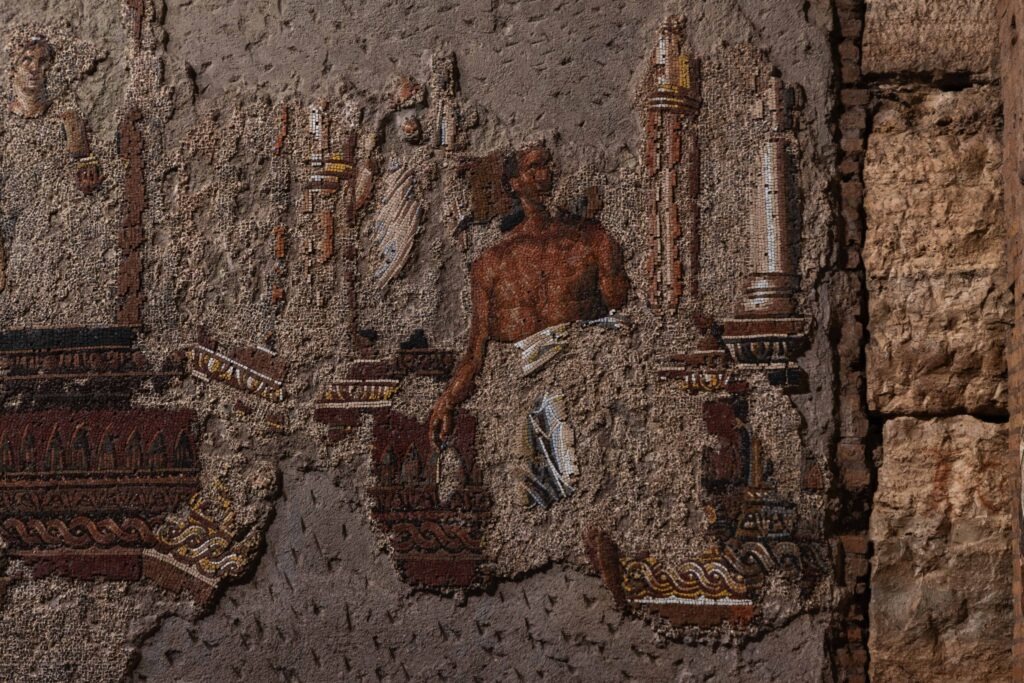
Mayor Roberto Gualtieri called the site’s central hall “the largest fresco and the largest mosaic of the Roman era ever discovered,” adding that they are “marvellous works that are truly unique in the world for their artistic beauty.”
An architect’s ambition
The baths were built in the year 109 by Apollodorus of Damascus, the architect behind Trajan’s Column and Trajan’s Forum, on Colle Oppio, the hill above the Colosseum. The complex once covered sixty thousand square meters, roughly the size of eight football pitches, and functioned as much as a social club as a place to bathe.

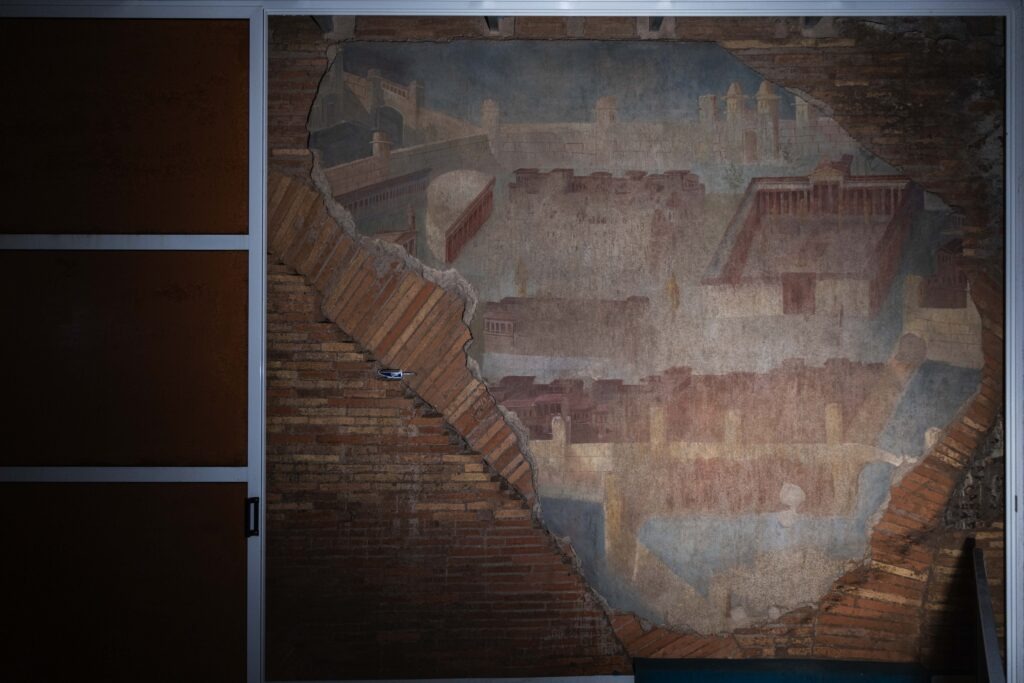


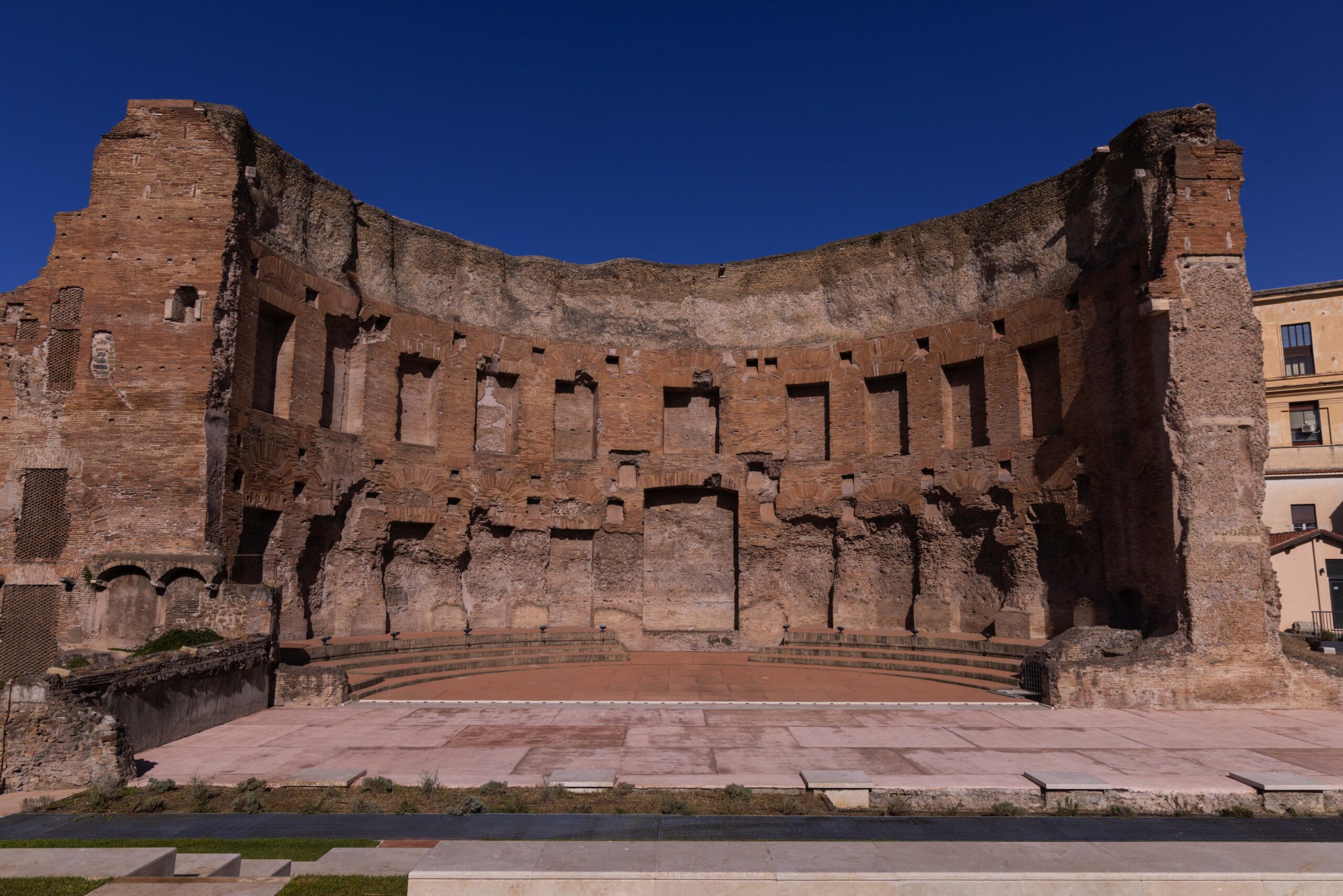
Restorers uncovered two works during the dig. “The Painted City,” a fresco depicting an imagined urban skyline, covers one wall. Facing it is a mosaic nicknamed “The Muse and the Philosopher,” set into the floor of what was once a covered hall. A semicircular exedra nearby is being prepared for concerts and exhibitions once restoration work is complete.
Fifteen at a time
For now, access is deliberately narrow. The site opens on weekends only through the rest of September, with groups capped at fifteen visitors, a restriction the sovrintendenza (the city agency responsible for Rome’s archaeological sites) says will ease as scaffolding comes down section by section.
That scarcity has done nothing to slow demand. Weekend slots already booked out within days, and Roman cultural blogs describe waiting lists reaching into next month. For a monument that spent nineteen centuries as rubble and, more recently, as a quiet public park most tourists walked straight over without a second glance, the queue is its own small kind of vindication.



Neighbors underground
The baths sit inside Colle Oppio Park, a five minute walk from the Colosseum and the Roman Forum, on ground riddled with older ruins. Nero’s Domus Aurea (the emperor’s golden palace, buried after his death) lies partly beneath the same hill, and archaeologists suspect Trajan’s engineers reused parts of it as foundations.
Tickets, once the full complex opens, will likely be sold through the Parco Archeologico del Colosseo (Rome’s Colosseum Archaeological Park, which also manages the Forum). Officials have not set a date, saying only that each hall will open as restorers finish it.