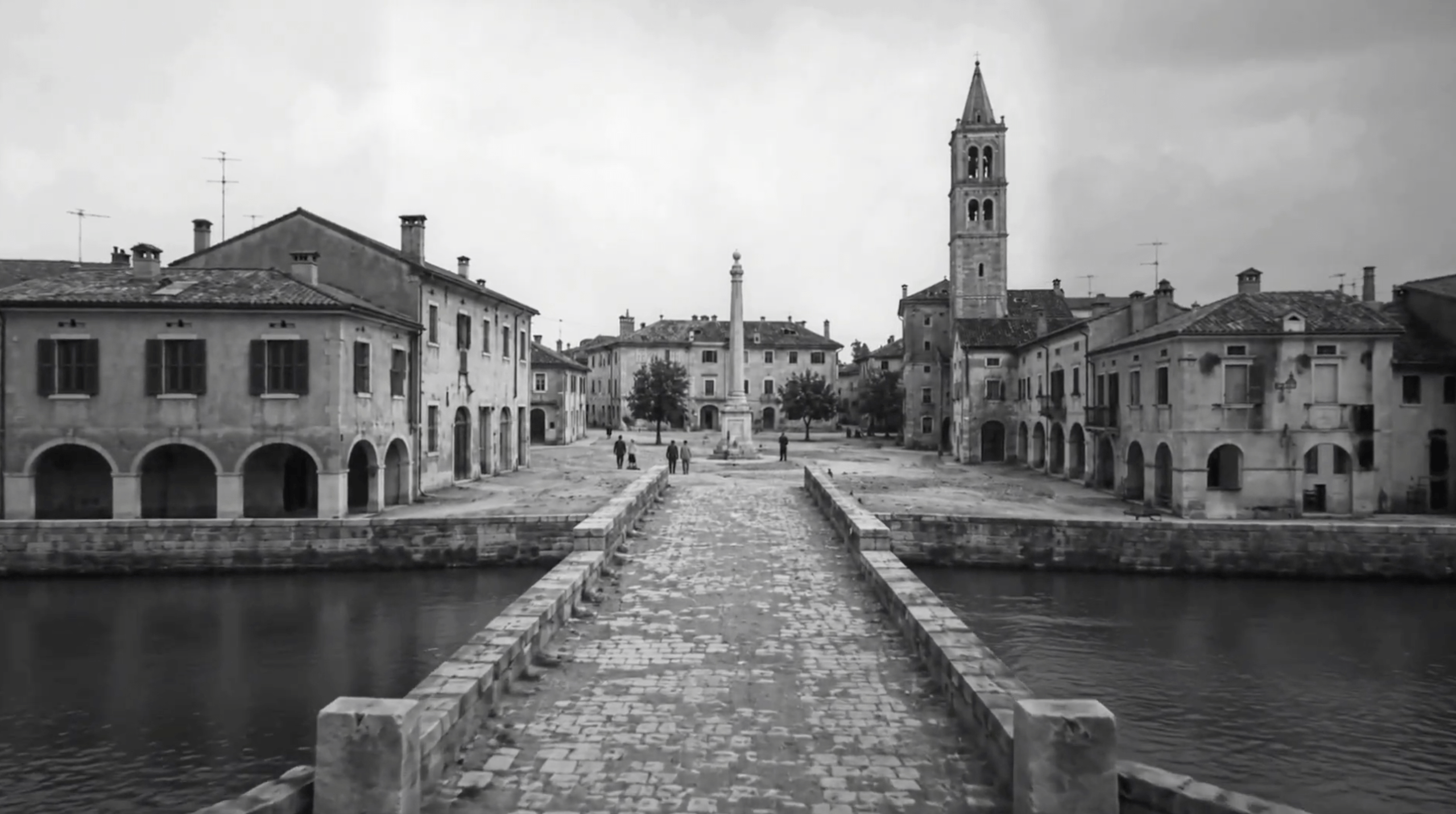

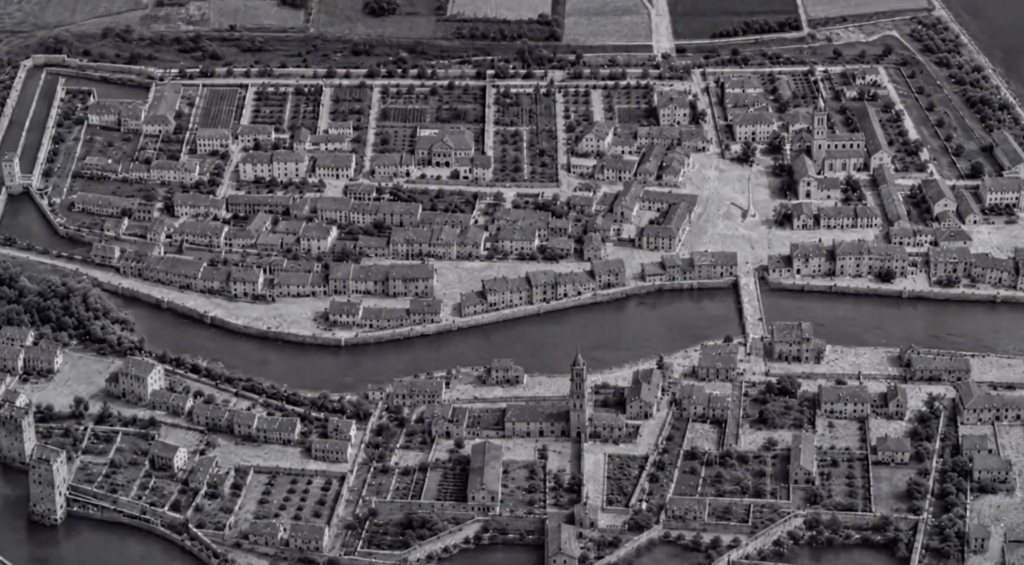
LEDINARA, Veneto — A 1690 map of this small town in Italy’s Veneto region has been rebuilt as a virtual city visitors can walk through with a headset, one of three experiences now open through November as part of a wider national digital heritage pilot.
The project, called Lendinara Digital Heritage, was rolled out over the summer as one of six proposals chosen nationally under an Italian government call for accessible digital culture, funded through Italy’s National Recovery and Resilience Plan, known by its acronym, PNRR.
“The July 31 event is an important step in a project that grew inside our Cittadella della Cultura, the town’s library, archive and museum, over more than a year,” said Mayor Francesca Zeggio, “and it opens the decisive phase of our Museo del Risorgimento museum’s new layout and new digital platforms for our art heritage.”
Map and temple
The map, drawn by surveyor Gaspare Mazzante and held in the town hall’s Sala Canoziana, was scanned, restored and rebuilt in three dimensions, showing streets, bridges and the Adigetto canal. Visitors first enter a 3D scan of the hall itself, then move into the historic town.
In the garden of Ca’ Dolfin-Marchiori, augmented reality restores the Tempio-Serra, a small wooden temple built into a nineteenth century landscape design and later demolished. Rebuilt from historic photographs and plans, the reconstruction marks a clear line between what is documented and what is interpreted.
At the Museo del Risorgimento museum, devoted to Italy’s nineteenth century unification movement and housed in Palazzo Boldrin, three digital avatars introduce themselves to visitors. They include Alberto Mario, a Garibaldino writer born in Lendinara in 1825, his wife, English journalist Jessie White, who backed the Italian cause in the Daily News, and journalist Adolfo Rossi, who chronicled post-unification Italy. The avatars are a first step toward a short film.
Emiliano Fabris, director general of the Galileo Visionary District, the Padua science park behind the experiences, said the project showed innovation could reach places often dismissed as peripheral. “Spreading innovation across these territories is one of our park’s core missions,” he said.
Lendinara joins a wider national push to bring virtual and augmented reality into small heritage sites, echoing projects at larger institutions. “The challenge now is not about deploying the highest technologies, but about making technology emotionally connected to feelings and events that make the visitor interact with it and affect their sense of belonging,” said Osama Elemary, a Canadian museum strategy consultant. “It succeeds only if technology does not dominate the spirit of the project, as Parks Canada showed by reviving Quebec City’s buried historic fortifications.”
The project closes in November, after which its content stays available in the museum, around town and remotely, for residents, tourists, schools and researchers.