VENICE — We met Lorenzo Marsili, director of the Berggruen Institute Europe, inside Casa dei Tre Oci on the Giudecca, the 1911 artist’s studio that now serves as the Institute’s European home. He told us Venice was chosen precisely because it is no nation’s capital, a universal city that frees the Institute from being read as German, French or Italian. The Berggruen Institute, founded in Los Angeles in 2010 by Nicholas Berggruen and Nathan Gardels, now runs three Venetian buildings and hosts thinkers from Carlo Rovelli and Giorgio Agamben to Slavoj Žižek and Peter Sloterdijk, publishing their conversations as books. Marsili, who co-founded DiEM25 with Žižek and lives between Venice, Berlin and Palermo, also flagged two unmissable spring shows, a Joseph Kosuth solo at Casa dei Tre Oci and a Hans Ulrich Obrist-curated exhibition on protocol art at Palazzo Diedo.
Q. You call Venice a laboratory for planetary thinking. That is an ambitious claim for a city most people associate with gondolas and spritzes.
“Venice is held together by hundreds of bridges that connect the islands and transform them into a single political space. That is precisely what we need today in a world that is fragmenting, where nation-states stand guard one against the other. We need bridges that transform our planetary cacophony into a new form of multilateral cooperation.”
Q. The Berggruen Institute was founded in Los Angeles in 2010. What is it actually for?
“It tries to solve the greatest challenges of the 21st century. We are privileged to think out of the box, to engage in intellectual and technological experimentation without the constraints of think tanks, universities or NGOs. We are an intellectual hub where thinking can be experimental, courageous and dare to make mistakes. We tackle the contradictions of today, whether technology, democracy, the unequal distribution of wealth, or the planetary crisis.”
Q. Why Venice rather than Berlin, Paris or Brussels?
“If the Institute were based in Berlin, it would very quickly be felt as a German institute, in Rome as Italian, in Paris as French. Venice is not the capital of any nation state. It is everyone’s city and everyone’s dream. And it is the most beautiful city in the world, so everybody loves to come.”
Q. You now have three buildings, Casa dei Tre Oci, Palazzo Diedo and Palazzo Malipiero. How do they differ?
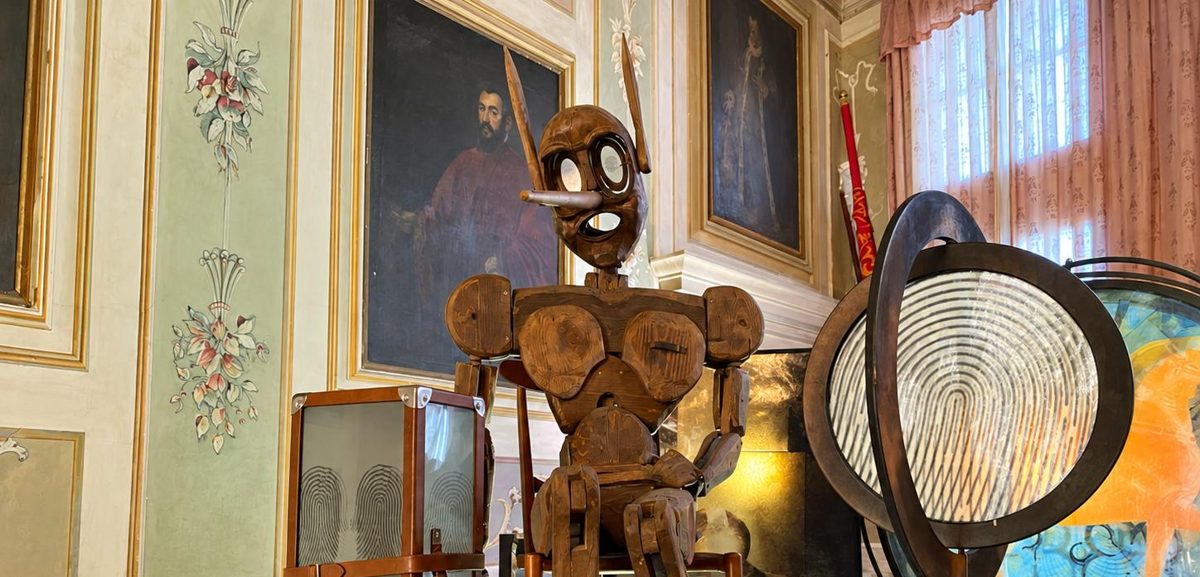
“Casa dei Tre Oci was built in 1911 by the artist Mario de Maria as his studio and family home. We keep that spirit, a house where thinking happens through conviviality. Palazzo Diedo, an 18th century palace that was once the court of justice of the Venetian Republic, hosts our arts and culture exhibitions. Palazzo Malipiero, on the Grand Canal with a rare garden, is undergoing major restoration and will open more regularly in two years.”
Q. What kind of conversations actually happen here?
“Three pillars. Foundational philosophy with thinkers like Žižek and Sloterdijk, asking what it means to be conscious in the age of artificial intelligence. China, building bridges with leading Chinese intellectuals like Wang Hui and Zhao Tingyang. And Europe, its political future and its role in a fragmenting world that needs a united continent making its voice heard.”
Q. Your own path is unusual, philosophy and sinology in London, co-founder of DiEM25, books, plays, three cities. How does it all feed into this?
“Europe, China and philosophy are the three guiding axes of my life. I like to think philosophically in a way that has an impact on reality, in dialogue with traditions beyond the Western one. My path and the Institute’s are equally eclectic, but very much in connection.”
Q. For a visitor next spring, what should they look out for?
“At Casa dei Tre Oci, a Joseph Kosuth exhibition. At Palazzo Diedo, a collective show curated by Hans Ulrich Obrist with Holly Herndon and Mat Dryhurst on protocol art, where artists create the conditions for the production of the artwork rather than the artwork itself. And visit the gardens of the Redentore behind the church, recently reopened, a 16th century oasis of beauty and quiet.”
To listen to the Italy Now podcast with Lorenzo Marsili, click here.