

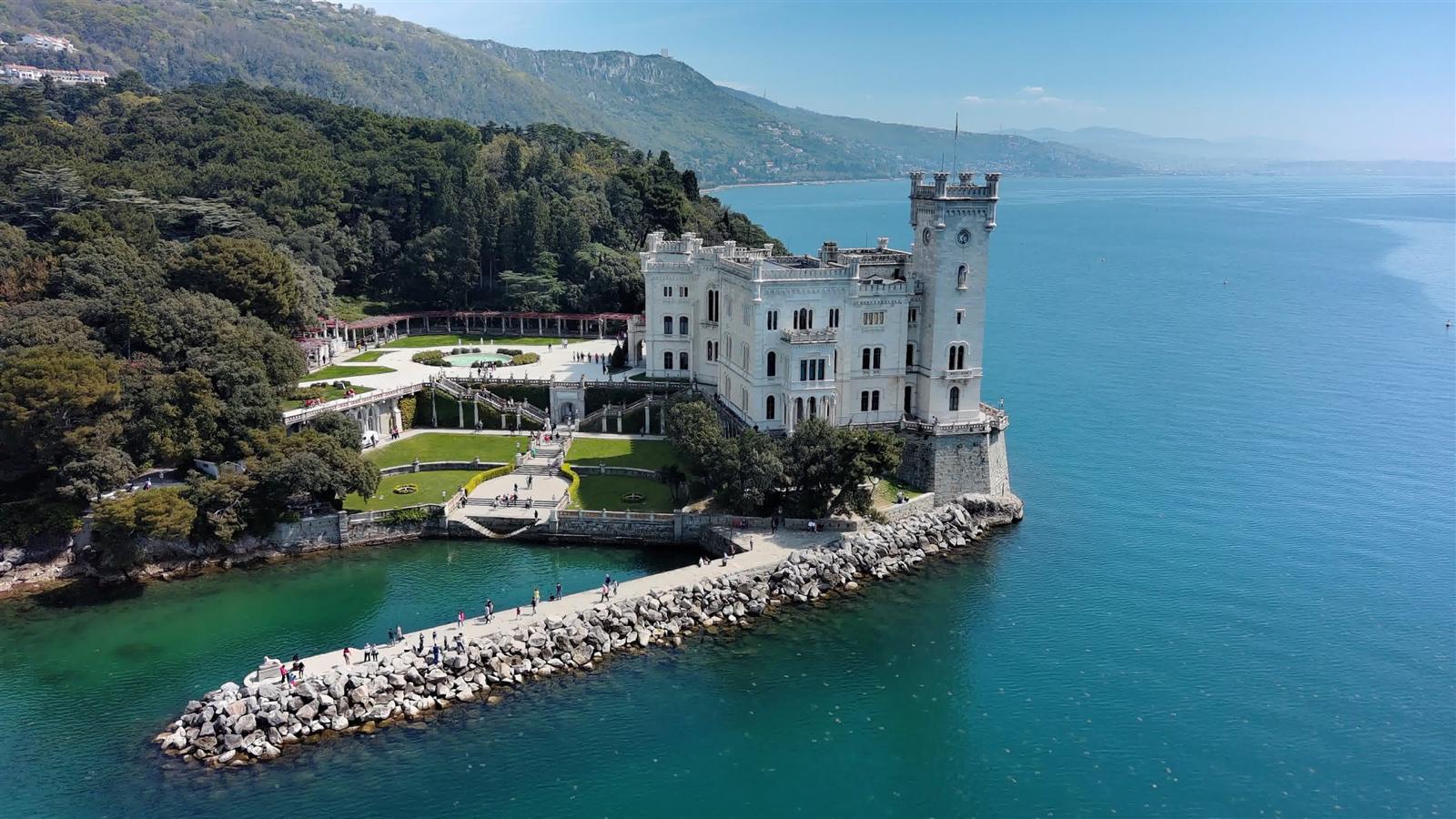

TRIESTE — The stables of Miramare Castle on the Adriatic promontory just outside Trieste are hosting until November 1, 2026 A Sphinx Attracts Him: Maximilian of Habsburg and the Egyptian Collections Between Trieste and Vienna, reuniting a remarkable collection with the place its owner always intended it to rest.
Archduke, castle and interrupted dream
The story begins in 1857, when Emperor Franz Joseph, keen to distance his more ambitious younger brother from Vienna, appointed Archduke Maximilian Rear Admiral of the Imperial Navy and Viceroy of Lombardy-Venetia. That same year Maximilian married Princess Charlotte of Belgium and commissioned Miramare, the couple’s seafront residence, completed in 1860. An avid Egyptophile, as many 19th-century royals were, Maximilian planned a museum within the castle’s magnificent park to house his growing collection of ancient Egyptian artefacts. The dream was never realised.

In 1864, stripped of his viceregal title by the Emperor, Maximilian accepted an offer to become Emperor of Mexico, naively believing he could end the country’s brutal civil war. His enthusiasm for ancient Egypt followed him. He dispatched an emissary who purchased some 1,200 artefacts, including several fakes, and shipped them to Mexico. Maximilian planned to install them in Mexico City’s Museo Nacional as the foundation of a major cultural institution. The ship reached Veracruz, but after Maximilian was executed by anti-royalist Republicans in 1867, it returned to Trieste with its cargo undelivered.
Sphinx and collection finally reunited
From 1868 Miramare passed under direct Viennese administration, and by 1891 the Egyptian collection had been transferred to Vienna’s Kunsthistorisches Museum, where it has remained ever since. The sole exception is the pink-grey-black granite sphinx at the head of the castle’s small harbour jetty. Too heavy to transport, she dates to the second century BC and has stood watch at Miramare since around 1860. After November 1 she will be alone again.

The exhibition brings together around 100 of the roughly 2,000 ancient Egyptian artefacts Maximilian collected across his lifetime. Its two centrepieces are a green schist sphinx of the pharaoh Senwosret III, which serves as the exhibition’s logo, and a life-size black granite statue of the official Sobekemsaf, a rare object given that life-size or larger statues were typically reserved for pharaohs alone.