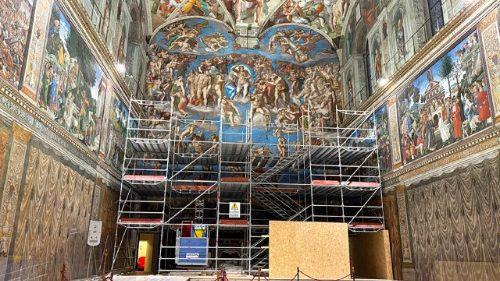
ROME — Restoration experts at the Vatican have begun a new phase of conservation work on Il Giudizio Universale (The Last Judgement), the monumental fresco Michelangelo painted on the altar wall of the Sistine Chapel between 1536 and 1541. The project, described by officials as “extraordinary maintenance,” began February 1 and is expected to last three months.
A film of salt and breath
The intervention targets a pale residue that has gradually settled on the painted surface since the last major restoration in the early 1990s. Conservators have identified it as calcium lactate: a salt that forms when lactic acid from human perspiration reacts with calcium compounds in the plaster. Millions of visitors pass through the chapel each year, and the accumulated warmth, humidity, and breath of that crowd leaves a measurable mark on a fresco nearly 500 years old.
The cleaning method is deliberately gentle. Sheets of washi (Japanese paper) soaked in distilled water are applied briefly to the surface and then lifted away, drawing the salt deposits with them. Teams of conservators work in monitored shifts, with continuous readings of humidity and temperature taken throughout.
“People are going to be able to see Michelangelo’s magical, marvellous colours again,” said Barbara Jatta, director of the Vatican Museums.
Open, but veiled
Temporary scaffolding runs along the altar wall, and a high-resolution reproduction covers the fresco during parts of the work. The chapel itself remains open. The project is led by Paolo Violini, head of the museums’ restoration laboratory, which employs dozens of specialists charged with the ongoing care of the Vatican’s most significant works.
The current intervention is far less extensive than the restoration carried out between the 1980s and early 1990s, which stripped centuries of candle soot and revealed a chromatic intensity that astonished art historians. This phase is maintenance, not reinvention. But the goal is the same: to return to viewers the vast swirl of saints, angels, saved souls, and damned figures as Michelangelo originally painted them, in colours chosen with deliberate force.
Vatican officials say environmental monitoring will continue after the work is complete, with particular attention to humidity control and visitor flow as long-term preventive measures.