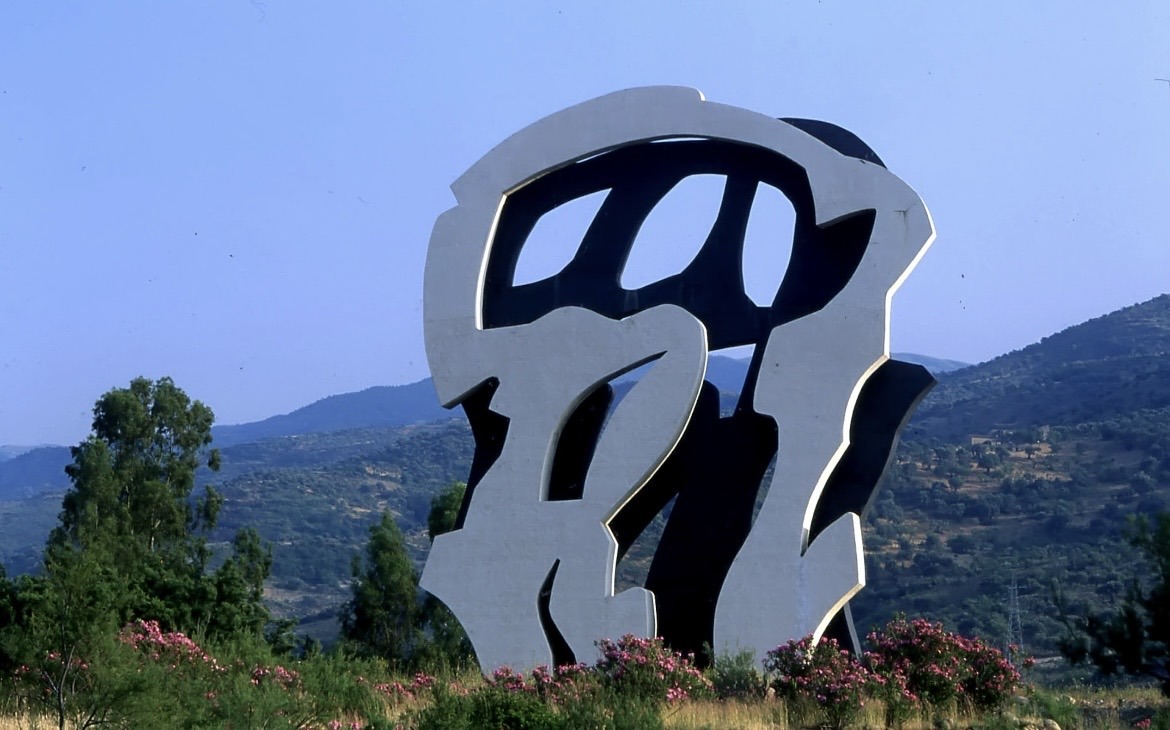
ROME — Italy is claiming Igor Mitoraj as its own this summer. Rome’s newest gallery is showing 41 of his sculptures until September 30, 2026, while Pietrasanta, the Tuscan town where he worked for three decades, has just opened a museum devoted to the Polish sculptor.
The Teldil Art Gallery’s inaugural show, La forma del silenzio (the shape of silence), presents 41 bronze and marble works, all for sale, by the prolific Mitoraj (born 1944, died 2014). They span his most frequent subjects, from the male torso based on classical mythology — colossal but often fragmented or mutilated to explore broken beauty, fragility and the passage of time — to blindfolded women’s heads, symbols of inner observation and the blindness of love, along with angels with broken wings, heads of the Virgin Mary and masks.
“To enter into the work of Igor Mitoraj,” said curator Marco Giammetta at the press opening, “is to confront a sculptural practice that escapes both the logic of the quotation and that of emulation. He reinterprets the legacy of classical sculpture in a contemporary key.”
A sculptor written into Rome’s public spaces
Rome holds three permanent Mitoraj installations: the Fontana della Dea Roma (Fountain of the Goddess Rome, 2003), a bronze fountain 10 metres high in the Vittoria neighbourhood; the bronze doors of the Basilica of Santa Maria degli Angeli e dei Martiri (2006), designed by Michelangelo; and a nearby marble head of St John the Baptist (2006).
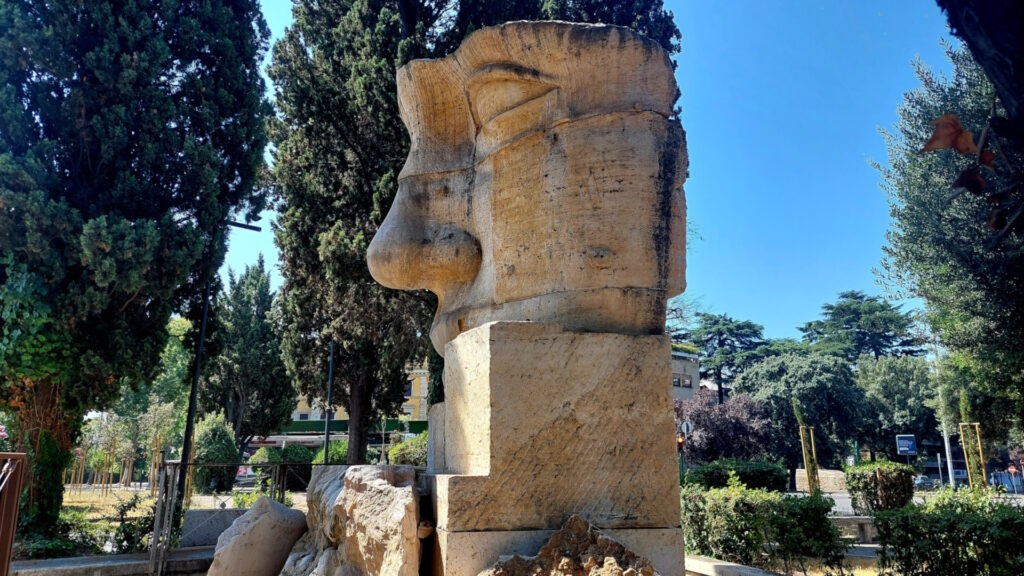
Elsewhere in Italy his usually monumental works stand in public space, from Agrigento’s Valle dei Templi (Valley of the Temples) and the Uffizi to Pisa’s Piazza dei Miracoli (Square of Miracles), Pompeii and Siracusa.
Pietrasanta gives the work a permanent home
In 1983 Mitoraj moved to Pietrasanta, Tuscany, near the marble quarries of Carrara — a destination for sculptors since Michelangelo — and opened his atelier. On June 6, 2026 the Museo Igor Mitoraj (Igor Mitoraj Museum) opened in the town’s former covered market on Via Oberdan, run by a foundation created by Italy’s Ministry of Culture, the Tuscany Region and the town. On display are 69 works recently donated to Italy by his heir and longtime companion Jean-Paul Sabatié. The inaugural exhibit, “Mitoraj. Present,” runs until January 10, 2027.
One show is commercial and temporary, the other institutional and permanent. Together they confirm Mitoraj endures in Italy not only in galleries but in civic space itself.