

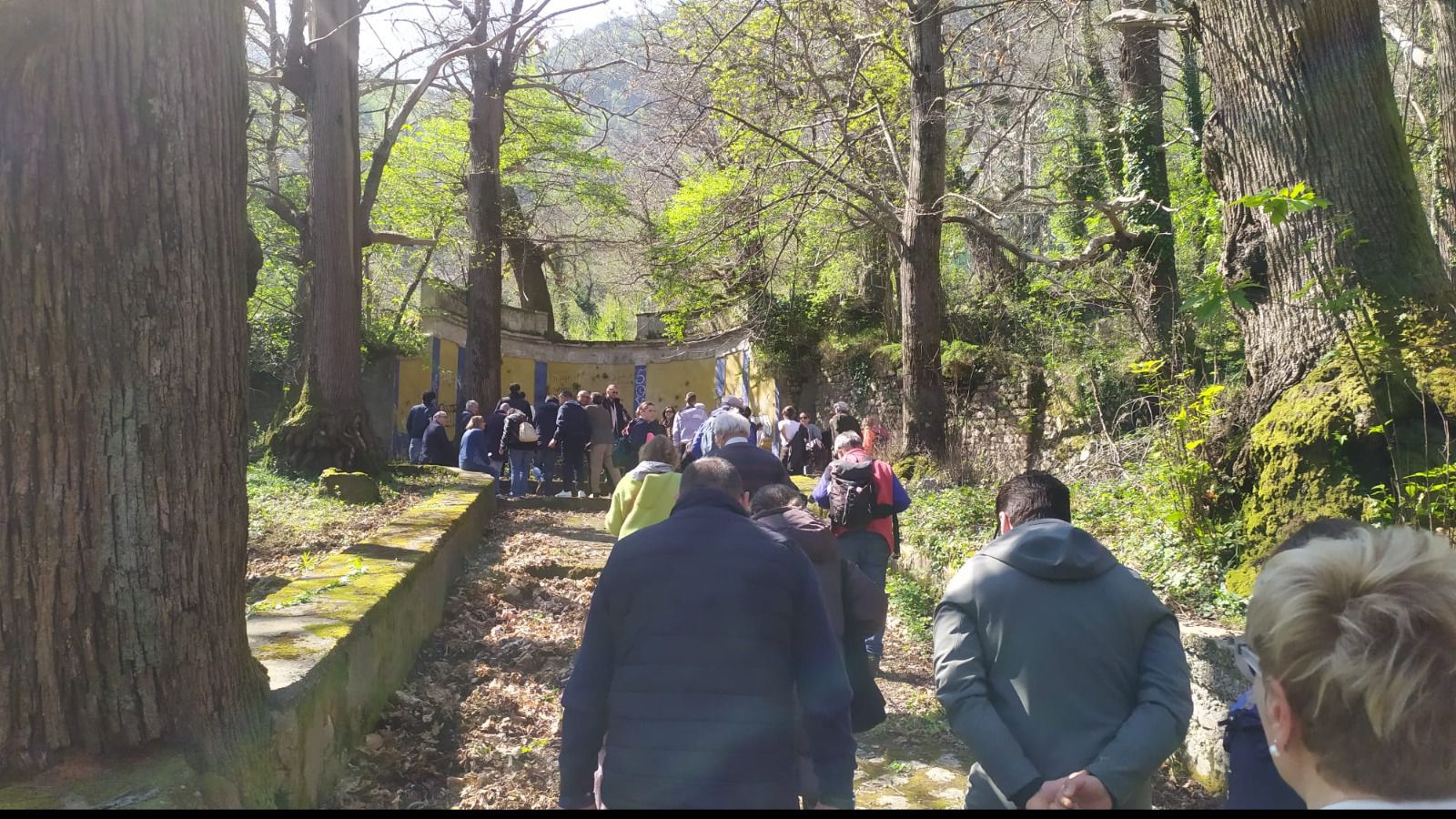

CASTELLAMMARE DI STABIA, Campania — A 1,500-metre route through the Monti Lattari Regional Park in Campania, southern Italy, opened on April 7, tracing an 18th-century Bourbon aqueduct built between 1791 and 1793 to supply the royal fountains of the Kingdom of Naples.
“It is a participatory cultural heritage project that has directly engaged those who live in this territory,” said Vincenzo Esposito, President of Archeoclub d’Italia Castellammare di Stabia, the heritage organisation behind the initiative. “This is a great day for Archeoclub d’Italia because this project was conceived and delivered by Archeoclub d’Italia together with local schools.”
The trail was developed over three years by Archeoclub d’Italia, a national cultural heritage association with branches across Italy, and opened in the presence of Mayor Luigi Vicinanza and Monti Lattari Park Authority President Vincenzo Peluso. The project received 10,000 euro in public funding from the park authority.
Massimo Santaniello, the organisation’s founding member and project designer, described how the path came to be. “The waterfall is located along the ancient Bourbon aqueduct path, built between 1791 and 1793 on the branch of an older aqueduct already known in the Angevin period, constructed to supply the Fountains of the King,” he said.

Ancient engineering
The route traverses three streams and dense Mediterranean scrubland, passing remnants of Angevin-era lime kilns, some operational as recently as the 1950s, alongside visible stretches of the aqueduct including inspection shafts, diversion chambers and a canal arch. Walkers can also view the Guglia Castellano, a natural rock arch that has served as a climbing landmark for over a century. The waterfall itself drops more than 20 metres into a natural pool at the source of the Rio Lavello stream.
Children’s tiles
A distinctive feature of the trail is a series of hand-painted ceramic tiles produced by primary school pupils from the San Marco Bonito Cosenza institute, depicting the aqueduct’s engineering, lime kiln processes and local flora. The tiles serve as the first information panels ever installed in the Quisisana woodlands.
Officials said the trail would complement Castellammare di Stabia’s broader tourism offer, including the nearby Quisisana Royal Palace, which houses the town’s archaeological and civic museums.