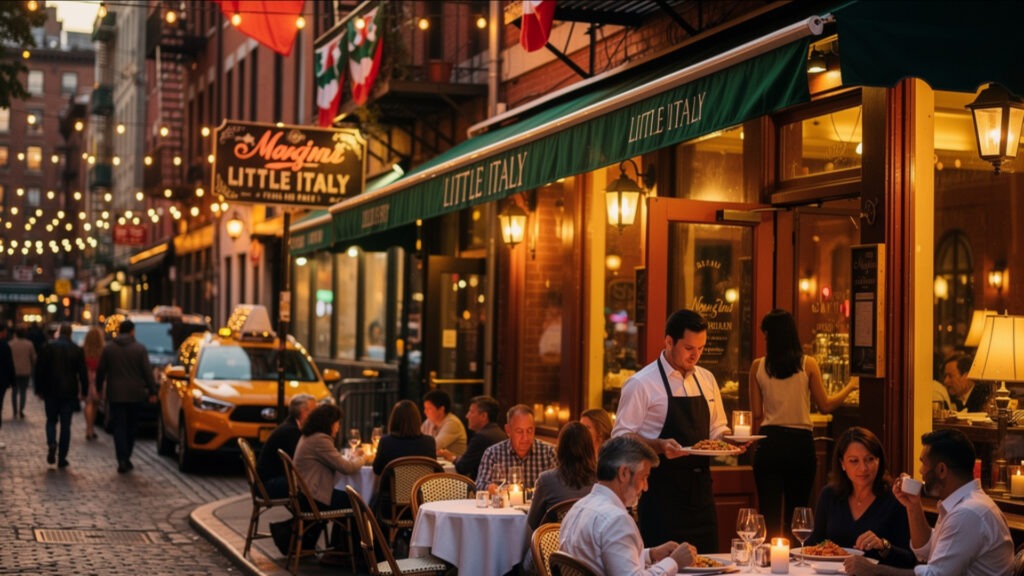
NEW YORK — Mayor Zohran Mamdani confirmed Little Italy would be added back into New York City’s official immigrant enclaves map, days after its omission from a city tourism guide drew protest from tourists, local residents and even Italian American organisations.
The map, titled New York City Immigrant Enclaves, went online on July 8 as part of the Neighborhood Passport campaign, tied to the 2026 FIFA World Cup. It marks 30 neighbourhoods across the five boroughs, among them Koreatown, Little Pakistan, Little Yemen, Little Palestine, and Little Egypt. Historic Italian, Irish, and Jewish neighbourhoods were absent.
“The mayor has heard Italian Americans and promised to add Little Italy,” said Anthony Julian Tamburri, dean of the John D. Calandra Italian American Institute, “as well, this gives Italian Americans and the mayor’s office the opportunity to engage in a greater, continued dialogue.”
Shifting blame
Mamdani distanced himself from the omission. “This map was initially created by the prior administration in 2023, and when we inherited it, we added a few additional neighborhoods,” he said. He added that the guide was clearly not an exhaustive list of the more than 200 ethnic communities in the city, and that Little Italy would be among future additions.
Officials from the administration of former mayor Eric Adams rejected that account, saying their project consisted of separate illustrations of 27 communities, not a single citywide map.
Counting immigrants
City Hall has defended the selection on demographic grounds, saying the map highlights neighbourhoods with substantial foreign born populations from regions and countries around the world. That standard sits awkwardly with Little Italy, a national historic district on Mulberry Street whose Italian born population has thinned to almost nothing over three generations.
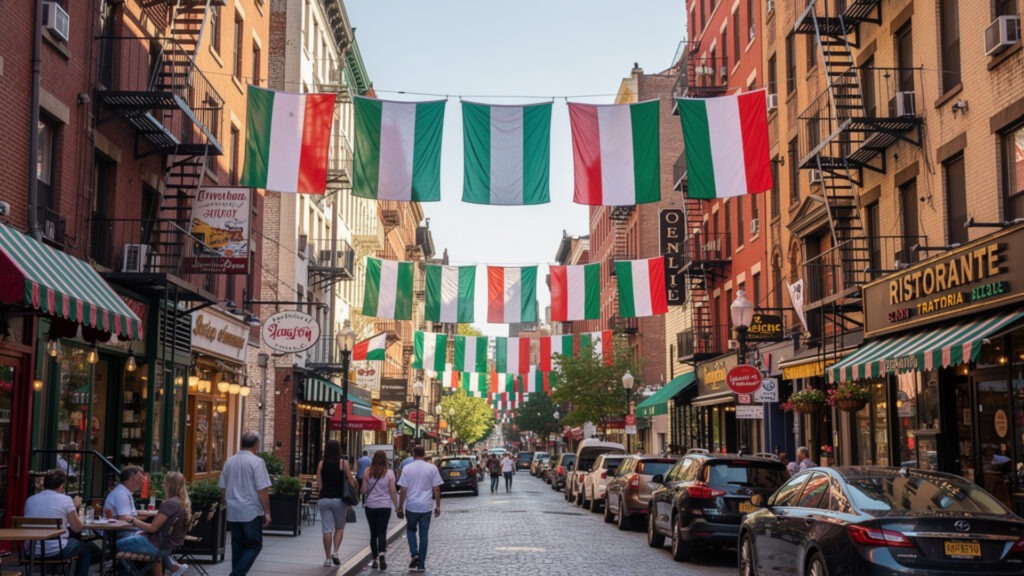
The National Italian American Foundation, one of the largest Italian American advocacy bodies in the United States, wrote formally to the mayor asking for a revision.
“New York’s Little Italies are more than tourist destinations,” wrote Robert Allegrini, president and chief executive of the foundation. “They are living monuments to the resilience, perseverance, and contributions of millions of Italian immigrants.”
More than four million Italians emigrated to the United States between the 1880s and 1924, roughly a third of them settling in New York City, according to the Library of Congress.
The argument was never really about cartography. It was about who a city decides to name when it introduces itself to the world.