


SIENA — A major new exhibition unveiled on May 22 at Palazzo delle Papesse (Palazzo of the Papesse) in Siena, Tuscany, is posing a question most museum shows prefer to avoid. What did it actually feel like to live inside a Renaissance palace?
Abitare il Rinascimento (Living the Renaissance) brings together more than 80 works from the 15th and 16th centuries, including paintings, decorated furniture, and objects that once furnished the homes of noble Sienese families. It runs until November 1, 2026.
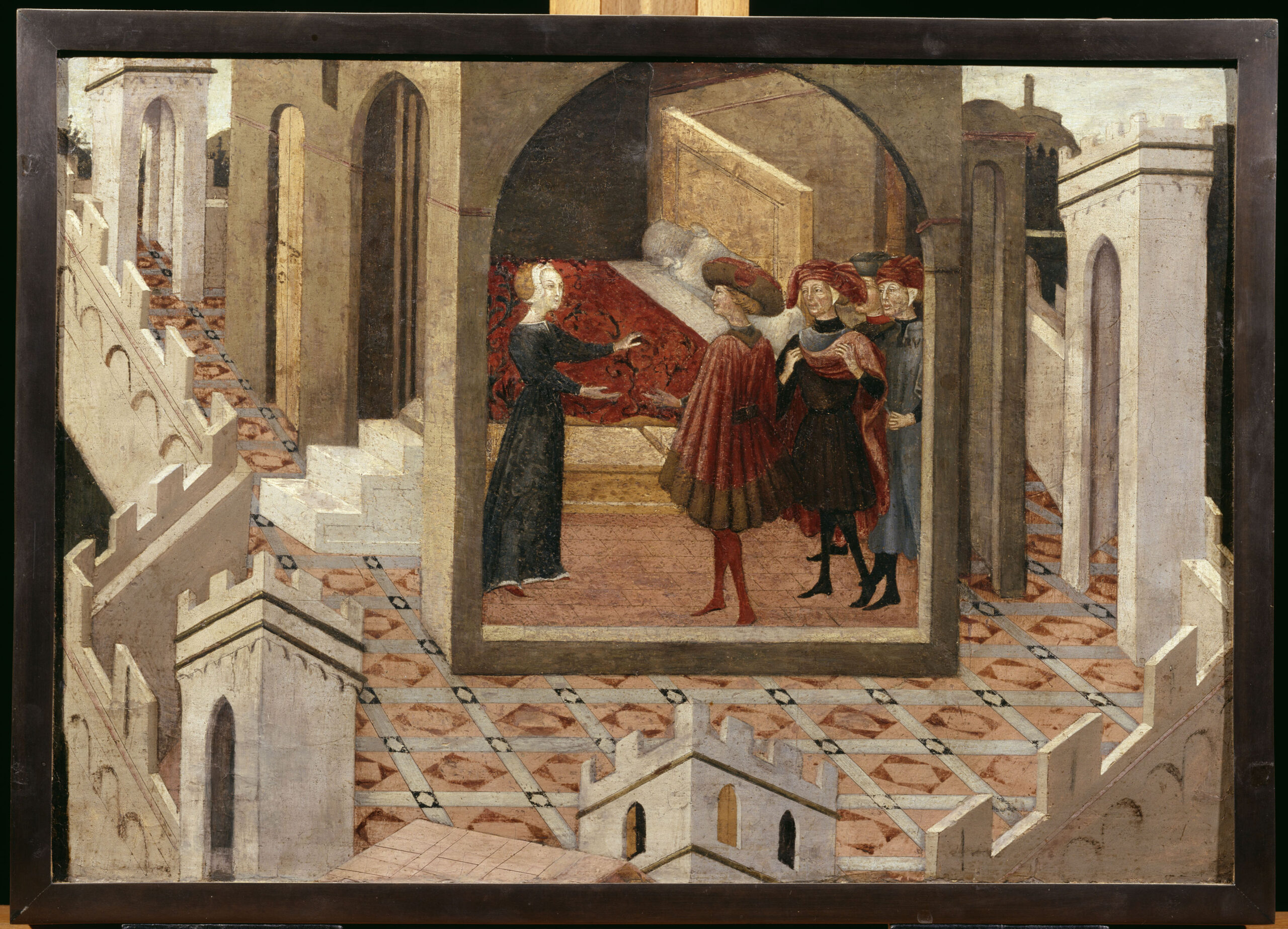
What sets it apart is how those objects are presented. Many cassoni (painted marriage chests), spalliere (decorative wall panels), and lettucci (day beds) now sit in museums across Europe as isolated pictures, stripped of their original purpose. Here, they are reinstated as furniture inside reconstructed domestic rooms.

A palace that suits the theme
The venue itself makes the argument. Palazzo delle Papesse is a 15th-century residence built for Caterina Piccolomini, sister of Pope Pius II, one of the great figures of the Sienese Renaissance. The building and the theme belong to the same historical world, and that proximity is intentional.
“Papesse” refers to the Piccolomini sisters, especially Caterina and Laudomia, who were known by that nickname in Siena, so the palace name points to the women linked to the pope’s family. In historical or cultural writing, it is often better to keep the Italian name, since that preserves the site’s identity and avoids a clumsy literal translation.
Beppe Costa, chief executive of Opera Laboratori, the production company behind the show, put it plainly. “The Renaissance architecture and the history of the palace offer an ideal context for works in dialogue with the spaces that house them,” he said. “The container becomes an integral part of the content.”
The show was curated by art historians Laura Bonelli and Marilena Caciorgna and produced in collaboration with the Fondazione Monte dei Paschi di Siena, one of the world’s oldest banking foundations. Loans came from institutions including the Musée du Louvre en Avignon and Florence’s Museo del Bargello.
Furniture with a message
The scholarly argument beneath the visual richness is pointed. These objects were commissioned with specific iconographic programmes, meaning narrative cycles drawn from ancient writers such as Ovid and Plutarch. They were designed to instruct young brides in the values of marriage and fidelity. The bedroom, not the chapel, was often where that moral education took place.
Tickets are 14 euro full price and 10 euro reduced. The exhibition runs daily from 10 a.m. to 7 p.m., with extended evening hours on Thursdays until 9.30 p.m.