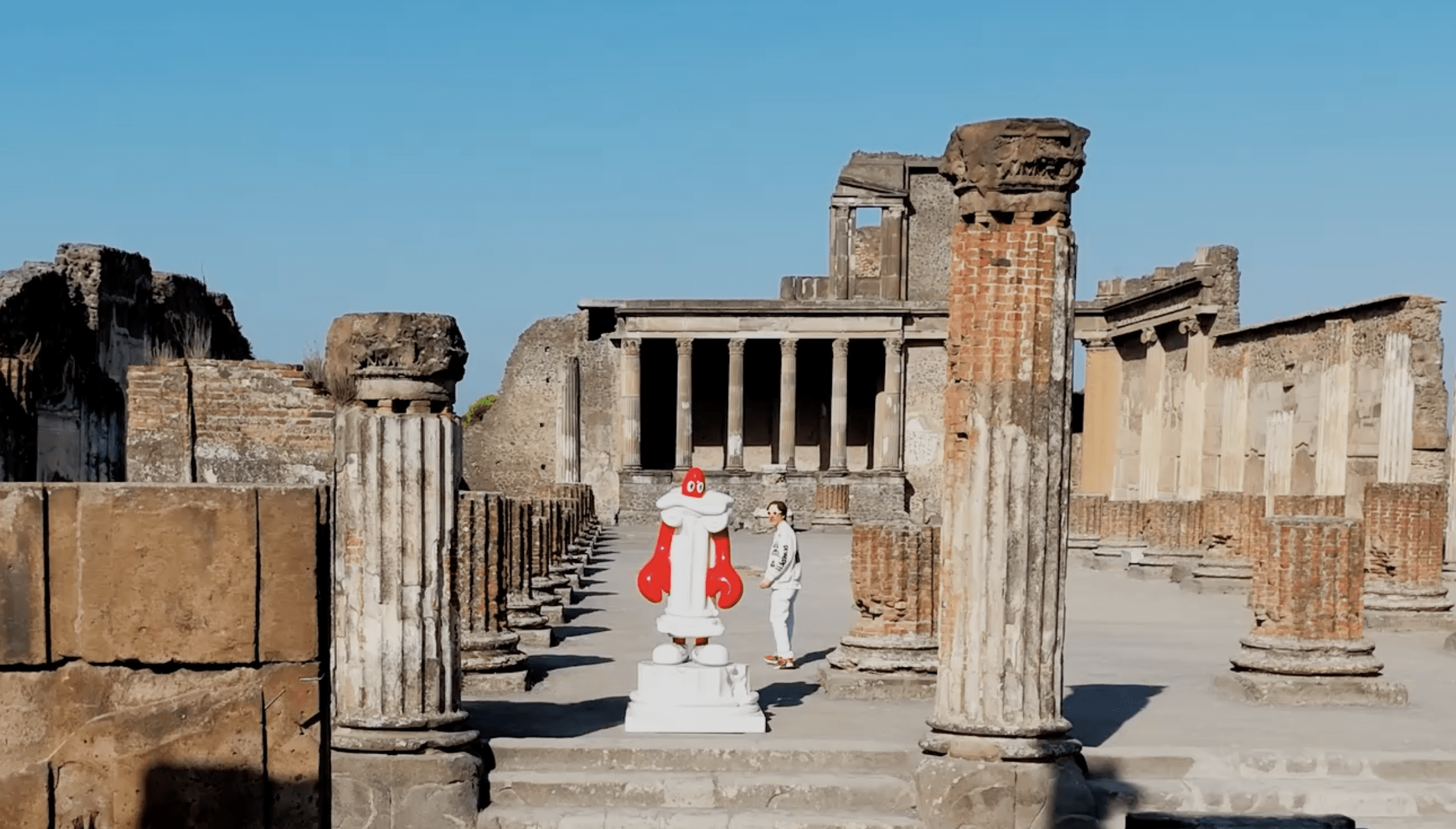

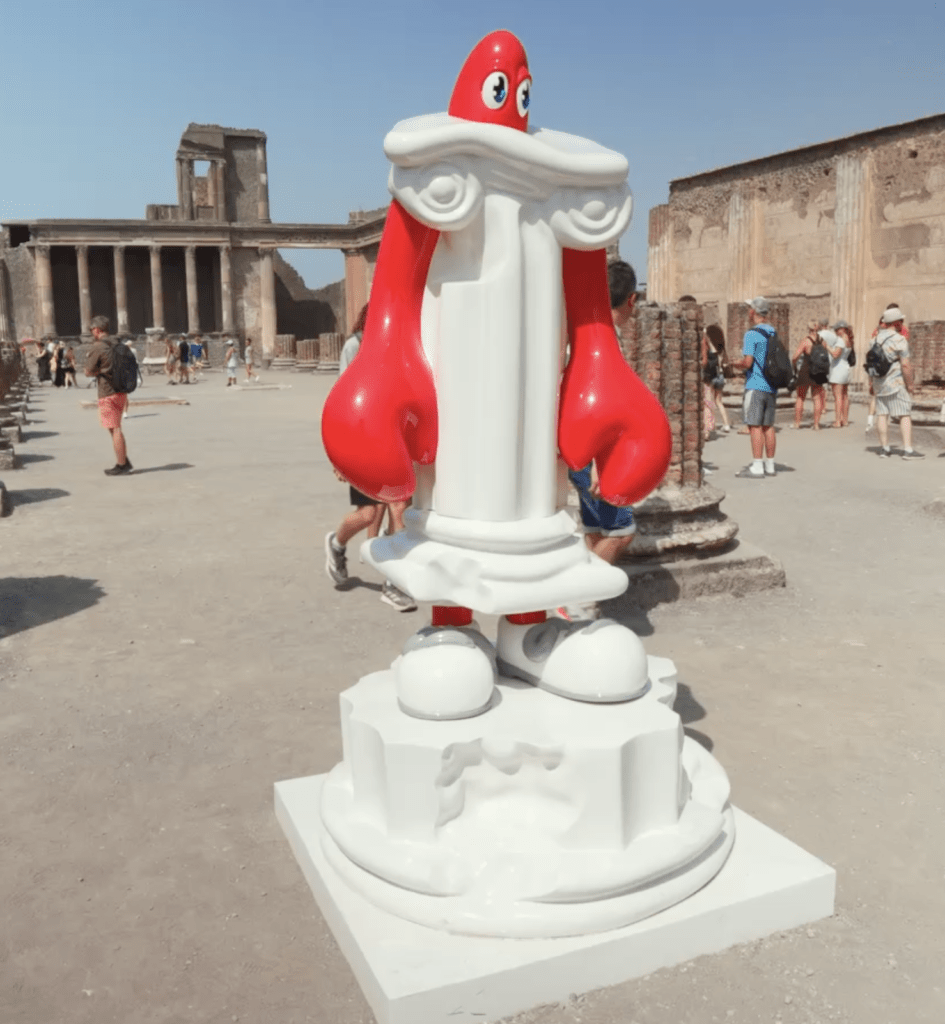
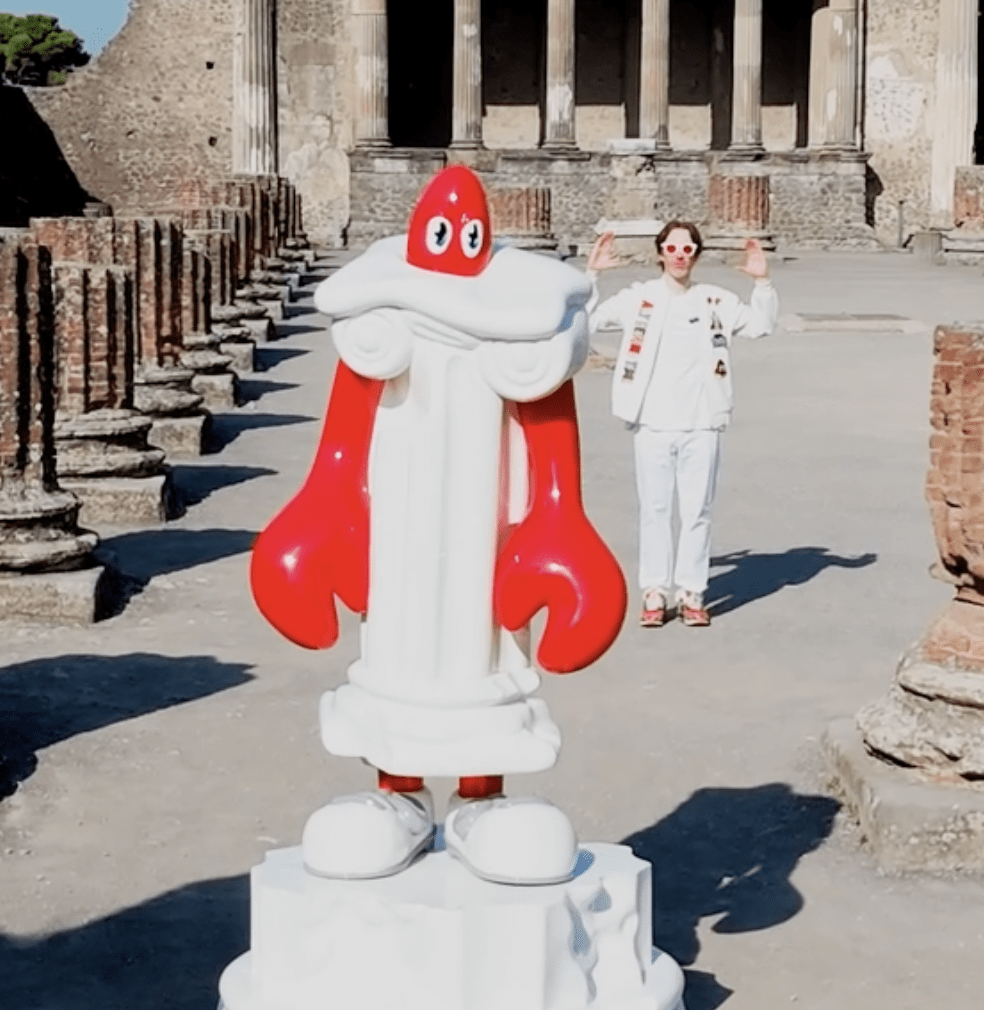
POMPEII, Campania — British artist Philip Colbert has unveiled 30 monumental lobster sculptures across Pompeii and six neighbouring sites, the largest installation of his career. The exhibition, titled Philip Colbert in Pompeii, Pop Mythology, opened on July 27, 2026, and runs until November.
Experts expect initiatives like these to boost engagement with art, as well as revive the attraction of historical sited for visitors and tourists.
“Contemporary art is moving into heritage sites, and the relationship works both ways, as ancient locations gain renewed engagement, while contemporary works find new audiences,” Eirini Meze, founder of art advisery service MeSo Ventures in Dubai, told Italy Now. “With museum attendance falling, the pairing has become an effective way to attract visitors, especially younger ones.”
The show, organised by Il Cigno Arte with the Archaeological Park of Pompeii and curated by Cesare Biasini Selvaggi, is billed by its organisers as the biggest pop installation ever staged in the ancient city. From July 28 the sculptures also appear at Longola, Boscoreale, Oplontis, Villa San Marco, Villa Arianna, and the Real Polverificio Borbonico, a former Bourbon gunpowder factory.
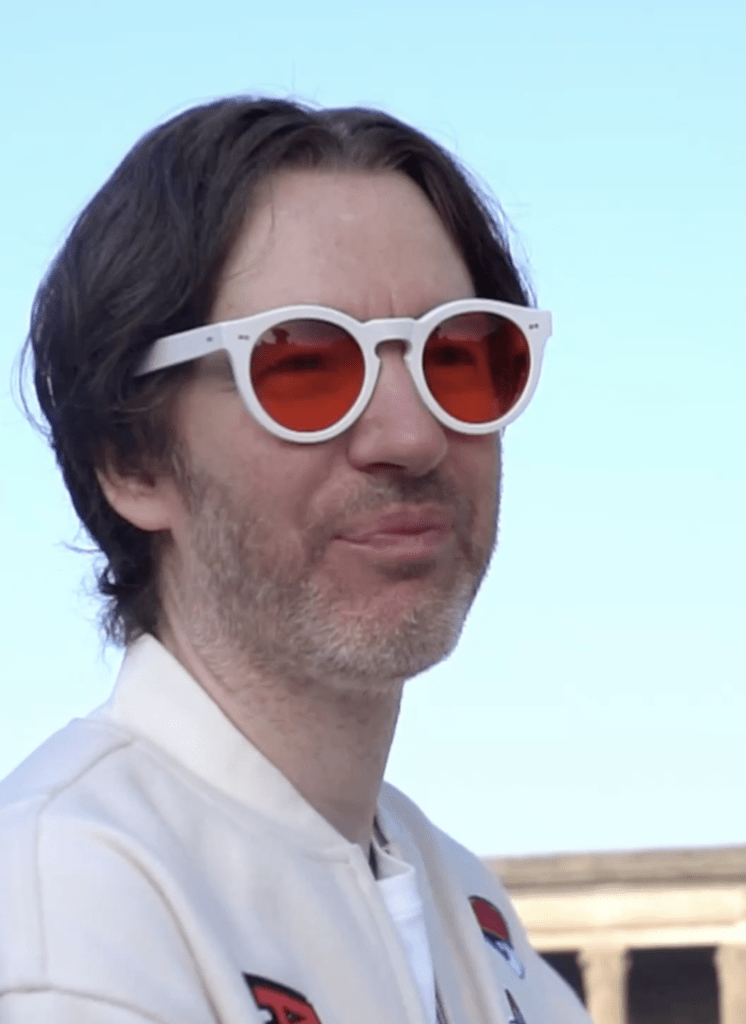
“For me, having my exhibition here in Pompeii, in the most important archaeological site in the world, is incredible,” Colbert said. “Pompeii exists beyond time. It is a bubble that embraces antiquity but also modernity.”

The lobster myth
Colbert, born in Scotland and based in London, is described by Italian critics as an heir to Andy Warhol. He traces his fascination with antiquity to childhood, when he found a Roman coin in a field near his home in Scotland, an encounter he says opened his mind to how archaeology can inspire art.
His signature crustacean is no casual choice. “My alter ego, my artistic personality, is a lobster, just as so many artists of ancient Pompeii drew on mythology, like the minotaur, in this magical and fantastical world,” he said.
Beside the celebrated dancing faun, he noted, archaeologists uncovered an important lobster mosaic in the House of the Faun. In antiquity the red lobster was a potent symbol, he said, representing life and death.
Healing Longola
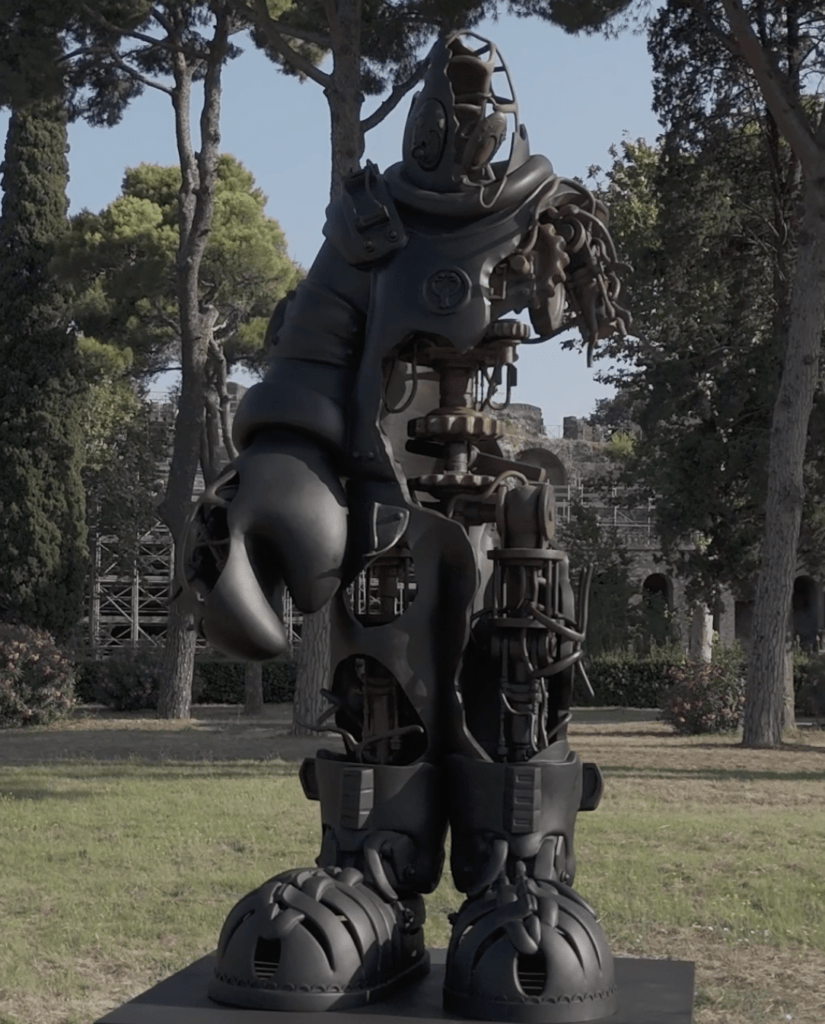
One sculpture stands at Longola, a protohistoric settlement in the municipality of Poggiomarino damaged by arson only weeks before the opening. “A sculpture will be installed in the protohistoric site of Longola, so that art contributes to healing the wound of the arson attack that struck the site a few weeks ago,” said Gabriel Zuchtriegel, director of the Archaeological Park of Pompeii.
“Contemporary art can deepen engagement with Pompeii when it creates a genuine dialogue with the site rather than using it as a simple backdrop,” Thery Jean Christophe, founder of MusaArtGallery in Paraguay, told Italy Now. “Colbert’s playful visual language may help younger visitors look at the archaeology with fresh curiosity, while the sculpture at Longola cannot repair the physical damage but can restore attention and a sense of public ownership around a vulnerable site,” he added.
Italy’s growing use of contemporary art in ancient sites is a sustainable model that could help both with both funding and protecting heritage sites, Meze said.
“It will eventually drive growth of new crowds,” she added. “The goal is to engage the new generation and this will be sustainable model for funding, and technically using those funds to protect and preserve as well.”