PALERMO, Sicily — Four monumental stages, one procession, and a route that crosses the whole historic city from the mountain to the sea. We spoke to Luca Pintacuda, creative director of the 402nd Festino di Santa Rosalia (the Feast of Saint Rosalia), which peaks every July 14. This year he has yoked Rosalia to the Normans, and his reason is that both stories start in blood. Conquest for one, the plague of 1624 for the other. Palermo’s two greatest inheritances, he argues, were born from catastrophe. The city has chosen a word for her this year. Rebel. Rosalia, the story goes, was promised to a man at the Norman court and ran rather than marry him.
Q. What can we expect this year?
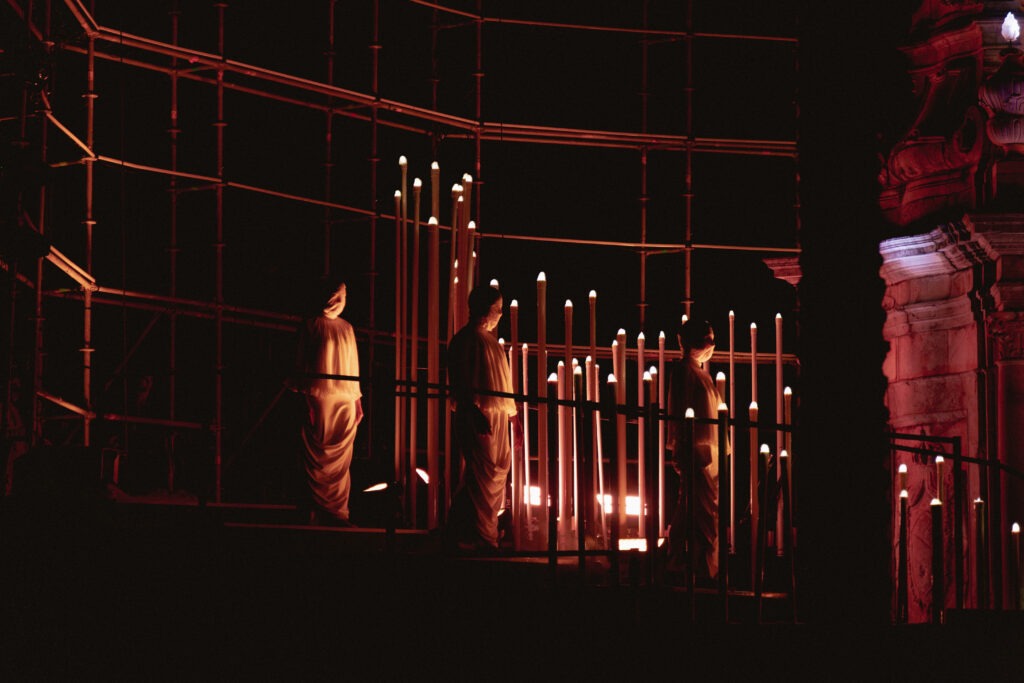
“The Festino has been going for about 400 years, 402 to be precise, so it is quite codified. In the last 30 years it has changed a great deal. It has evolved into a great moving spectacle, four monumental stages along a route that crosses the whole historic city, from one gate to the other, from the mountain to the sea.”
Q. Why put the Normans and Rosalia in the same story?
“They look like two distant stories, but they have the same genesis. Both were born from drama. The Norman conquest, the domination, the blood. And Rosalia with the plague of 1624. At the time they were terrible moments. Today they are Palermo’s two most important inheritances, the material one of Arab Norman art and architecture, and the intangible one of Rosalia. Two stories born from drama that turn into beauty over the centuries.”
Q. What strikes you most about her?
“That through her own force she still gathers 300,000 Palermitans every year, people who decide to get past the divisions a city carries inside itself and become a community. Somehow Rosalia manages to put us all under the same roof and reminds us that we belong to one.”
Q. Who was she?
“The word the city wanted this year is Rosalia the rebel. She was said to be promised in marriage at the Norman court. Rather than marry that man she fled into exile and withdrew alone to a hermitage. So, certainly, strength.”
Q. And the miracle?
“The plague. In 1624, four centuries after her death, a humble Palermitan dreamed of Rosalia at the worst moment of the epidemic. The dream led him to her bones. They were carried in procession along the Cassaro, the historic street where the Festino runs every year, and from that act the plague ended.”