Italy’s Adriatic coast is about to give up a piece of history that has stayed underwater for thousands of years. On Friday, July 24, 2026, officials in Porto Cesareo, a seaside town in the Salento peninsula in the southern region of Apulia, will inaugurate the Submerged and Coastal Archaeological Park, opening centuries of buried and underwater heritage to the public for the first time.
A layer of history underwater
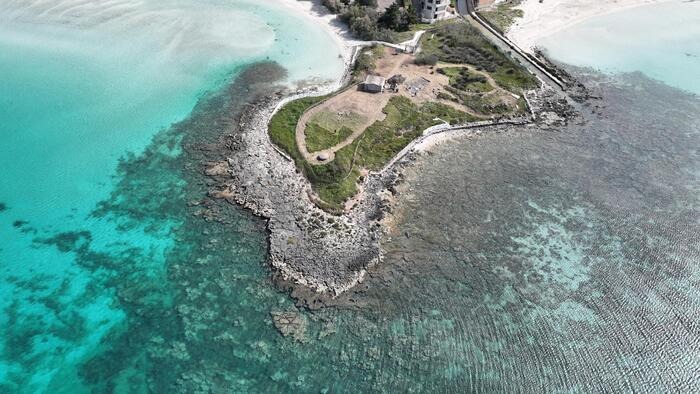
The park sits at Scalo di Furno, near Torre Chianca, in the province of Lecce. There, a settlement from the Bronze Age, dating back to the second millennium BC, meets a Roman necropolis, a burial ground, resting on the seabed just off the coast. Visitors will be able to explore the site on foot along the shore or by snorkeling with a mask and snorkel directly above the ruins. Shipwrecks, submerged structures, ceramic fragments, amphorae, the large clay jars used to transport wine and oil across the Mediterranean, and anchors trace a continuous story running from the Bronze Age to the late medieval and modern periods.
“The park gives back to the community a heritage that stayed invisible for centuries, guarded by water,” said Rita Auriemma, professor at the University of Salento and the project’s scientific director. “Years of underwater research now find a form of public access open to everyone. This is not a museum to look at, but a cultural landscape to walk and swim through. It is public archaeology in the fullest sense of the term,” she added.
Funding a new kind of museum
The project was developed under Smart-In Archeologia, a public funding programme run by the Apulia regional government to support projects that make archaeological heritage more accessible. Rather than building a conventional museum, organizers chose to let visitors move through the actual site, on land and in the water, guided by signage and marked underwater routes.
Researchers say the density and variety of finds at Porto Cesareo place it among the most significant submerged archaeological areas in the Mediterranean, reflecting centuries of settlement, trade routes and maritime traffic along this stretch of the Salento coast.
For Porto Cesareo, the opening turns years of underwater excavation into something residents and travelers can experience directly, transforming a hidden seabed into an open-air record of Apulia’s ancient past.