PONZA — Rome’s Circolo Canottieri Aniene won the eleventh GiroPonza on Saturday, June 13, 2026, the amateur rowing regatta held off Ponza, a volcanic island in the Pontine archipelago in the Tyrrhenian Sea south of Rome and a fixture on the capital’s rowing calendar.
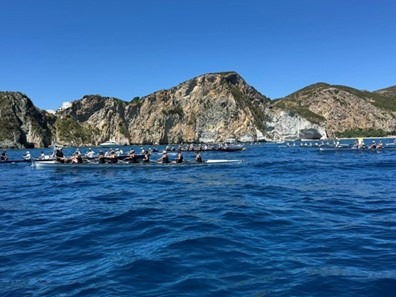
Around 100 athletes from some of Rome’s established clubs rowed the course beneath the island’s cliffs in almost perfect weather. Aniene, one of the capital’s oldest rowing clubs, took the title with an eight, a racing shell powered by eight oarsmen and a coxswain who steers. The crew of Sandro Cerea, Filippo Carfagni, Stefano Capelli, Marco Cerea, Benny Carbone, Marco Marocco and Lorenzo Porzio raced with an oarsman on loan from rivals Circolo Canottieri Tevere Remo, steered by cox Catalin Blay. Aniene led from early on, and the win extended the club’s long record of competitive success.
Porzio is no ordinary club rower. He took bronze in the coxless four at the Athens Olympics of 2004, racing here among weekend amateurs.
“Returning to the flagship boat like this, with no Olympic medals at stake but only the sea and a crew of friends, is in itself a great victory, if we then include the island of Ponza as the location, then everything becomes magical,” Porzio said.
The fleet
Roman rowing is a tight, clubbable world. Its members train through the winter on the River Tiber and produce many of Italy’s international scullers, with little of the attention given to other sports. The GiroPonza, rowed for honour rather than prize money and without television cameras, is the closing fixture of their season.
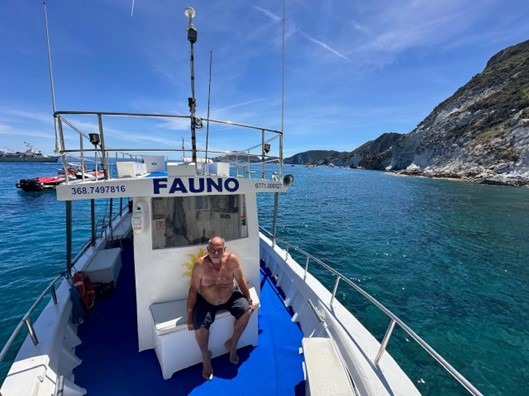
Crews from the Circolo Canottieri Tevere Remo, the Circolo Canottieri Tirrenia Todaro, the Circolo Ondina and other Rome clubs filled out the field, trailed by a flotilla of family boats. Among them was the fishing vessel Fauno, whose skipper, Francesco, watched with relatives and friends aboard. “The rowers bring the race, we bring the table. A plate of spaghetti with proper tuna and the day is complete,” he said.
More than sport
Organisers cast the GiroPonza as more than a contest. “This is more than a regatta. It’s a way of bringing people to Ponza and showing what the island and its sea can offer,” said organiser Ferdinando Femiano. The race draws visitors outside the peak summer crush, filling the island’s tables and rooms in a short season. An island content to be found slowly, by people willing to row to it, may be the regatta’s most lasting result.