SAEPINUM, Molise — Recently-completed excavations at one of southern Italy’s least-visited Roman sites have uncovered a luxury townhouse, a Byzantine coin hoard, and evidence of a sophisticated domestic heating system that researchers say rewrites understanding of provincial Roman life, Italy’s Culture Ministry said on March 19.
The ancient city of Saepinum, set against the Matese mountains in Molise, is considered one of the most evocative sites in Italy’s national museum system. Investigations carried out in past years, funded by Italy’s Ministry of Culture through Cohesion Development Funds, have uncovered significant new urban and monumental contexts, helping researchers reconstruct the city’s development over more than five centuries.
Archaeologists’ work brought to light an extensive Roman domus (townhouse), featuring a monumental entrance facing the decumanus, one of the city’s main east-west roads. The structure shows evidence of continuous occupation from the early Imperial period through to the 6th century AD.”The new evidence not only provides fresh data on the city’s history, but also reveals concrete aspects of daily life and long-term urban transformation,” said Massimo Osanna, former director of Pompeii and now Director General of Museums.
Roman daily life
Finds from the site suggest that Saepinum was integrated into wider Mediterranean trade networks. Imported African ceramics dating to the 2nd and 3rd centuries AD, alongside local materials, indicate sustained economic activity. In later centuries, parts of the residence appear to have been repurposed for storage or small-scale production.
Among the discoveries are oil lamps, ceramic containers, and personal bronze items including rings and a small key. The standout find is a large lead vessel believed to form part of a hypocaust (underfloor heating) system, decorated with stylised solar motifs and Gorgon heads. Researchers say it offers rare evidence of elite Roman hydraulic technology in a provincial Italian setting.
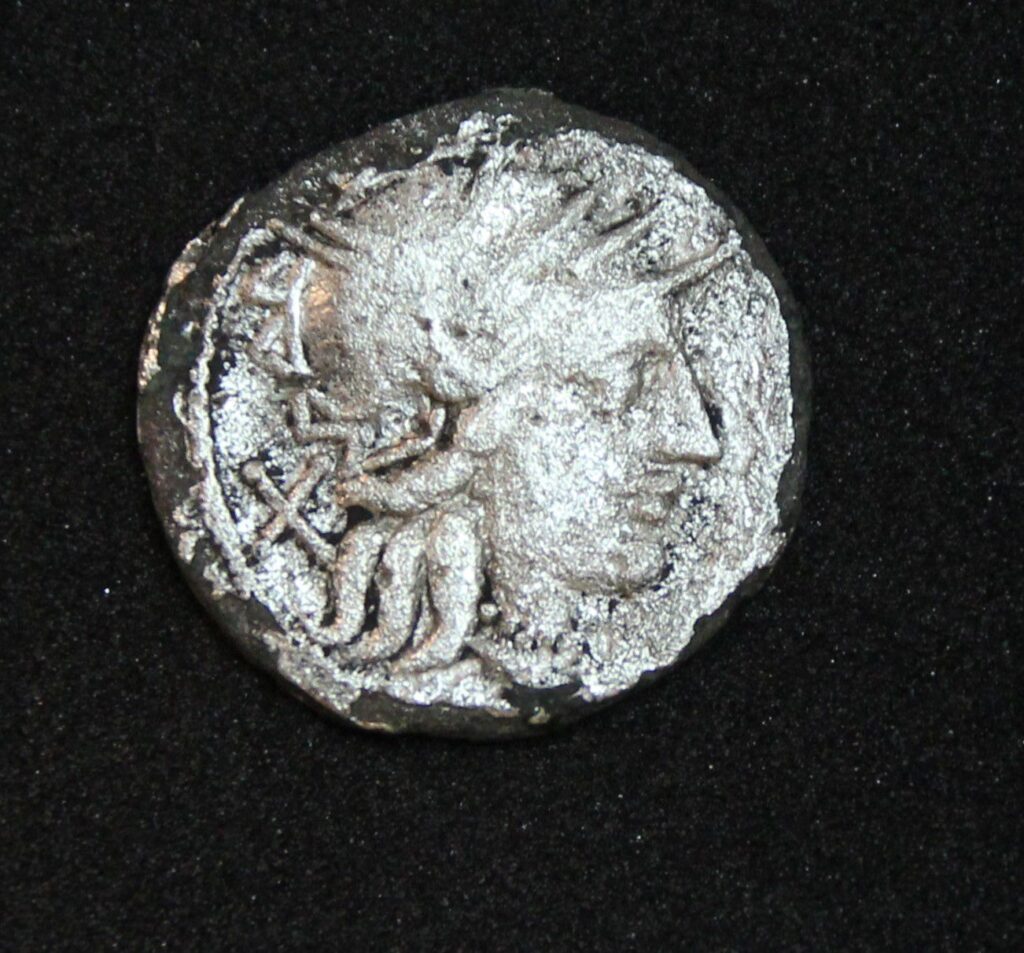
Further excavations in the forum area, resumed after more than two decades, have identified around 400 architectural elements. A hoard of coins dating to the 5th century AD, discovered along the city’s main north-south road, suggests occupation continued well into the Byzantine period. Archaeologists also uncovered a marble honorary inscription dating to 139 AD, during the reign of Emperor Antoninus Pius, which attests to direct imperial involvement in the city.
“The recent excavation campaigns are delivering results of great scientific significance, deepening our understanding of the ancient city and its long-term transformations,” said Enrico Rinaldi, director of the Saepinum Archaeological Park. Even if Saepinum’s grid-plan streets, forum, theatre and baths make it one of the best-preserved small Roman cities in Italy, it draws a fraction of the visitors of better-known sites in Campania.