

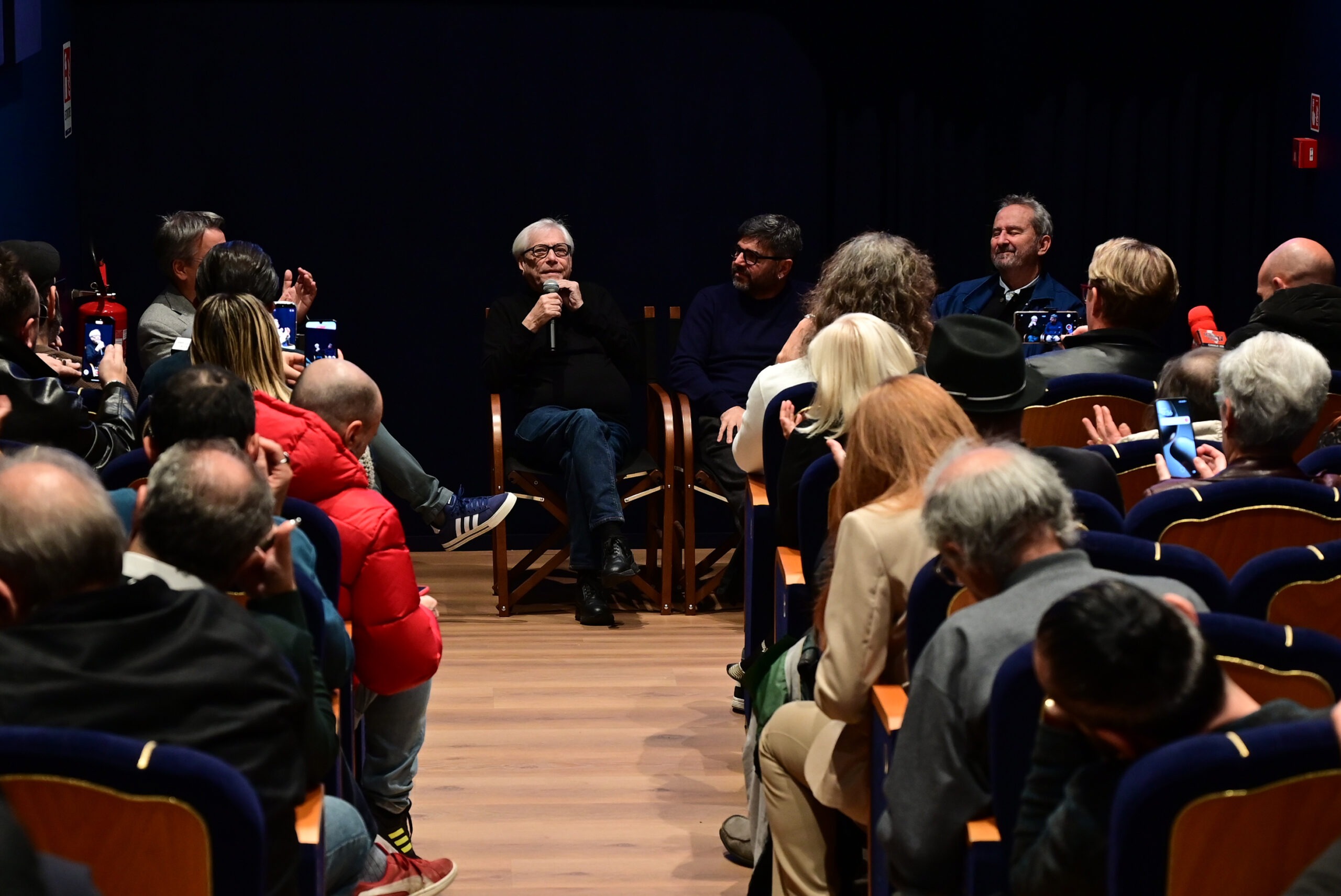

ROME — From sold-out screenings in Venice and Naples to standing ovations in Los Angeles, the documentary “Nino, 18 Days” has turned one of Italy’s most beloved singers into a study of a father seen, at last, through his son’s eyes. We spoke to film-maker Toni D’Angelo, known until now for hard urban thrillers like Falchi and Calibro 9, who told us the title comes from the 18 days he spent waiting at home as a new born while his father, Nino D’Angelo, performed on stage in Palermo. That gap became the spine of the film. Along the way he uncovered the man behind the Neapolitan myth, the depression that followed his grandmother’s death, the gunshots through the window that forced the family to flee Naples after a Camorra extortion threat, and the long migration that took his father from San Pietro a Patierno all the way to Rome.
Q. The title, 18 Days. When did you realise that number was the key to the whole film?
“I needed to find something that divided my life and the life of my father. Something I had to discover about him. I started from this number to say, I want to know, I want to discover who my father was during those 18 days.”
Q. You have made tough urban thrillers. This is a completely different world, behind the camera with your own father. Were you more director or more son?
“Good question. I think we are always more son. You cannot get away from being a son. It is impossible. As a director, I have been honoured to go beyond the ideas I had of my father. Now I can say that I know him better.”
Q. Your father calls himself a poet who doesn’t speak well. What surprised you most about the man behind the myth?
“I discovered that my father always fought. And today, at 70 years old, he continues to fight. Because he decided to be part of the country where he was born.”
Q. Naples is almost a third character in the film. San Pietro a Patierno, Casoria, Palermo. How did you decide which memories to revisit?
“I decided to talk about his roots. So I chose San Pietro a Patierno especially, because it is the place where he was born and where he did not imagine he would become the star he eventually became.”
Q. The response has been extraordinary. What has it meant to hear from ordinary fans?
“People are happy now to discover the man. They know the star, they know the songs, they know the films. But they did not know anything about the man. Thanks to this film they now thank me, because they have discovered the man, the father, the grandfather. I think that is the most important thing I have done with this film.”
Q. What was the most difficult moment during filming?
“The most difficult moment is when we had to escape from the city of Naples, because the Camorra came to our house to ask for money. We had to leave. My father was very sad. For me, though, it was the beginning of my new life. I started to feel better with myself.”