ROME — Nearly 2,000 years after Vesuvius buried it, Pompeii will make wine again. The Archaeological Park of Pompeii and Campania winery Feudi di San Gregorio announced a public-private partnership on February 3, 2026, to plant a working vineyard and cellar inside the ancient city.
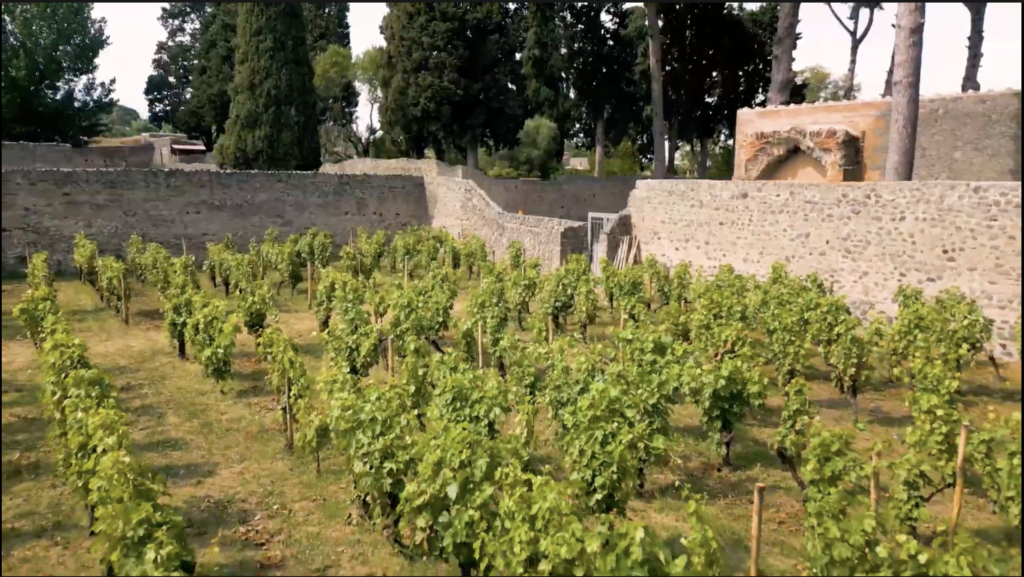
Unveiled at Italy’s Ministry of Agriculture in Rome, the project covers more than six hectares of organic vineyards, with the cellar built inside the park boundary. It is the first working winery in Pompeii since the eruption in 79 AD.
“This is the first vineyard of its kind in the world,” said Antonio Capaldo, president of Feudi di San Gregorio, the Campania winery leading the private side of the partnership. Capaldo went on to say that the project mission was not “to sell wine” but to “bring back a story.”
The partnership is unusual in form. Rather than a standard concession or tender, the park and the Tenute Capaldo Group will share expertise, costs and decisions across the life of the project. Research will be led by Attilio Scienza, professor of viticulture at the University of Milan, working alongside Feudi production head Pierpaolo Sirch.

Volcanic and untouched
The soils around Pompeii are volcanic and have lain undisturbed for more than two millennia. The park has been studying ancient vine varieties and growing techniques since the 1990s through its in-house botanical laboratory. Smaller experimental plots already exist on the site. The new estate scales that work into a full agricultural enterprise with its own cellar, built within the park boundary.
Gabriel Zuchtriegel, director of the Archaeological Park of Pompeii, said the vineyard sits within a broader project that also includes olive cultivation and a social farming initiative employing people from vulnerable backgrounds in the surrounding area.
A cultural argument
Italian Agriculture Minister Francesco Lollobrigida, who opened the Rome event, framed the project as part of a wider effort to link landscape, food and heritage. Culture Under-Secretary Gianmarco Mazzi described the partnership as a model for how public sites and private companies can collaborate without commercial pressure dictating outcomes.
The Roman world treated wine as a marker of presence. When Rome took new territory, settlers planted vines and olive trees before building roads. Two thousand years on, Pompeii is planting again, this time as an act of memory rather than conquest, and as a quiet argument that heritage can also feed the future.