


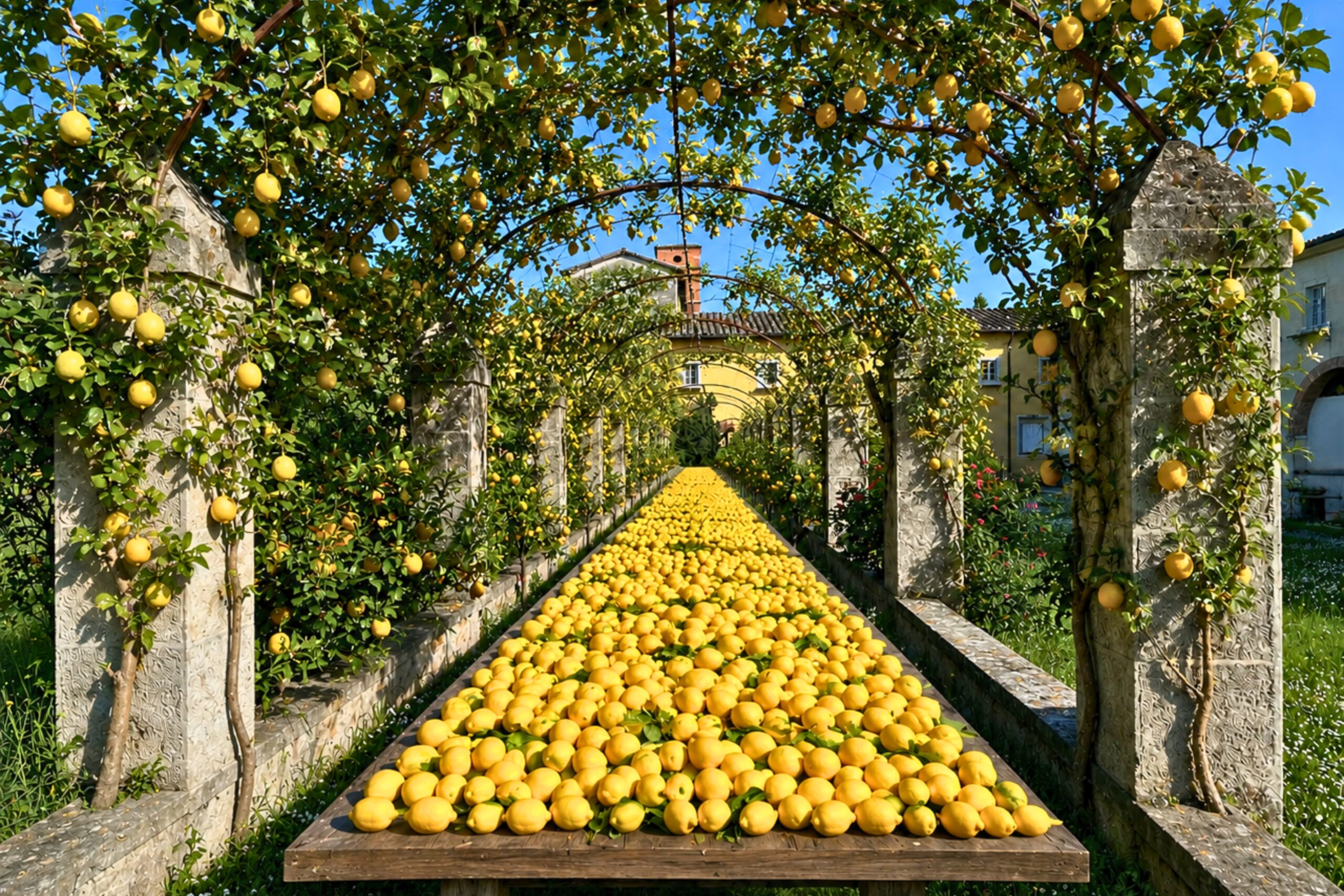

PIETRASANTA — When Cosimo I de’ Medici turned this small Tuscan town into a citrus nursery in the 16th century, he was supplying plants to the world’s first university botanical garden in nearby Pisa. Five centuries later, Pietrasanta is reviving that heritage with Agrumeta, returning from June 12 to 14, 2026.
The festival, now in its third edition, transforms the gardens of the former Convent of San Francesco into an open-air showcase of ancient citrus cultivars, contemporary art, and Mediterranean landscape design.
“With Agrumeta we put on show the beauty that nature and the garden create, almost as if it were a work of art, an artistic and botanical representation,” Nicola Lattanzi, president of the Visual Arts Foundation of Pietrasanta, told Italy Now. “The foundation in the end, is all about giving beauty cultural direction.”
The 2026 edition unfolds within the Anno Francescano, the Franciscan Year marking the eighth centenary of Saint Francis of Assisi’s Canticle of the Creatures. It is supported by the Regione Toscana and the Orto Botanico di Pisa, founded in 1543 and considered the world’s oldest university botanical garden.

A heritage rediscovered
At the heart of the programme is Oscar Tintori, the Tuscan grower whose nursery holds one of Italy’s rarest citrus collections, alongside Pietrasanta’s own Limone Cedrato, a fragrant citron once central to the local economy. Visitors can purchase plants, sample citrus-based foods and cosmetics, and walk through three newly commissioned gardens from the national design competition Il Giardino delle Esperidi, named after the mythical orchard of golden apples in Greek tradition.

Talks and books
Two days of academic discussion will be held in the convent’s refectory on June 13 and 14, 2026, bringing together landscape architects, neuroscientists, perfumers, and agronomists. French architect Jean Mus, Versailles-based perfume expert Fulvia Grandizio, and Palermo professor Giuseppe Barbera are among the speakers.

Beyond the gardens
The town itself, often called Italy’s Little Athens for its dense network of sculpture studios and marble workshops, will join the celebration. Galleries, ateliers, and restaurants are preparing citrus-themed windows and menus, turning Pietrasanta into a three-day open garden.
For Pietrasanta, the festival is also a chance to reframe its identity. Better known for marble and sculpture, the town now joins what organisers call the European Citrus Route, an itinerary linking Tuscany to Sicily, Liguria, and southern France. For three days, the convent gardens themselves will smell of bergamot, citron, and bitter orange.