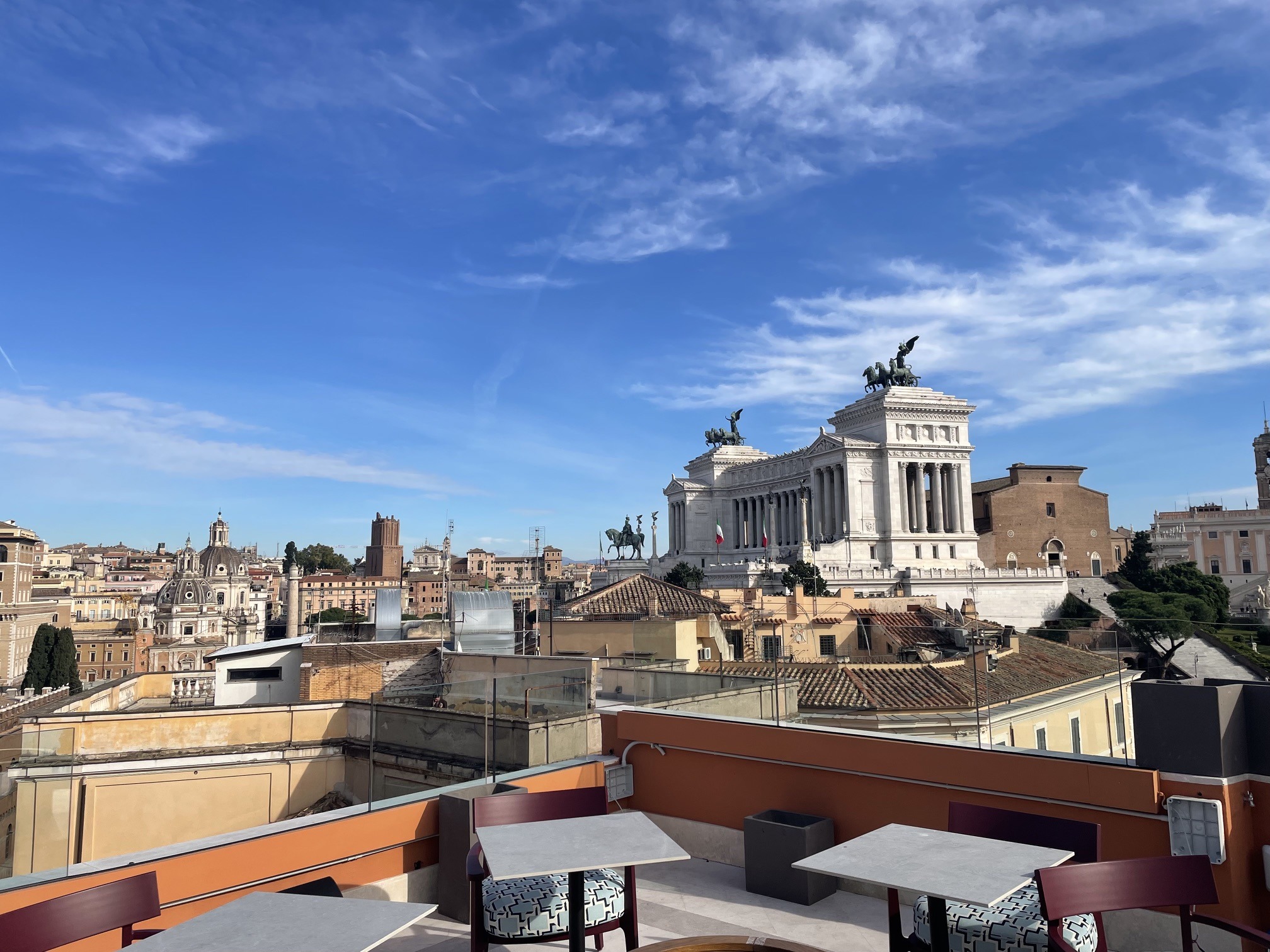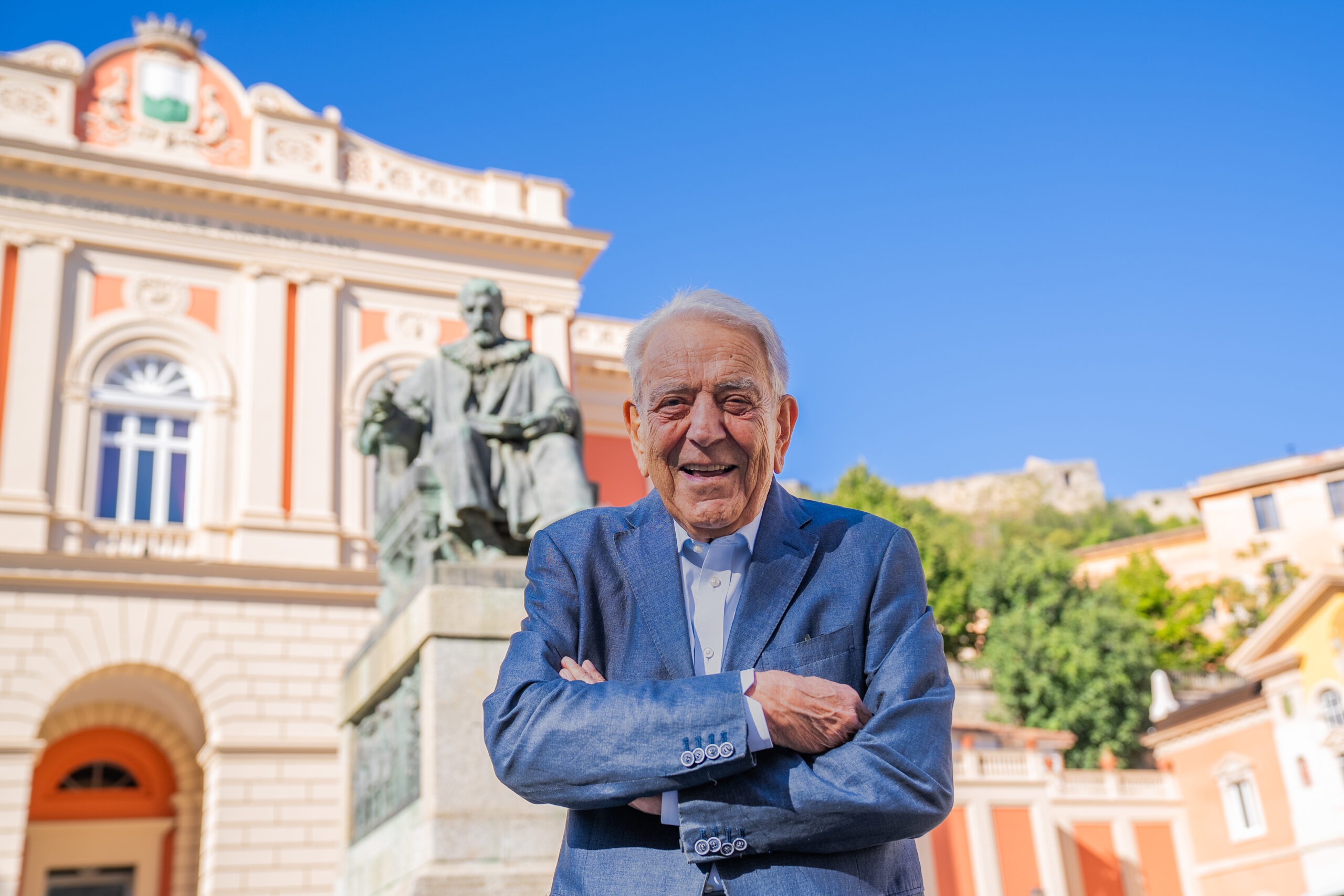

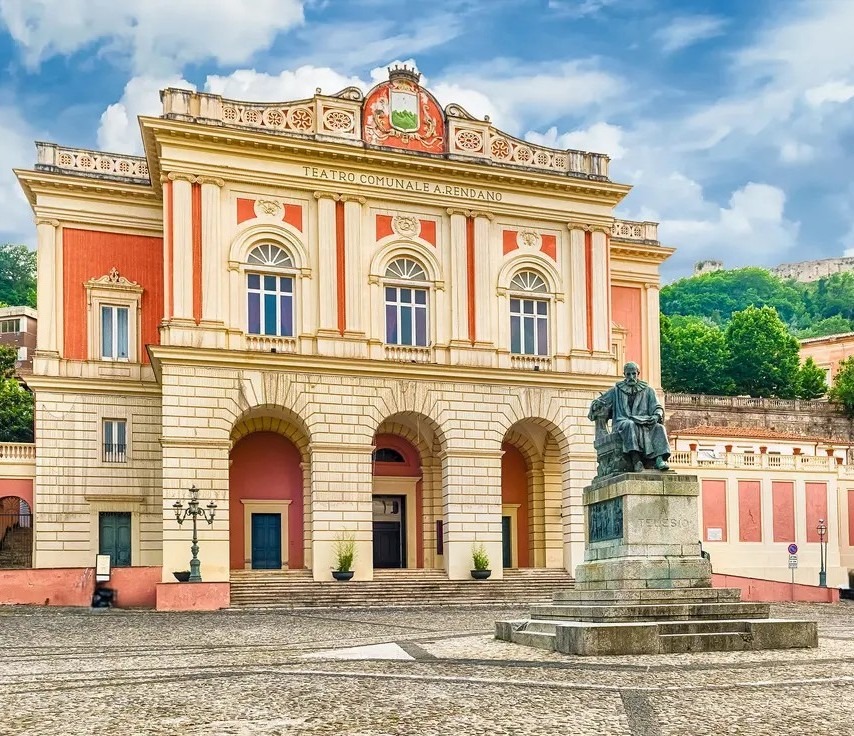
COSENZA, Calabria — Twenty years after founding it, Mario Bozzo still chairs the jury of the Prize for Mediterranean Culture, whose 20th edition filled the Teatro Alfonso Rendano on October 16 with a Gaza writer on a faltering video link and Tahar Ben Jelloun on screen from Paris.
Bozzo, who taught Latin at a liceo classico (classical high school) and later led the Fondazione Carical, the banking foundation behind the prize, reflected on this year’s prizes a month after they were awarded.
Q. You founded the prize 20 years ago. Why the Mediterranean, and why Cosenza?
“It could only be born in Cosenza, home of the Fondazione Carical,” Bozzo said. “We wanted something distinctive, tied to two regions that knew Magna Graecia, the Greek colonies of southern Italy, then Rome, then rulers from this ancient sea.”
Q. Ben Jelloun and Amos Oz won first. Who has struck you most since?
“Awarding Ben Jelloun and Amos Oz, men of different faiths, was a programme, the Mediterranean as a meeting place of cultures,” he said. “From the Rendano stage they told the world’s rulers to listen to writers. I also think of Father Enzo Bianchi, who founded the Bose community, and Stefano Rodotà, author of Il diritto di avere diritti (The right to have rights).”
Q. You said the prize must stay clear of solo protagonism. What do you mean?
“I have always believed in teamwork and distrusted those who think they can do everything alone,” he said. “If the prize wants a long life, its strength must come from the community that runs it, and from the Mediterranean, which will again be civilisation’s great motorway for the South, Italy, and Europe.”
Q. More than 300 students choose the Narrativa Giovani (young fiction) winner. What has their judgment taught you?
“Moving young people from the judged to the judges was a happy choice. They read books they might never have opened, at a time when Italy reads little and badly,” he said. “They find in books meanings an adult reader overlooks.”
Q. A special prize went to Majd al-Assar in Gaza. What can a prize do against war?
“Prizes are always a great appointment with people who, in life and work, have made room for feelings,” he said. “Peace, before it is a conquest of diplomacy, is the landing of deep motivations born in mind and heart. Literature and art feed both.”
Q. The 2026 theme was artificial intelligence. Why does a Mediterranean prize talk about algorithms?
“The prize is dedicated to Mediterranean culture, not to the sea as an endless stretch of water,” he said. “Artificial intelligence commanded by the magnates of wealth and the selfishness of men of power is dangerous. To serve humankind it must recover the ancient civilisations born on these shores.”
Q. Today’s Mediterranean is also migration and conflict. Is the prize an observatory or a stance?
“In the Mediterranean and the nearby Middle East, the old encounter between peoples has given way to the will to power behind today’s wars,” he said. “The foundation cannot take strong positions. But it is an observation post whose voice carries, through culture, the feelings from which peace is born.”
Twenty years on, his answer to algorithms and war is the one his first winners gave, to keep listening to writers.