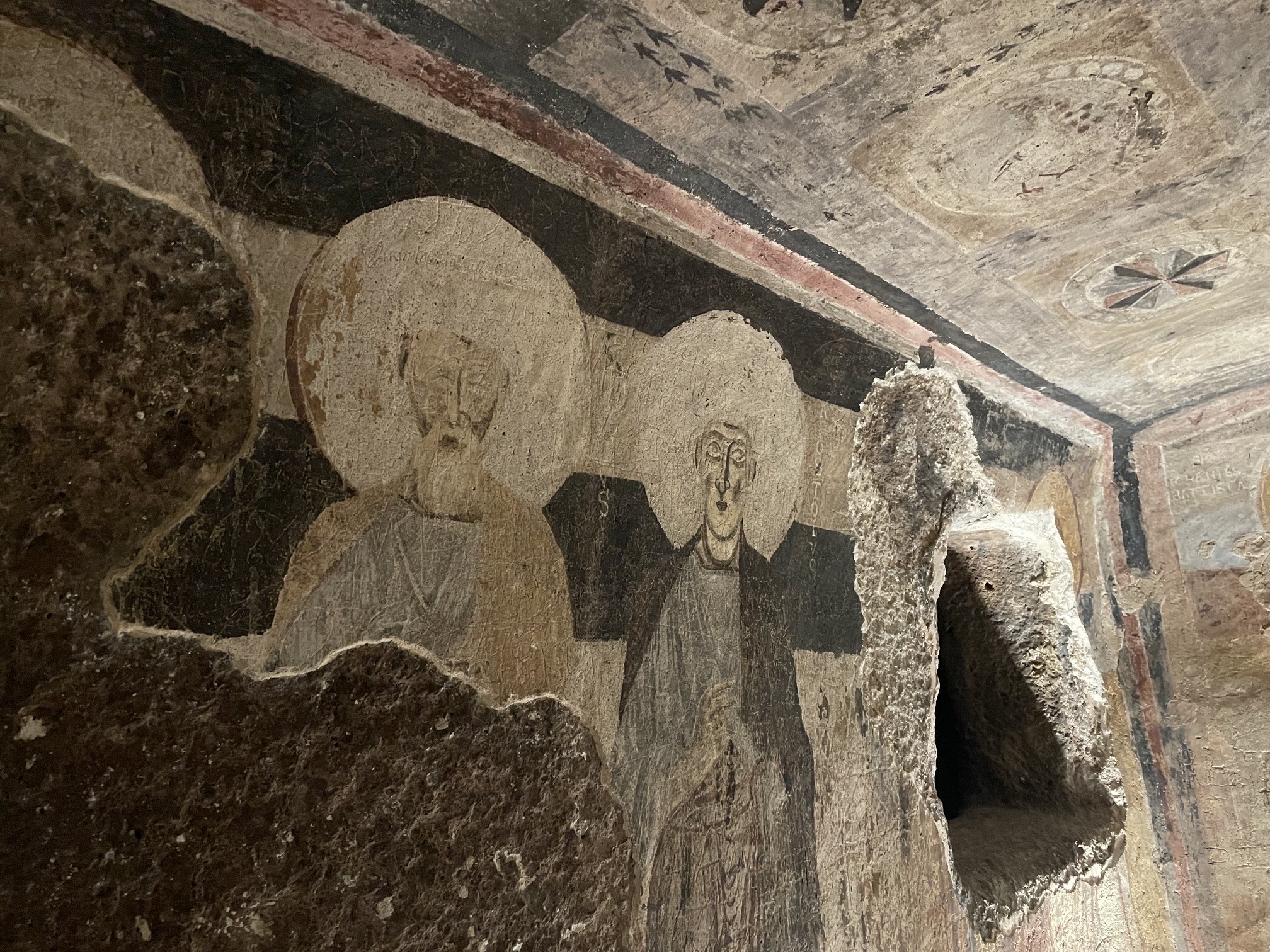

BONORVA — In the volcanic highlands of central Sardinia, a labyrinth of rock-cut chambers has kept watch over the dead for six thousand years. Known as domus de janas, or “houses of the fairies,” these tombs are carved directly into trachyte and basalt outcrops, and more than three thousand of them survive across the island. The largest and most storied lies at Sant’Andrea Priu, near Bonorva, where visitors can walk straight into a chamber first used by Neolithic islanders around 4000 BC.
“This historic site is called the Tomba del Capo, and it is the largest tomb in all of Sardinia,” said Nanda Sias, a member of the cooperative that manages the necropolis. “It has an exceptionally long history of use, beginning around 4000 BC and continuing through various civilizations, until it was used by a shepherd in the 1990s.”

A home built for the afterlife
The tomb’s builders modelled its rooms on ordinary houses of the period, cutting a rounded entrance chamber and a rectangular inner room, with pillars, lintels and doorways carved to mimic domestic architecture. The skeleton were laid in a fetal position to symbolize rebirth, and painted red to represent life. Two protective deities appear throughout the site, a Mother Goddess who accompanied the dead, and a God Bull carved near the entrance.
Carving such hard stone required patience rather than metal tools. Builders used fire to heat the rock, then doused it with cold water to crack it, or drove damp wooden wedges into fissures until the wood expanded and split the stone.
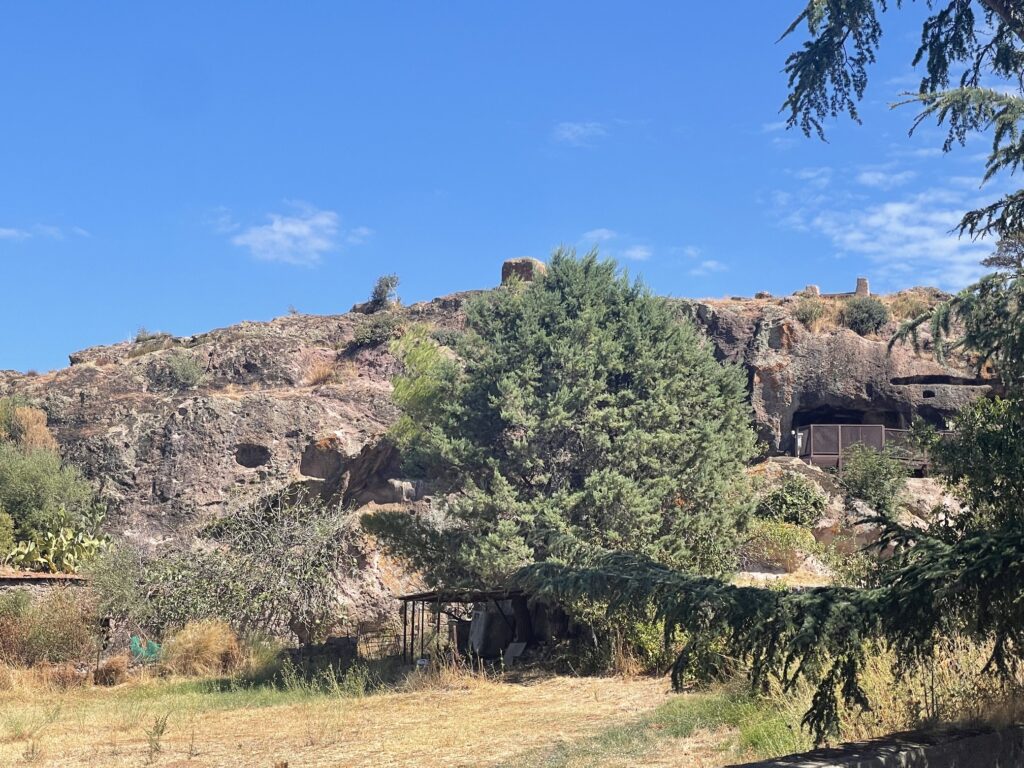
Archaeological site (Credits: Italy Now)
From tomb to church
Centuries later, during Roman rule, the site was converted into a church, its floor lowered, a door and a skylight added. The result is unique in Sardinia, a building that still preserves frescoes from both the Roman and Byzantine periods. In 2025 and 2026, archaeologists working nearby uncovered three more richly decorated tombs, bringing the total known at the site to twenty and reinforcing Sardinia’s place among the Mediterranean’s richest prehistoric landscapes. The site received UNESCO recognition last year, joining the United Nations’ list of places judged to be of outstanding cultural value.
The necropolis is run by a four-member cooperative funded largely through admission tickets, which also hires young collaborators during busy seasons to help with tours and to pass on their skills to a new generation. Visitor numbers have grown steadily, with turnout highest during the summer months.