NAPLES — In ancient Greece, wine was never drunk alone. It was mixed with water, shared among guests reclining along the walls of a room, and governed by ritual.
That 2,500-year-old tradition of communal drinking is now the subject of a new exhibition in Naples, where a New York painter’s canvases and four ancient Greek vessels ask the same question from opposite ends of history: what happens to us when we drink together?
In ancient Greece, a formal drinking gathering known as a symposion was held after dinner, typically among educated men. It was a structured social institution: a designated host decided the ratio of wine to water, guests reclined on couches along the walls, and everyone was expected to contribute through poetry, debate, or song. Drinking undiluted wine was considered barbaric. The mixing of wine with water was itself symbolic, reason tempering appetite, civilisation mediating nature. Wine was considered transformative: under the influence of Dionysus, the god of wine and theatre, identities became fluid. Plato used a banquet as the setting for his most celebrated philosophical dialogue.
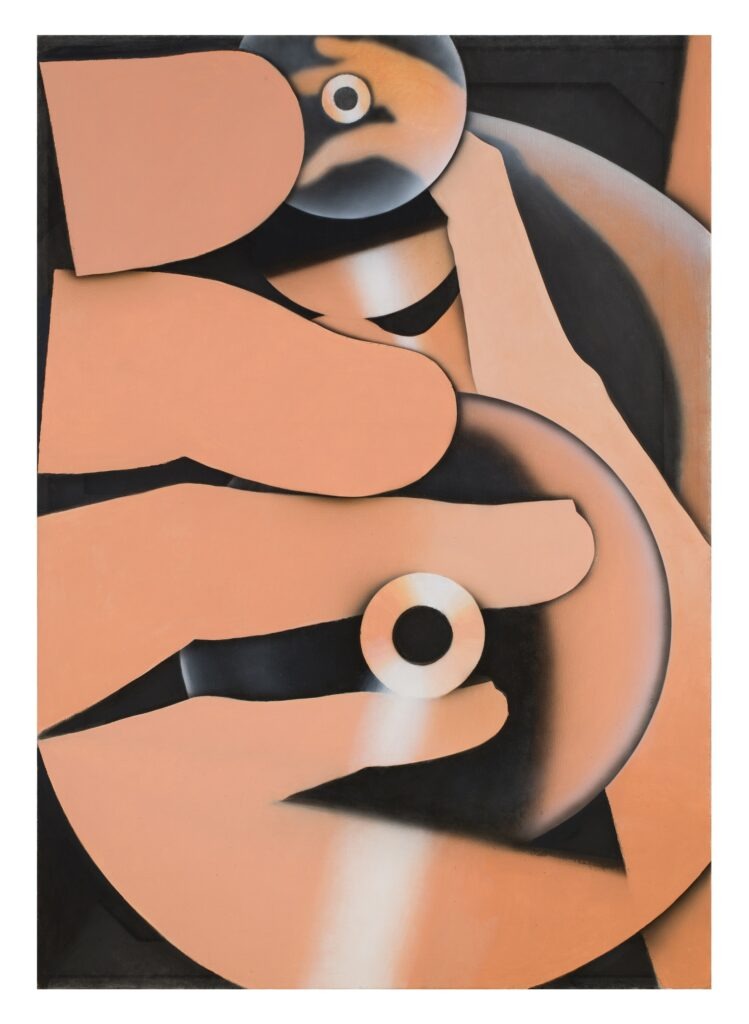
New York artist Alexi Worth has spent years painting precisely this charged moment. His canvases show hands gripping wine stems, a second smaller hand implying a companion just out of frame. “When we drink together,” Worth said, “the chemistry of our blood changes and our drinking companions change in step.”
“Wine has always been central in the Mediterranean culture and civilization and this exhibition highlights brilliantly the cultural and convivial value of wine,” Antonio Capaldo, who heads the Feudi di San Gregorio winery, said to Italy Now. Feudi di San Gregorio as founded in 1986 in Irpinia by the Capaldo family, and is one of Southern Italy’s leading wineries, renowned for reviving native varieties like Aglianico, Fiano, and Greco on 300 hectares of volcanic vineyards, exporting to over 50 countries.
Effective pairing
The curatorial logic is precise. Worth’s airbrush technique shares the Attic palette of black, orange, and terracotta with the ancient vessels. Where Greek painters placed full figures at mid-distance, Worth moves in close, occupying the viewer’s point of view, positioning them in the role of the second drinker. The ancient vessels and the modern canvases occupy the same rooms in the same configuration as a Greek symposium, ceramics at the centre and paintings along the walls.
“Wine has always been a conduit for connection, a thread that runs through centuries of human ritual, from the ancient symposion to the modern dinner table,” says Maria Pasquale, award-winning food journalist, Italy expert and author of Mangia: How to Eat Your Way Through Italy. “In every era, it has softened the edges between us, turning strangers into companions, if only for a glass.”
Richard Neer, professor of art history at the University of Chicago, selected the ancient vessels on show from the Caputi Collection, a holding of more than 500 Greek and Magna Graecia pieces dating from the sixth to the third century BC. The collection is now part of the artistic heritage of Intesa Sanpaolo, Italy’s largest banking group and a significant force in cultural patronage through its Gallerie d’Italia museum network, with spaces in Naples, Milan, Turin, and Vicenza.
Vortici runs from April 3 through July 5, 2026 at the Gallerie d’Italia, Via Toledo 177, Naples.