
Naples unveiled the restored Edicola di San Gennaro in Piazza Enrico De Nicola on 19 September, the feast day of the city’s patron saint. The work was carried out with the help of university students.
Mayor Gaetano Manfredi and city councillor Massimo Pepe attended the inauguration. The restoration formed part of wider efforts to enhance Naples’ UNESCO-listed historic centre.
A monument born of gratitude
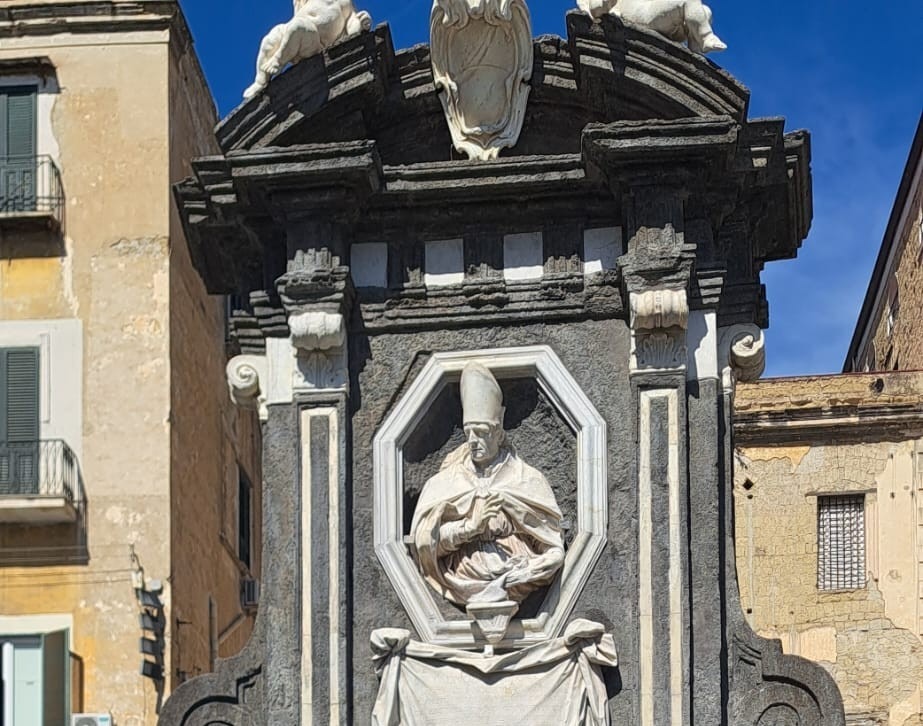
The 18th-century shrine stands in front of the Church of Santa Caterina a Formiello, close to Porta Capuana, one of the historic entrances to the city. It was commissioned by the Deputation of the Chapel of San Gennaro to give thanks for the saint’s intercession during the 1707 eruption of Mount Vesuvius.
Architect Ferdinando Sanfelice designed the monument in piperno stone and marble. It houses a bust of San Gennaro by the sculptor Domenico Antonio Vaccaro. Both men were leading figures of Neapolitan Baroque art.
Manfredi said the timing made the reopening especially meaningful. “Returning to the city a monument of such high symbolic, artistic and devotional value, precisely during the days of the feast of San Gennaro, is a sign of great attention to our history and our identity,” he said.
A classroom on the building site
Work began in May 2025 and was completed by mid-September 2026. Naples City Council and the Suor Orsola Benincasa University ran it as a “cantiere didattico”, or teaching site. Third- and fourth-year students on the university’s conservation and restoration degree worked on the monument itself.
Restoration lecturers Giancarlo Fatigati and Maria Rosaria Vigorito oversaw the students, alongside the Superintendency of Archaeology, Fine Arts and Landscape for the City of Naples. Federico II University’s Department of Architecture, coordinated by Professor Antonella Di Luggo, supported the project with documentation and an assessment of the monument’s deterioration. The council’s UNESCO Historic Centre Office also took part.
The mayor said the project showed what partnerships between institutions and local universities can achieve. “Thanks to the commitment of the Suor Orsola students and the collaboration of the UNESCO Historic Centre Office, we have enhanced a precious asset located at one of the most important historic entrances to Naples,” he said.
Manfredi added that the council would continue its work to protect and regenerate the city’s monumental heritage. The shrine is once again open to residents and visitors.