VENICE — On the sleepy island of Mazzorbo, 40 minutes from Venice by boat, Gianluca Bisol stumbled by chance on a vine believed extinct and brought it back from the brink. The vines grow in soil so saline it sits under seawater for part of the year, producing a wine of golden hue unlike anything on the Italian mainland.
This April, the 2026 Wine Travel Awards placed Venissa second in their global public vote for must-visit wine destinations, ahead of estates in California, South Africa and France. The competition spans 48 countries and 16 categories, with Venissa beaten only by a Georgian winery with 8,000 years of history behind it.
“In 2001, I had the opportunity to cross paths with a historic native Venetian grape variety. I came across it in the small garden of a house on Torcello, right in front of Venice’s oldest basilica,” Bisol, the 21st generation of a winemaking family from Valdobbiadene, told Italy Now.
Rescued from extinction
Italian wine expert Count Gelasio Gaetani d’Aragona Lovatelli, whose work as an international wine consultant brings him to the four corners of the world, described the wine’s signature character. “The secret of the wines made in Venissa is the golden colour, the golden colour of the real gold label, and you should drink it or taste it around the time of the golden colour of the sun before it disappears,” he said.
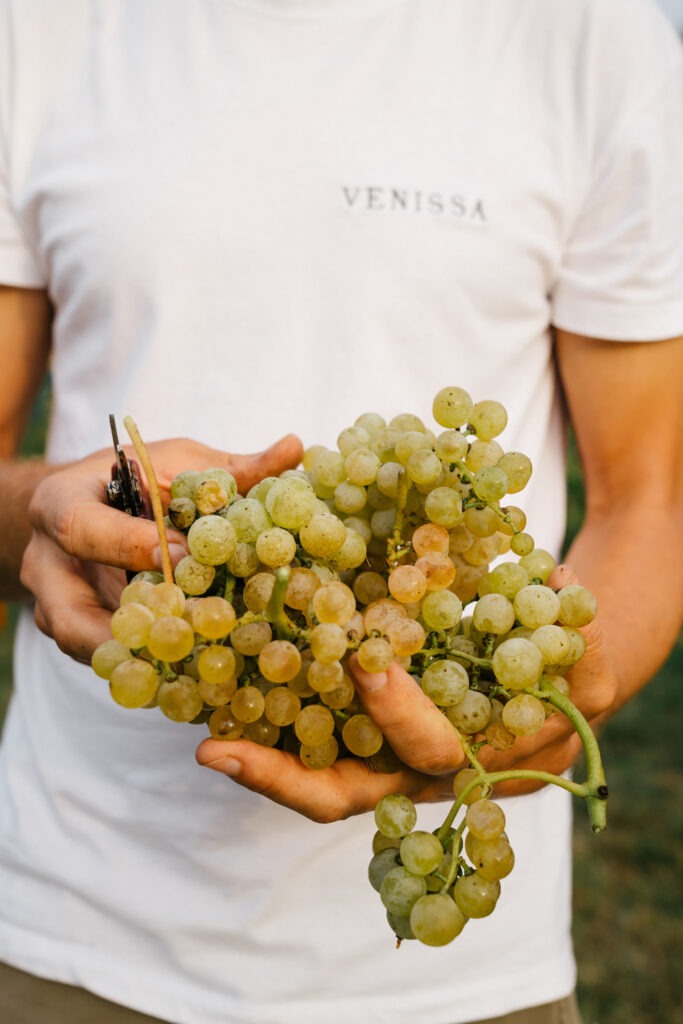
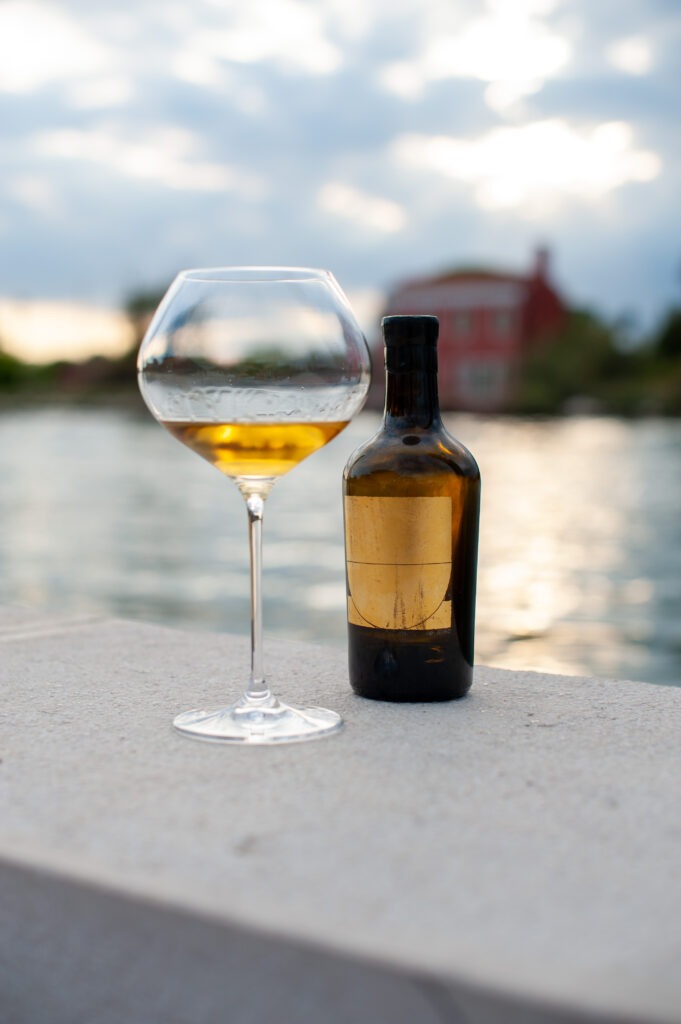
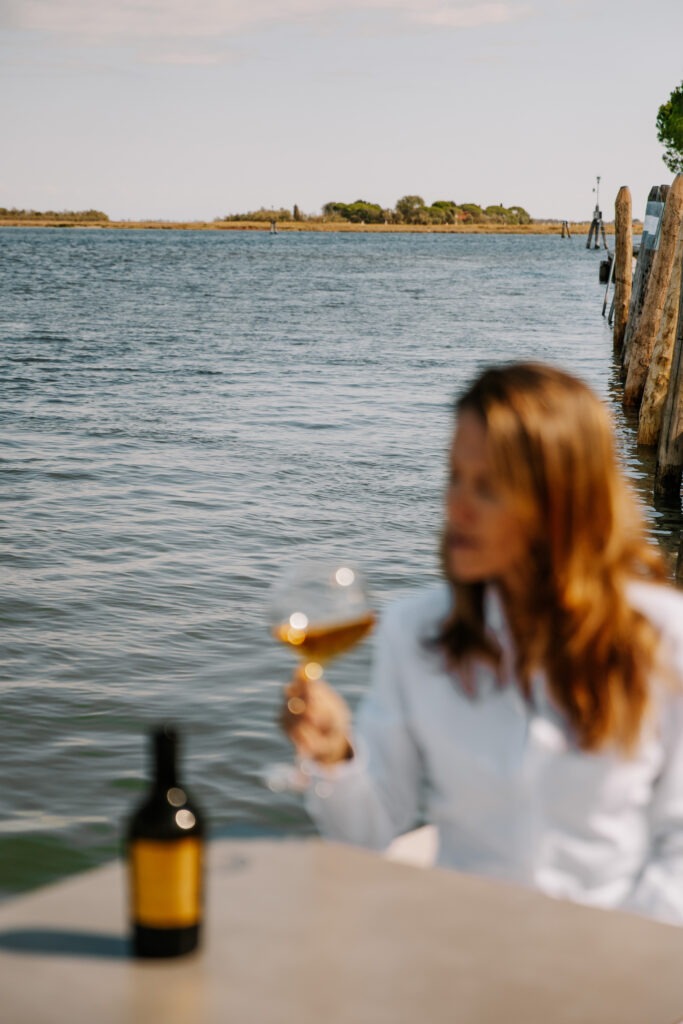
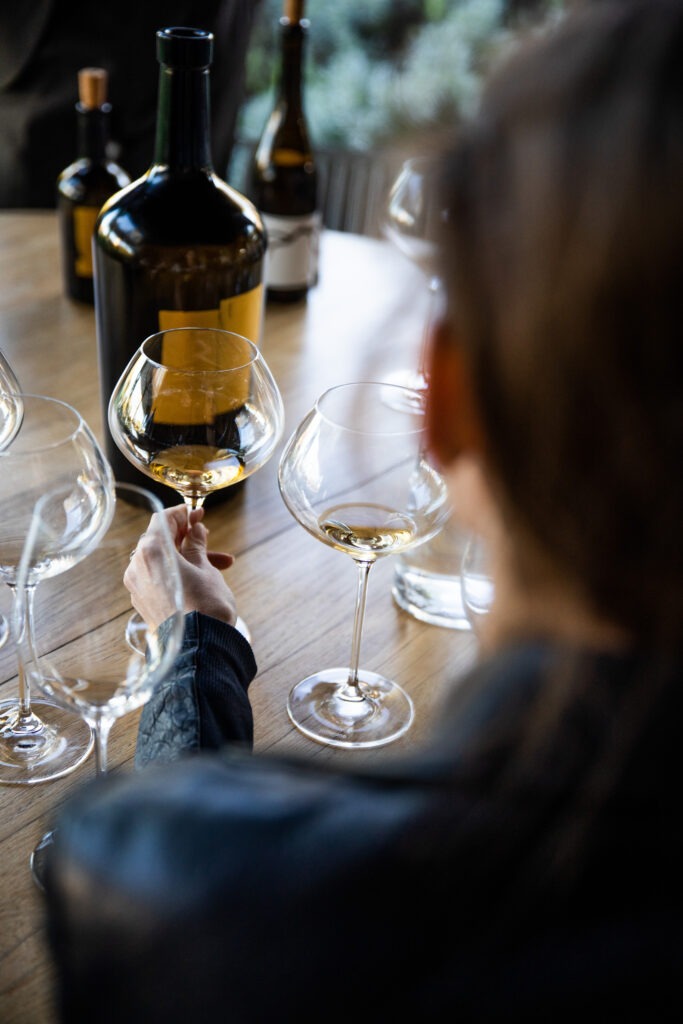
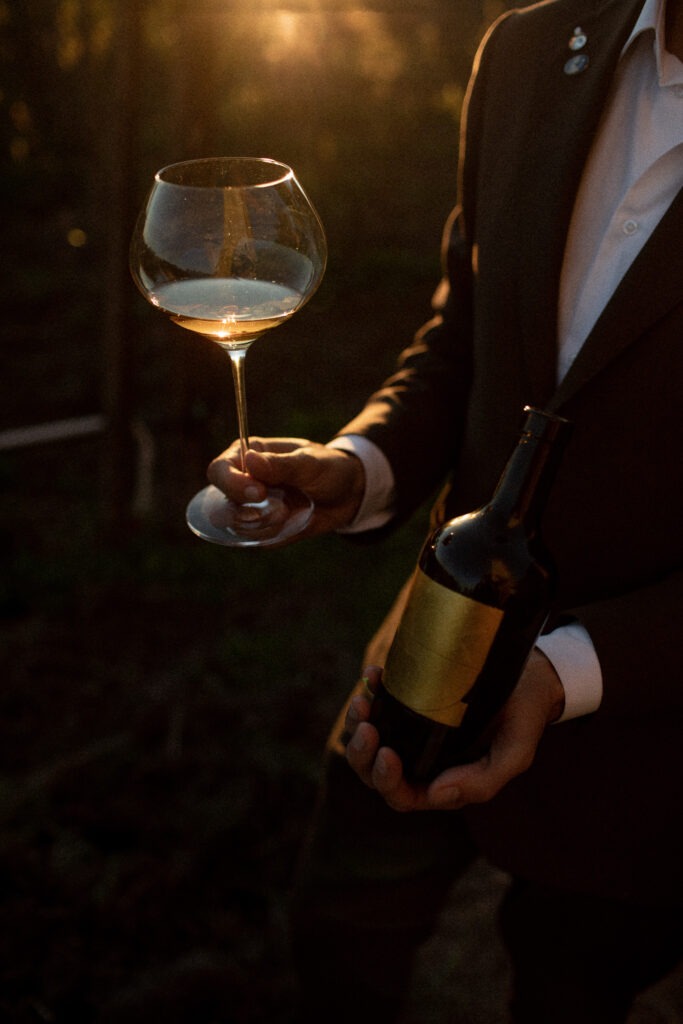
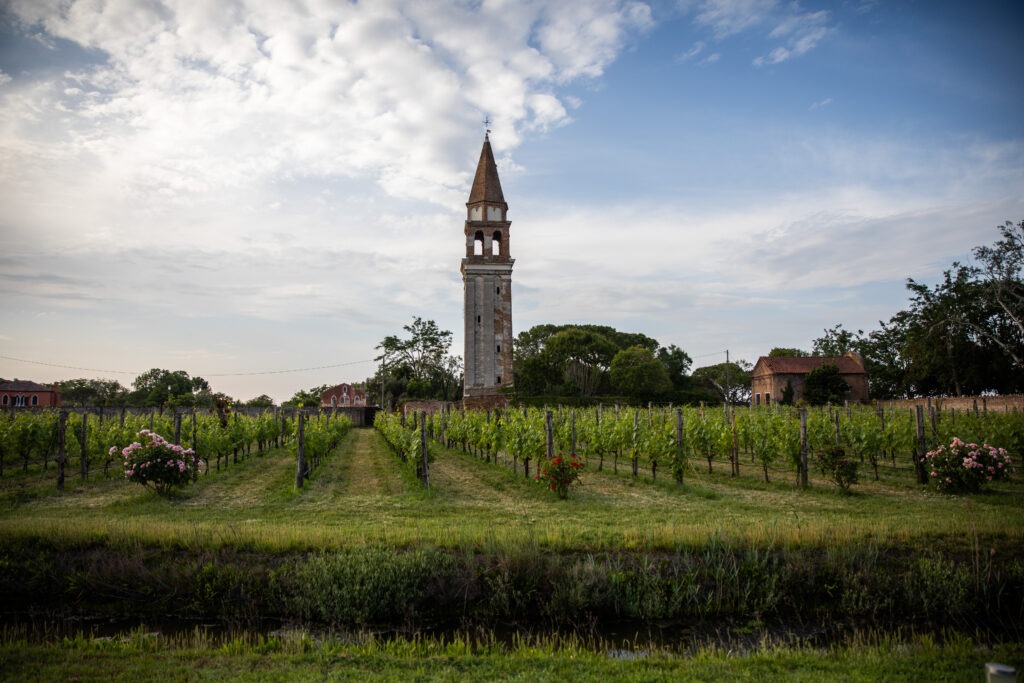
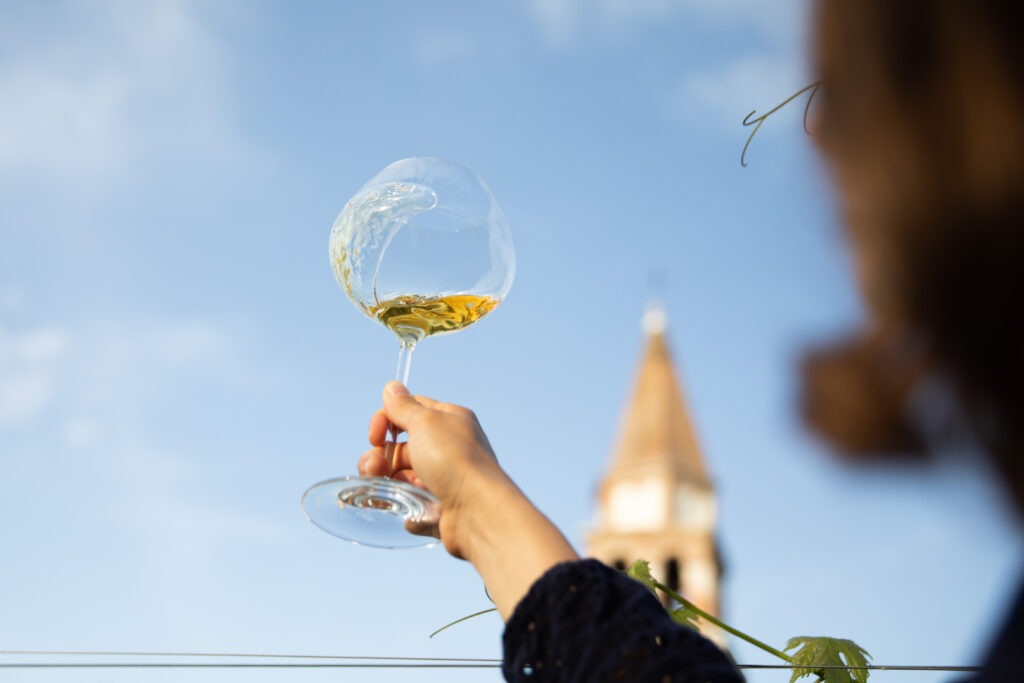
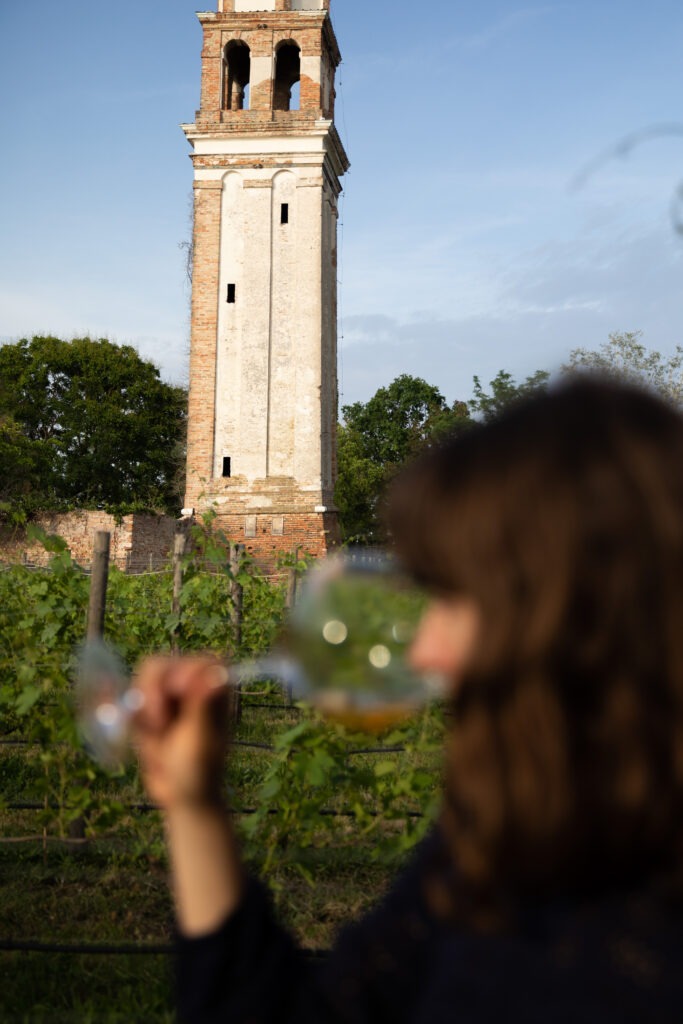
Venissa wine and vineyards, various (Credits: Letizia Cigliutti)
The grape is the Dorona di Venezia, a golden-hued white variety thought lost forever after the Acqua Grande flood of 1966, which submerged Venice under nearly two metres of water. Bisol, heir to Bisol 1542, a Prosecco dynasty with more than five centuries of history, spent a decade replanting the vine inside the medieval walls of a former monastery on Mazzorbo. The first harvest came in 2010. Today, just one hectare produces roughly 3,500 bottles a year.
Walled lagoon vineyard
“What makes Venissa unique is the contrast between a hyper-crowded Venice and a Venice so quiet, so different, so unexpected,” Bisol said. The estate sits behind a wall built in the 1300s and rebuilt in the 1700s. “From outside you cannot tell what is inside. The surprise when you open the small door and see these two hectares all together in Venice is something completely unexpected.”
Each bottle is sealed with Murano glass and labelled with 24-karat gold leaf, hand-hammered by the last surviving battiloro (gold-beating) family in Venice. Bottles sell for above 100 euro.
Additional reporting by Alina Trabattoni